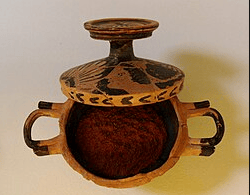
Long before modern blush compacts and lipsticks existed, Ancient Egyptians were tinting their cheeks and lips with red ochre — one of the earliest pigments used in human beauty culture. Red ochre, a naturally occurring iron oxide, was ground into a fine powder and mixed with oils or animal fats to create a creamy, earthy tint. It became the foundation of Egyptian rouge, symbolizing vitality, sensuality and divine protection.
Red ochre wasn’t just cosmetic; it carried deep cultural meaning. Its warm, terracotta one echoed the colour of life and blood — a symbol of strength, fertility and the life‑force energy associated with goddesses like Hathor. Wearing red ochre was a way to invoke beauty, health and spiritual power. It brightened the complexion, added warmth to the skin and created the soft flush seen in Egyptian art and funerary portraits.
The pigment was stored in rouge jars, small vessels carved from alabaster, limestone, faience or pottery. These jars were intimate objects, kept on vanities, carried in daily life and placed in tombs to accompany the dead into the afterlife. Red ochre was considered essential — not just for adornment but for identity and continuity beyond death.
Application was tactile and ritualistic. Using carved cosmetic spoons or fingertips, Egyptians dabbed the pigment onto cheeks and lips, blending it into the skin for a natural, sun‑warmed glow. In a desert climate where dust and sun could dull the complexion, red ochre restored life and vibrancy.
Red ochre also appeared in ceremonial contexts. Priests, dancers, and high‑status individuals used it during rituals, festivals, and religious ceremonies. Beauty in Egypt was never superficial — it was spiritual, protective, and symbolic.
Today, red ochre stands as one of the earliest colour cosmetics in human history. It reminds us that the desire for a warm flush on the cheeks — that hint of life, vitality and sensuality — is thousands of years old. In its earthy pigment, we see the origins of rouge, lipstick, and the timeless human impulse to adorn the face.
I’m Stacey Hobbs, thanks for reading Face by Stace! Until next time.
do you feel fabulous today?

