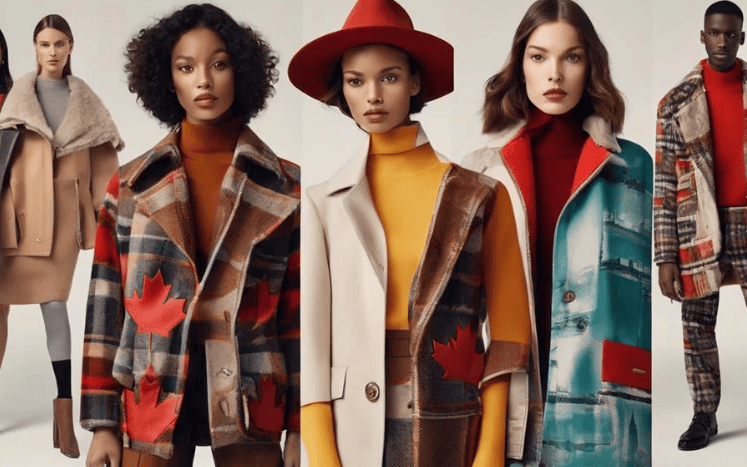
Canadian fashion has always been defined by subtlety, craftsmanship and intelligence rather than spectacle. While Paris and New York dominated headlines, Canada quietly built an industry rooted in practicality, artistry and cultural diversity — shaping wardrobes across North America in ways most people never realized.
Early 20th Century: The Rise of Montreal’s Garment Industry
By the 1910s and 1920s, Montreal had become one of North America’s most important garment hubs. Its factories produced dresses, coats, lingerie, uniforms, knitwear and underpinnings for women across Canada and the United States. The city’s blend of French influence, English industry and immigrant craftsmanship created a fashion ecosystem that valued both artistry and practicality.
This is the era that produced the Wanderbra, a Depression‑era innovation that offered comfort, affordability and modernity — a Canadian invention born in Montreal’s bustling lingerie district.
Mid‑Century: Practical Elegance and Outerwear Innovation
Canada’s climate shaped its fashion identity. Designers and manufacturers became global leaders in:
- outerwear
- knitwear
- cold‑weather textiles
- fur and faux‑fur innovation
- parkas and performance coats
Brands like Canada Goose, Sorel, and Roots emerged from this era, blending utility with style.
1960s–1980s: Toronto’s Rise as a Fashion Capital
While Montreal remained the creative heart, Toronto became the commercial and media capital. It developed:
- major retail headquarters
- magazine and editorial hubs
- celebrity styling networks
- Toronto Fashion Week (in its various incarnations)
- a strong ready‑to‑wear scene
Toronto amplified Canadian fashion globally, giving designers a platform and connecting them to international markets.
1990s–2000s: Canadian Designers Go Global
Canadian designers began shaping international fashion:
- Dsquared2 (Canadian twins dominating Milan)
- Erdem (London couture with Canadian roots)
- Aurora James (Brother Vellies, CFDA winner)
- Marie Saint Pierre (Montreal avant‑garde)
- Mikhael Kale (celebrity‑worn couture)
- Smythe (Kate Middleton’s blazer brand)
Canadian fashion became known for minimalism, craftsmanship and quiet luxury.
Today: A Blend of Heritage, Innovation, and Cultural Diversity
Modern Canadian fashion is defined by:
- Indigenous designers and beadwork traditions
- sustainability and ethical production
- outerwear excellence
- minimalist luxury
- multicultural influence
- strong craftsmanship
- global retail presence
Canada doesn’t chase trends — it builds wardrobes. It’s respected for its intelligence, practicality and cultural richness.
I’m Stacey Hobbs, thanks for reading Face by Stace! Until next time.
do you feel fabulous today?

