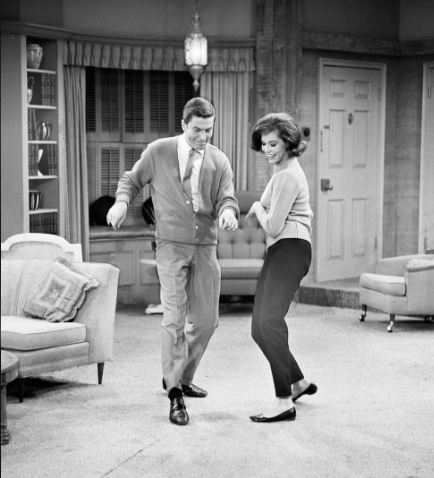
When The Dick Van Dyke Showpremiered, no one expected a pair of capri pants to cause a cultural stir. But Mary Tyler Moore’s decision to wear slim, tailored trousers as Laura Petrie became one of the most revolutionary fashion moments of the 1950s. At a time when American housewives were expected to appear in dresses, skirts and perfectly pressed aprons, seeing a young suburban wife on television wearing pants was nothing short of radical.
A Subtle Rebellion in Prime Time
The 1950s were defined by polished femininity: cinched waists, full skirts, red lipstick and the idealized image of the “perfect housewife.” Pants were considered casual, masculine or even inappropriate for domesticated women. They were worn for gardening, chores or leisure — but rarely shown as acceptable everyday attire.
Mary Tyler Moore changed that.
Her capri pants were:
- slim
- modern
- youthful
- practical
- stylish
They reflected how real women actually lived — moving, bending, cleaning, chasing toddlers and navigating suburban life with energy and personality.
Television’s First Modern Housewife
Producers initially resisted the idea. They worried pants would look too informal or too provocative. But Moore insisted that Laura Petrie should look like a real woman, not a costume‑perfect stereotype. When she appeared on screen in her now‑iconic black capris, viewers immediately noticed — and responded.
Women wrote letters praising the authenticity.
Fashion magazines took note.
Advertisers saw a new opportunity.
Television had quietly shifted the image of the American woman.
A Fashion Ripple Effect
Moore’s capri pants helped normalize trousers for women in everyday life. They signaled a cultural transition from rigid domestic expectations to a more modern, active, expressive culture. The look became a staple of early 1960s fashion and paved the way for later icons — Audrey Hepburn, Jane Birkin, and even the Mod movement — who embraced slim pants as chic, youthful and liberating.
Mary Tyler Moore wardrobe choice:
- challenged gender norms
- modernized the image of the American housewife
- influenced fashion trends
- altered television styling
- reflected the growing independence of women
The Backlash: Viewers Who Thought Pants Were “Too Casual” for a Housewife
Not everyone loved Mary Tyler Moore’s capri pants. In fact, the show received letters from viewers — mostly women — who felt that a housewife wearing pants on television was inappropriate, un-feminine or simply “too casual” for a suburban mother. Some argued that pants made Laura Petrie look like she wasn’t properly dressed for her husband, her home or her domestic duties. Others insisted that a TV housewife should appear polished at all times, in skirts or dresses, the way magazines and advertisements portrayed the ideal woman. The backlash revealed how strongly 1950s culture women’s appearance, even in their own living rooms. Moore’s capris weren’t just a fashion choice; they were a quiet challenge to the expectations placed on women — and the resistance proved just how radical that choice really was.
Carl Reiner Defended Mary Tyler Moore’s Choice — And Fought to Keep the Pants On Air
When complaints started coming in from viewers who felt pants were “too casual” or “too masculine” for a TV housewife, Carl Reiner didn’t back down. He defended Mary Tyler Moore’s capri pants as an authentic reflection of how modern women actually dressed at home. Reiner argued that Laura Petrie shouldn’t look like a staged, idealized housewife from a detergent commercial — she should look like a real woman who moved, cleaned, played with her child and lived her life in comfort. He insisted that the pants stay even when network executives worried they were too controversial. His support allowed Moore to portray a more relatable, contemporary woman and it quietly pushed television toward a more realistic and liberated image of femininity.
Mary Tyler Moore’s capri pants may seem simple now but in the 1950s they were a quiet revolution — a small wardrobe choice that challenged an entire cultural script about how women should look, dress and behave. By appearing on television in clothing that reflected real life, Moore helped shift the image of the American woman toward authenticity, autonomy and modernity. Her pants became more than a fashion statement; they became a symbol of changing expectations, evolving femininity and the subtle power of representation. Decades later, the impact still resonates. Sometimes, it only takes one lady choosing comfort, truth and practicality to move an entire culture forward.
I’m Stacey Hobbs, thanks for reading Face by Stace! Until next time.
do you feel fabulous today?
 Face by Stace