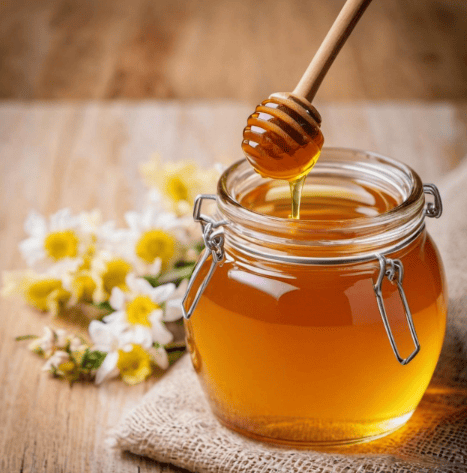
Honey has always carried a sense of a subtle form of luxury — a beauty ingredient treasured in ancient rituals and a kitchen staple that feels both comforting and elegant. Victorian women used honey salves to achieve a glowing complexion, while today it remains one of the most beloved ingredients in modern wellness.
Honey is one of the oldest beauty ingredients in recorded history. Cleopatra famously used honey to soften her skin, while ancient Greek women applied honey masks before festivals and ceremonies. In medieval Europe, honey was used as a healing salve for the skin — prized for its antibacterial properties long before modern science confirmed them. Victorian women used honey in homemade cold creams, believing it preserved youthfulness.
Honey’s beauty legacy spans continents and eras, always associated with luxury, femininity and natural radiance.
Beauty Benefits of Honey
Skin: Honey draws moisture into the skin, supports barrier repair and has natural anti-bacterial properties.
Hair: A honey mask adds shine and softness especially when mixed with oils.
Body: Its antioxidants support overall wellness and glow.
Mood: Warm, floral, comforting — honey is a sensory cue for calm and sweetness.
Below, you shall discover historical context, beauty and wellness benefits under each recipe.
Honey Oatmeal Chamomile Face Mask
A gentle, nurturing, kitchen‑beauty treatment rooted in softness, calm, and Fraîche Living’s wholesome aesthetic.
Prep 5 min Cook 0 min Serves 1 mask
Ingredients
- 1 tbsp raw honey (Manuka or local)
- 1 tbsp colloidal oats (finely ground)
- 1 tbsp cooled chamomile tea
- 2–3 drops almond oil (optional for extra nourishment)
Instructions
- Prepare the chamomile
Steep chamomile tea, allow it to cool completely, and measure out 1 tablespoon. - Mix the base
Combine honey and colloidal oats in a small bowl until a paste forms. - Add chamomile
Stir in the cooled chamomile tea to loosen the mixture into a smooth mask. - Enrich (optional)
Add almond oil for extra slip and barrier support if your skin is dry. - Apply
Spread a thin, even layer over clean skin, avoiding the eye area. - Rest
Leave on for 10–15 minutes. The mask will stay slightly tacky but should feel soothing. - Rinse
- Remove with lukewarm water, massaging gently for a soft exfoliation.
Sources
Honey and Oatmeal: Skin Benefits, 5 DIY Face Masks & How to Use | Raw Honey Guide
12 Spa Day DIYs — Brit + Co – Brit + Co
Chamomile Oatmeal Manuka Honey Goat Milk Soap | Gray Goat Soaps
Historical Context
Honey‑oat masks are one of the oldest in beauty history. In ancient Egypt, women used honey as a sacred cosmetic — prized for its healing, anti-bacterial properties and its association with youthfulness. Oats appear in Roman and later Victorian beauty manuals, where they were praised for “soothing the nerves of the skin,” a poetic way of describing their anti‑inflammatory beta‑glucans.
Chamomile’s lineage is equally storied. The herb was used by Greek and medieval European apothecaries to calm irritation, reduce redness and soften the complexion. By the 1930s, during the era of kitchen‑beauty and frugality, women often turned to pantry staples like oats, honey and chamomile tea to maintain their skin without expensive creams.
This mask is gentle, nurturing and rooted in the idea that beauty can be created from everyday ingredients. It mirrors Tori Wesszer’s Fraîche Living ethos: wholesome, approachable and a subtle form of luxurious.
Beauty Benefits of This Recipe
Honey
- Humectant: draws moisture into the skin
- Antibacterial: supports clearer, calmer skin
- Antioxidants help protect against environmental stress
Colloidal Oats
- Beta‑glucans soothe irritation and redness
- Creates a protective, softening film on the skin
- Ideal for sensitive or reactive complexions
Chamomile Tea
- Anti‑inflammatory and calming
- Reduces redness and post‑sun irritation
- Helps restore balance to stressed skin
Almond Oil (Optional)
- Rich in vitamin E
- Supports the skin barrier
- Adds slip for a smoother application
Honey has always been a quiet form of luxury in beauty and wellness—simple, natural and endlessly versatile. This recipe is one more way to bring that softness and radiance into everyday life, using ingredients that feel comforting. If you enjoyed this treatment, explore the rest of the Honey Series for more historically inspired, modern‑friendly recipes.
I’m Stacey Hobbs, thanks for reading Face by Stace! Until next time.
do you feel fabulous today?
 Face by Stace