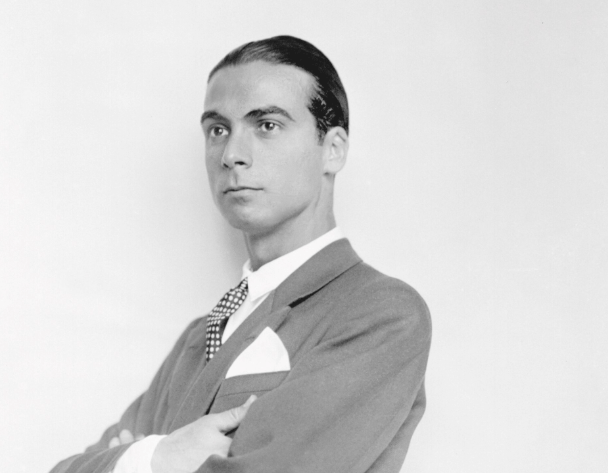
By the 1960s, Balenciaga had reached a level of mastery that few designers ever achieve. His work had become so distilled, so architectural, so un-compromising in its purity that it no longer belonged to the rhythms of the fashion calendar. While Paris buzzed with youth culture, ready‑to‑wear and the rise of modern marketing, Balenciaga moved in the opposite direction. He withdrew further into silence, into discipline, into the pursuit of absolute form. His final years were not a decline; they were a refinement — a stripping away of anything that did not serve the silhouette.
The clothes from this period were astonishing in their restraint. Seam lines disappeared. Ornament vanished. Fabrics were chosen not for decoration but for structure — gazar, a fabric developed specifically for him, allowed shapes that seemed impossible. His garments floated, curved and hovered around the body with an almost architectural serenity. These were not clothes meant to charm or entertain. They were the culmination of decades of study, the final vocabulary of a designer who believed fashion was an art of proportion, not spectacle.
But the world around him was changing. The rise of youth culture, mass production, and the commercialization of fashion clashed with Balenciaga’s philosophy. He had no interest in ready‑to‑wear. He refused to compromise his standards for speed or accessibility. He disliked the growing influence of press and publicity. Fashion was becoming louder, faster, more democratic — and Balenciaga’s work required silence, patience and reverence. The industry was moving toward visibility; he was moving toward invisibility.
In 1968, he made the decision that shocked Paris: he closed his house. No farewell show. No grand announcement. No attempt to adapt. He simply stepped away. For Balenciaga, withdrawal was not defeat; it was integrity. He had taken fashion as far as he believed it could go. He had refined silhouette to its purest form. He had sculpted modernism in fabric. And he refused to dilute his vision in a world that no longer valued the discipline required to sustain it.
His final years were spent quietly in Spain, far from the noise of the industry he had once dominated. But his influence did not fade. Designers continued to study his patterns like sacred texts. His protégés — Givenchy, Courrèges, and later countless others — carried his architectural principles into the future. Even today, the foundation of modern minimalism, sculptural volume and purity of line can be traced directly back to Balenciaga’s final decade.
Part IX marks the moment when Balenciaga’s genius becomes inseparable from his refusal to compromise. His withdrawal was not an ending; it was a final act of precision. In stepping away, he preserved the purity of his legacy — un-touched, un-diluted and absolute.
I’m Stacey Hobbs, thanks for reading Face by Stace! Until next time.
do you feel fabulous today?
 Face by Stace