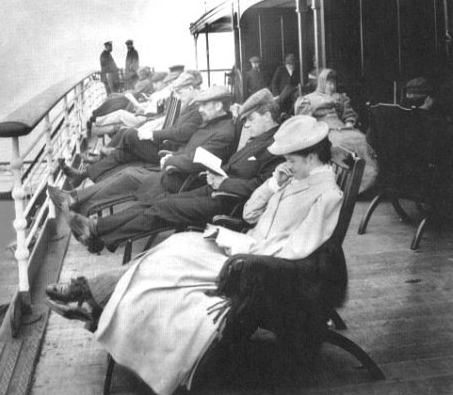


When Titanic sailed in April 1912, she carried more than the world’s wealthiest travellers — she carried their lives, their rituals, their comforts and their identities, all carefully packed into steamer trunks and leather cases. For first‑class passengers, travel was not a disruption of daily elegance. It was an extension of it.
Their luggage told a story: of privilege, of refinement, of a world that believed beauty and ritual should follow you wherever you went — even across the Atlantic.
This is what they brought aboard.
The Steamer Trunks: Portable Wardrobes of the Elite
First‑class passengers didn’t travel light. They arrived with Louis Vuitton, Goyard, and Moynat trunks — the status symbols of the Edwardian age.
These trunks were marvels of craftsmanship:
- Wardrobe trunks with built‑in drawers and hanging bars
- Hat trunks designed to protect elaborate millinery
- Shoe trunks with individual compartments
- Toiletry trunks lined in silk
- Jewelry cases with velvet‑lined trays
A single family could board with 20–40 pieces of luggage, each one a curated archive of their life.
The Essentials of First‑Class Travel
For the Edwardian elite, “essentials” meant far more than clothing. Their trunks held the objects that defined their social world.
1. Calling Card Cases
No introduction was complete without a calling card. Women carried silver or mother‑of‑pearl cases engraved with their initials.
2. Opera Glasses
Even at sea, entertainment was expected. Many brought opera glasses for concerts and evening performances.
3. Writing Sets
Travel diaries, fountain pens, monogrammed stationery — correspondence was a daily ritual.
4. Silk Stockings & Gloves
A lady never travelled without multiple pairs of:
- evening gloves
- day gloves
- driving gloves
- silk stockings
Gloves were etiquette, not accessory.
The Luxuries: Objects of Comfort and Identity
First‑class passengers brought items that reflected their status and personal taste.
Jewelry Cases
Diamonds, pearls, brooches, and lavalier necklaces were stored in velvet‑lined boxes. Many women brought their finest pieces for dinners and soirées.
Perfume Bottles & Atomizers
Guerlain, Houbigant, Floris — the great houses of scent. Perfume was considered part of one’s identity, and women travelled with:
- crystal atomizers
- miniature flacons
- scented sachets
Fans & Evening Accessories
Hand‑painted fans, beaded evening bags, and silk shawls were tucked into small cases.
Books & Leisure Items
First‑class passengers brought:
- leather‑bound novels
- travel guides
- card decks
- embroidery kits
- sketchbooks
Leisure was an art form.
The Grooming & Toiletry Kits
Men and women alike travelled with silver grooming sets — the height of Edwardian refinement.
These sets often included:
- hairbrushes
- combs
- mirrors
- manicure tools
- shaving kits
- colognes
- soaps
- powders
All nestled in velvet compartments.
Children’s Luggage: Miniature Elegance
Even first‑class children travelled with refinement.
Their trunks held:
- sailor suits
- lace dresses
- toys
- books
- hair ribbons
- tiny gloves
- miniature grooming sets
Childhood, even at sea, was curated.
The Sentimental Items
Among the luxuries were the objects that mattered most:
- family photographs
- lockets
- letters
- heirlooms
- engagement gifts
- keepsakes
These were the items passengers reached for in moments of quiet and the ones that carried the deepest meaning.
I’m Stacey Hobbs, thanks for reading Face by Stace! Until next time.
do you feel fabuloys today?
 Face by Stace