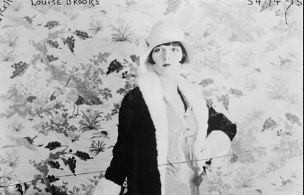
By the time the First World War ended in 1918, the world that women returned to was not the same one they had left behind. The war didn’t just re-shape borders — it re-shaped identity. It altered how women lived, worked, moved, dressed, and even how they understood themselves. And it is precisely this transformation that gave birth to the flapper: the modern woman of the 1920s whose beauty and fashion choices were not simply stylistic, but symbolic.
The flapper was not an invention of the Jazz Age. The flapper was the inevitable outcome of wartime change.

1. Independence Became a Lived Reality — Not an Ideal
During WWI, women stepped into roles previously reserved for men. They worked in factories, drove ambulances, operated machinery, managed farms, and kept entire economies functioning. This wasn’t theoretical empowerment — it was lived, daily independence.
When the war ended, women did not simply return to pre‑war expectations.
They had earned their own wages, navigated public spaces alone, made decisions without male oversight, and proven their capability
This new confidence translated directly into beauty and fashion.
The flapper’s boldness was not rebellion — it was continuity.
She was simply living the independence she had already tasted.
2. Practical Wartime Styles Became the Outline for Modern Beauty
The beauty norms of the Victorian and Edwardian eras, heavy hair, restrictive corsetry, elaborate grooming, were incompatible with wartime life. Women needed practicality, speed, and mobility.
Shorter Hair
The proto‑bob emerged in factories long before it appeared in nightclubs. Women cut their hair for safety and convenience, not fashion.
By the 1920s, the bob became a symbol of modernity — but its roots were utilitarian.
Simplified Makeup
Wartime shortages altered women’s beauty routines long before the flapper emerged. With cosmetics difficult to obtain, women relied on the bare essentials: a light dusting of powder, minimal rouge, petroleum jelly to give lashes a hint of shine, and brows left in their natural shape. Beauty became practical, pared‑down, and almost improvised — a routine built from what was available rather than what was fashionable.
These habits didn’t disappear when the war ended. They evolved. The flapper’s signature look — clean powder, defined lips, and darkened eyes — grew directly out of these wartime constraints. What had begun as necessity became a style of streamlined face, a focus on the mouth, and eyes that carried more drama than the rest of the make-up combined. The flapper aesthetic was modern, but its roots were shaped by the scarcity and simplicity of WWI.
3. The Decline of the Corset Changed the Female Silhouette
Wartime industry reshaped women’s bodies as much as their wardrobes. With steel diverted to the war effort, corset production halted almost overnight. Women adapted quickly, replacing rigid boning with soft brassieres, lighter undergarments, and uncorseted silhouettes that allowed them to work, move, and breathe more freely. What began as necessity soon became habit: a body no longer cinched into an hourglass, but allowed to fall into a straighter, more natural line.
These changes didn’t vanish when peace returned. They carried directly into the 1920s, shaping the new ideal of the flapper. The straight, boyish figure associated with the decade wasn’t a sudden rebellion — it was the evolution of wartime practicality. Freed from corsetry, women embraced a silhouette that felt modern, youthful, and un-restrained. The flapper body was not invented in the Jazz Age; it was forged in the shortages, substitutions, and improvisations of WWI.
The flapper’s silhouette wasn’t a rejection of femininity; it was a reflection of wartime necessity.
Women had already spent years moving freely. The 1920s simply embraced that freedom aesthetically.
4. The Psychological Aftermath: A Desire for Joy, Youth, and Lightness
After years of loss, rationing, and uncertainty, the post‑war generation craved something the war had denied them: pleasure, novelty, youthfulness, escape. The emotional pendulum swung hard in the opposite direction. Women who had spent the war conserving, substituting, and simplifying suddenly wanted colour, movement, nightlife, and a sense of being alive again. Beauty culture responded instantly. Cosmetics became brighter, bolder, and more expressive; fashion embraced playfulness and modernity; and the idea of youth — not just in age, but in attitude — became a cultural ideal.
This longing for escape shaped the flapper’s aesthetic as much as any product or trend. Her powdered skin, defined lips, and darkened eyes were not merely stylistic choices — they were emotional ones. After a decade of restraint, women embraced beauty as a form of liberation, a way to reclaim joy and identity in a world rebuilding itself. The flapper look was modern, but its spirit was born from the collective desire to feel free again.
Short skirts, dancing, nightlife, lipstick, powder, perfume — these were not frivolous.
They were expressions of relief, resilience, and the desire to reclaim life.
The flapper’s beauty was a celebration after years of austerity.
5. Mass Media Amplified New Beauty Ideals
WWI accelerated technological innovation in ways that re-shaped beauty culture almost immediately. By the early 1920s, film, photography, advertising, and department store culture were expanding at a pace the pre‑war world had never seen. For the first time, women could see modern beauty ideals everywhere — in movie theatres, in glossy magazine spreads, in storefront displays, and in the new visual language of commercial advertising. Beauty was no longer local or private; it was public, shared, and increasingly aspirational.
Actresses appeared on screen with bobbed hair, defined lips, smoky eyes, and silhouettes that felt radically modern compared to the corseted figures of the previous generation. These images circulated widely, shaping how women imagined themselves and what they believed beauty could be. The flapper look didn’t emerge in isolation — it was amplified by the technologies that made beauty visible, repeatable, and accessible. In this new visual world, makeup became not just a personal ritual but a cultural statement, a way for women to participate in the modernity they saw reflected back at them.
The flapper was the first woman shaped by mass media.
Her look spread across Canada, America, and Europe with unprecedented speed.
6. Changing Gender Roles Made Visible Through Beauty
The war permanently altered gender expectations.
Women were no longer confined to domesticity. They had worked, contributed, sacrificed, and proven themselves.
Beauty became a language of this new identity:
- Lipstick signaled confidence
- Bobbed hair signaled autonomy
- Powdered skin signaled modernity
- Short hemlines signaled freedom
- Visible makeup signaled self‑expression
The flapper was not merely fashionable — she became political.
I’m Stacey Hobbs, thanks for reading! Until next time.
do you feel fabulous today?
 Face by Stace