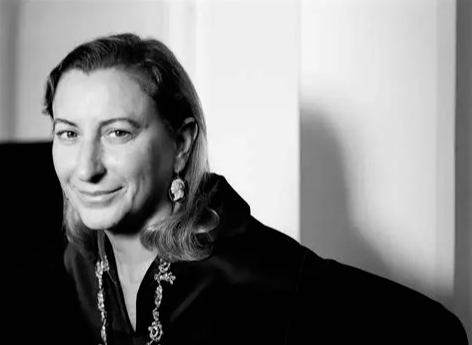
By the late 1990s and early 2000s, Prada was no longer simply a fashion house, it developed into a cultural force. Miuccia Prada had already disrupted the industry with nylon, subversion, and anti‑luxury vibe but Part 3 marks the era when she transformed Prada into something deeper: intellectual luxury.
This chapter explores how Prada became the brand that didn’t just dress the body — it dressed the mind.
1. The Philosophy Behind the Clothes
Miuccia Prada’s genius lies in her refusal to treat fashion as decoration. For her, fashion is a conversation, a critique, a cultural mirror, a psychological study and a political gesture.
She designs from the brain outward.
Where other houses chased glamour, Prada chased meaning. Where others chased beauty, Prada chased contradiction.
This is the era when Prada became synonymous with:
- awkward chic
- ugly‑pretty
- intellectual minimalism
- subversive femininity
Prada wasn’t trying to please. Prada was trying to provoke.
2. The “Ugly Chic” Revolution
Prada’s most controversial and influential contribution to modern fashion is the concept of ugly chic — the idea that beauty can be found in discomfort, tension and imperfection.
This era introduced:
- clashing colours
- odd proportions
- heavy fabrics
- orthopedic‑looking shoes
- retro prints that felt intentionally off
- silhouettes that challenged the body rather than flattering it
It was radical.
It was polarizing.
It was brilliant.
Prada proved that fashion could be intellectual, ironic, self‑aware and emotionally complex.
This changed the industry forever.
3. The Rise of the Prada Woman
Miuccia Prada is interesting. She is:
- analytical
- modern
- self‑possessed
- culturally literate
- un-interested in traditional beauty
- drawn to contradiction and complexity
She wears clothes that make people think not clothes that make people stare.
Prada became the uniform of:
- editors
- curators
- architects
- writers
- academics
- women who lead with intellect
This is when Prada became the brand of the thinking woman.
4. The Miu Miu Counterpoint
While Prada was building intellectual luxury, Miu Miu emerged as its rebellious younger sister.
Miu Miu offered:
- playfulness
- youth
- experimentation
- nostalgia
- sensuality
Prada was the mind.
Miu Miu was the impulse.
Together, they created a duality that strengthened the Prada universe — two sides of the same woman, two expressions of the same intelligence.
5. The Architectural Era
Prada’s runway shows in this era became architectural statements.
Collections featured sculptural coats, geometric cuts, rigid pleats, industrial fabrics, structural knitwear and silhouettes that felt engineered rather than sewn.
Prada wasn’t designing outfits — she was designing forms.
This architectural approach influenced:
- Jil Sander
- Phoebe Philo’s Céline
- Raf Simons
- modern Balenciaga
- contemporary minimalism
Prada became the blueprint for intellectual fashion.
6. The Cultural Impact
This era of the Prada story shaped:
- editorial photography
- museum exhibitions
- fashion criticism
- the rise of “smart fashion”
- the shift from glamour to concept
- the acceptance of minimalism as luxury
This is the era that made Prada a cultural institution as opposed to just a brand.
7. Why This Era Still Matters
Because Prada changed the definition of luxury.
Luxury became thoughtful, conceptual, restrained, ironic and psychological.
Prada proved that fashion could be:
- un-comfortable
- challenging
- cerebral
- emotionally layered
This is why Prada remains one of the most influential houses in the world.
I’m Stacey Hobbs, thanks for reading Face by Stace! Until next time.
do you feel fabulous today?
 Face by Stace