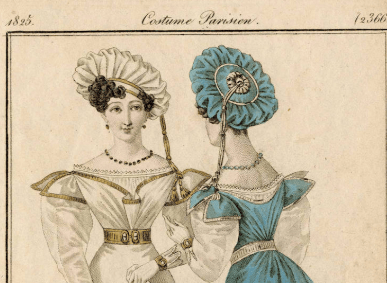
The Romantic Era in the French Beauty History series, in France brought a new kind of shift, a dramatic one. After the rational, neo-classic restraint coming from the late 18th century, this new era embraced emotion, sensuality and a return to nature. During 1820s-1840s, beauty became what one may refer to as poetic, dreamy and expressive, mirroring the era’s literature, music and painting.
During this next era, women had been encouraged to embody delicacy, softness, emotional sensitivity, delicate, ethereal and a slight melancholy (seen as artistic, not depressive. This derived from romantic literature, romantic painting, romantic music, the cultural obsession with emotion over reason and the rejection of Neo-classic restraint. Women were idealized as fragile, expressive, spiritually attune, and naturally beautiful.
This was the age of Victor Hugo, Delacroix, and Chopin, and their vibe shaped this romantic era.
Romantic era beauty ideals consisted of pale, luminous skin; soft, rosy cheeks; natural, expressive brows; large, luminous eyes; glossy, dark hair; and a “tender” mouth.
The overall effect was fragile beauty, which was a face that looked touched by emotion, poetry, and inner life.
Cosmetics & Ingredients of the Era
French women used gentle, natural preparations inspired by apothecary traditions. This included rosewater, almond oil, violet powder, carmine and cold creams.
- Rosewater for cleansing and softening
- Almond oil for moisture
- Violet powder for scent and complexion
- Carmine for lip and cheek tint
- Cold creams (beeswax + almond oil + rosewater) for skin protection
Cosmetics were subtle and meant to enhance natural beauty rather as opposed to transform a woman’s natural beauty.
Hairstyles & Silhouette Influence
The Romantic silhouette was narrow at the waist, sloping shoulders, flowing sleeves, all of which were by influenced beauty.
- Hair was parted in the centre and styled in soft curls around the face.
- Braids, ribbons, and floral accents were common.
- The goal was to frame the face with softness and movement.
This was the opposite of the rigid and powdered typical hairstyles of the 18th century.
Cultural Context
This is an era that was deeply emotional and introspective. Beauty reflectioed nature, melancholy, individuality and artistic sensitivity.
- Nature — flowers, wind-blown hair, soft textures
- Melancholy — a gentle sadness seen as refined
- Individuality — expressive eyes and natural features
- Artistic sensitivity — beauty as a reflection of inner feeling
Women were encouraged to look like tender and soulful.

Why This Era Matters in French Beauty History
The Romantic Era established the French ideal of effortless, natural beauty, which was a philosophy that still shapes the French vibe that has resonated with French beauty today. It introduced minimal makeup, to celebrate natural features and the emotional side.
- The preference for minimal makeup
- The celebration of natural features
- The idea that beauty should feel emotional.
It is one of the most influential periods in shaping modern French beauty culture.
I’m Stacey Hobbs, thanks for reading Face by Stace! Until next time.
do you feel fabulous today?
 Face by Stace