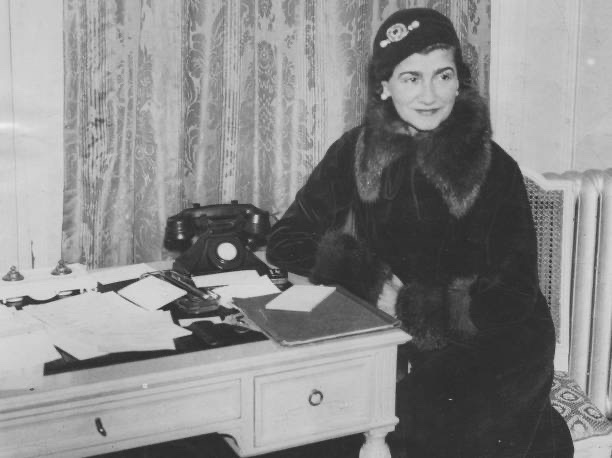
When the war ended in 1945, the balance of power between Chanel and the Wertheimers shifted decisively. Chanel returned to a France re-building itself, but her attempt to seize Parfums Chanel had left a trail of legal complications and reputational strain. The Wertheimers, meanwhile, had survived the war with their business intact — protected by the ownership transfer to Félix Amiot — and were ready to reclaim full control.
Pierre Wertheimer quietly resumed leadership of Parfums Chanel and began the process of re-building the fragrance house. Factories were restored, distribution networks re‑established, and No. 5 was positioned for a new era of global expansion. Chanel, recognizing that the wartime attempt had failed and that the Wertheimers held every legal advantage, entered negotiations. The result was a settlement that re-shaped the future of the brand.
The Wertheimers agreed to finance Chanel’s return to couture. They funded the re-opening of her fashion house in 1954, covering her operating costs and giving her the freedom to design without financial pressure. In exchange, Chanel accepted the existing ownership structure of Parfums Chanel — the Wertheimers retained control, and she continued to receive her share of profits.
It was an un-easy peace, but a lasting one. Chanel regained her place in fashion, launching the iconic 1954 comeback collection that redefined post‑war elegance. The Wertheimers, meanwhile, transformed Parfums Chanel into a global luxury powerhouse, expanding No. 5 into the American market and building the foundation of the modern Chanel empire.
By the time Chanel died in 1971, the Wertheimer family had become the stewards of her legacy — not through force but through strategy, investment, and an understanding of how to scale luxury in the modern world. The empire that bears her name today exists because of both sides of the conflict: Chanel’s vision and the Wertheimers’ business acumen.
What This Conflict Reveals About Chanel
The Wertheimers conflict exposes a side of Chanel that is often overshadowed by the mythology surrounding her name. It reveals a woman who understood the power of branding long before the term existed, yet struggled with the realities of modern business. Chanel was visionary, ambitious, and fiercely protective of her identity — but she was also impulsive, uncompromising, and willing to take morally fraught actions when she felt her legacy slipping out of her hands.
Her attempt to seize Parfums Chanel during the war shows how deeply she believed No. 5 belonged to her alone. Her resentment toward the Wertheimers underscores her discomfort with collaboration and her desire for absolute control. And yet, the post‑war settlement demonstrates a paradox at the heart of her story: Chanel needed the Wertheimers as much as she fought them. Their investment, infrastructure, and long‑term strategy built the global empire her creativity inspired.
In the end, the conflict reveals a truth that defines the modern Chanel brand. The house was shaped by two forces — Chanel’s aesthetic genius and the Wertheimers’ business acumen. The elegance, the mythology, the global reach: none of it exists without both sides of the struggle. The empire that bears her name is not the product of a single woman, but of a tension that pushed the brand into the future.
I’m Stacey Hobbs, thanks for reading. Until next time!
do you feel fabulous today?
 Face by Stace