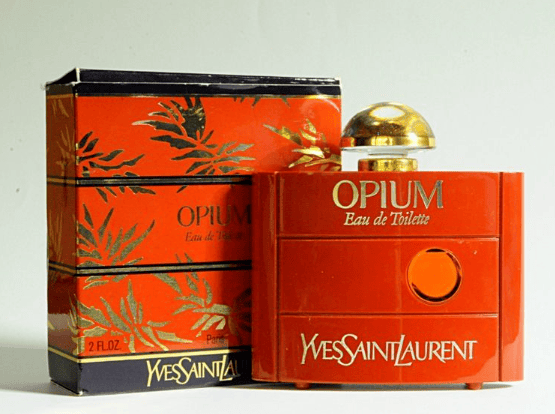
The 1970s were Yves Saint Laurent’s most decadent decade — a period defined by excess, sensuality, and a new kind of glamour that blurred the line between fashion, nightlife, and fantasy. If the 1960s established Saint Laurent as a revolutionary designer, the 1970s crowned him as a cultural force. His work didn’t just reflect the era; it shaped it. And nowhere is this more evident than in the creation of Opium, the fragrance that became both a symbol of the decade’s indulgence and one of the most controversial launches in beauty history.
The Mood of the 1970s: Nightlife, Fantasy,
and Escape
By the early 1970s, Saint Laurent had become synonymous with a particular kind of Parisian glamour — one that thrived after dark. The decade’s cultural mood leaned toward escape: disco clubs, exotic travel, sensual fabrics, and a fascination with the East. Saint Laurent absorbed all of it, translating the era’s hedonism into collections that felt cinematic, luxurious, and un-apologetically bold.
His runways glowed with gold lamé, velvet, embroidery, and silhouettes that moved like smoke. The YSL woman of the 1970s was not simply fashionable; she was magnetic. She lived in kaftans, tuxedos, turbans, and jewels that caught the light. She was a creature of nightlife — glamorous, mysterious, and slightly dangerous.
Opium: The Fragrance That Defined a Decade
In 1977, Saint Laurent released Opium, a fragrance that captured the decade’s spirit with almost provocative precision. It was rich, spicy, resinous, which was a departure from the fresh florals dominating the market. Opium smelled like lacquered boxes, incense, silk, and heat. It was sensual, hypnotic, and deliberately excessive.
The name alone sparked controversy. Critics accused Saint Laurent of glamorizing addiction; supporters praised him for daring to push beauty into new territory. The campaign imagery, a reclining woman, jewel-toned fabrics, and an atmosphere of erotic mystery, cemented Opium as more than a perfume. It was a cultural statement.
Opium became one of the most successful fragrance launches in history. It defined the YSL woman of the 1970s: bold, glamorous, and un-afraid of indulgence.
Fashion as Fantasy: YSL’s Eastern Influence
Saint Laurent’s fascination with Eastern aesthetics reached its peak in the 1970s. His collections drew inspiration from China, Japan, India, and North Africa, not as literal reproductions, but as imaginative re-interpretations. He created clothing that felt like artifacts from a dream: embroidered jackets, silk tunics, brocade gowns, and accessories that shimmered like treasure.
This fantasy-driven aesthetic aligned perfectly with the decade’s appetite for escape. The world was changing — politically, socially, economically — and Saint Laurent offered beauty as refuge. His designs allowed women to step into a different reality, one filled with colour, texture, and sensuality.
The YSL Woman: Glamour Without Apology
The YSL woman of the 1970s was unlike any fashion archetype before her. She was glamorous, but not fragile. Sensual, but not submissive. She wore tuxedos with the same ease as she wore silk gowns. She moved through the world with confidence, mystery, and a touch of danger.
Saint Laurent understood that glamour was not just about clothing — it was about attitude. His designs gave women permission to be bold, to take up space, to embrace beauty as power. In the 1970s, glamour became a form of self-expression, and Saint Laurent was its most influential architect.
Opium’s Legacy: Excess as Art
Opium’s impact extended far beyond its launch year. It became a symbol of the decade’s aesthetic, lush, indulgent, and dramatic. It also marked a turning point in beauty advertising, introducing a new dialogue built on fantasy, sensuality, and narrative.
Saint Laurent’s 1970s work remains some of the most referenced in fashion history. Designers still borrow from his silhouettes, his colour palettes, and his theatrical approach to glamour. Opium continues to be one of the most iconic fragrances ever created, a reminder of a decade when beauty was allowed to be extravagant.
The 1970s: YSL’s Decade of Glamour
The 1970s were Yves Saint Laurent’s most intoxicating era — a decade where fashion, fragrance, and fantasy collided. Opium remains its most enduring symbol, capturing the excess, sensuality, and glamour that defined both the designer and the world he shaped.
Saint Laurent didn’t just design clothing. He designed a mood — and in the 1970s, that mood was pure and glamourous.
I’m Stacey Hobbs, thanks for reading. Until next time!
do you feel fabulous today?
 Face by Stace