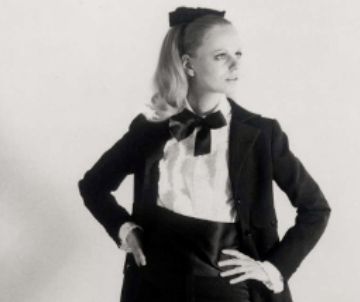
When Yves Saint Laurent introduced Le Smoking in 1966, he wasn’t simply designing a garment, he was re-writing the visual language of modern femininity. The tuxedo, long considered an exclusive symbol of masculine power, was re-engineered through Saint Laurent’s architectural eye: sharp lines, elongated proportions, and a deliberate tension between structure and sensuality.
Le Smoking was radical not because it was loud but because it was controlled. It offered women an alternative to the evening gown, an uniform of authority, eroticism, and restraint. In Saint Laurent’s hands, tailoring became a political act. The suit framed the body without exposing it, asserting presence through silhouette rather than skin. It was elegance stripped to its essentials.
The cultural impact was immediate. Photographers, editors, and avant‑garde artists recognized Le Smoking as a visual manifesto. Helmut Newton’s 1975 image of the tuxedo-clad woman in a Paris alleyway cemented the suit as an icon of modern power; a woman who occupies space.
More than a garment, Le Smoking marked the beginning of a new aesthetic — one that allowed women to claim the codes of menswear without surrendering their identity. It remains one of Saint Laurent’s most enduring contributions to fashion; a symbol of autonomy, sophistication, and the quiet force of a perfectly cut jacket.


I’m Stacey Hobbs, thanks for reading. Until next time!
do you feel fabulous today?
 Face by Stace