The Great Depression hit both Canada and the United States with devastating force, but the experience was not identical. The two countries entered the crisis differently, suffered differently, and responded differently. When you place these two countries side by side, the contrast reveals how geography, politics, and economic dependency shaped the fate of millions.


1. The Shock: America’s Collapse vs. Canada’s Contagion
The Depression began in the United States with the 1929 stock market crash — a collapse of speculation, credit, and confidence. America’s economy imploded from within.
Canada’s collapse was external. As a resource‑exporting nation, Canada depended heavily on American and British demand for wheat, lumber, minerals, and manufactured goods. When the U.S. economy fell, Canada’s export markets evaporated. The shock was imported, not self‑generated.
America fell first.
Canada fell because America fell.
2. Un-employment: Parallel Suffering, Different Scale
Both countries saw un-employment soar, but Canada’s rate climbed even higher.
- United States: roughly 25% un-employment at the peak
- Canada: estimates reach 27%–30% in some regions
Canada’s smaller, more export‑dependent economy meant that when global demand collapsed, entire industries, wheat farming, mining, forestry, were wiped out almost overnight.
3. Social Impact: Urban Despair vs. Rural Catastrophe
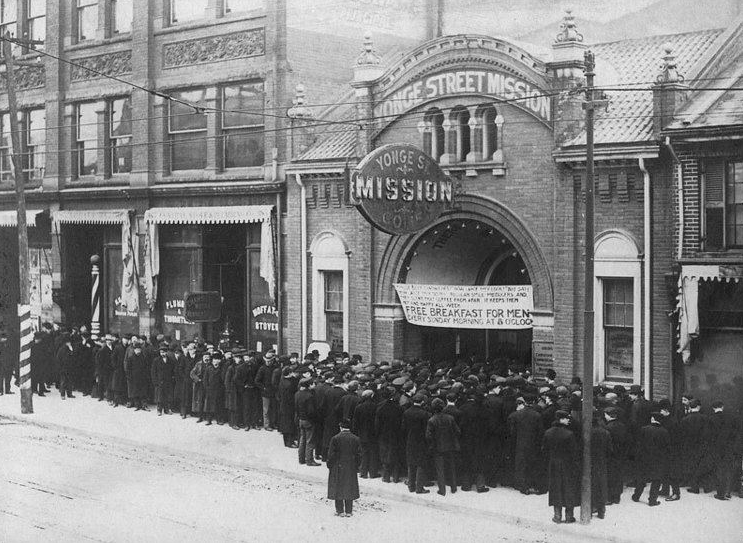
In the United States, the Depression is remembered through images of breadlines, Hoovervilles, and urban un-employment. Cities bore the brunt of the crisis.
In Canada, the suffering was more rural. Prairie farmers faced drought, dust storms, crop failure, and collapsing wheat prices. The Depression and the Dust Bowl overlapped, creating a double disaster. Rural poverty became national trauma.
America’s Depression was industrial.
Canada’s Depression was agricultural.
4. Government Response: The New Deal vs. Reluctant Relief
The United States responded with bold federal intervention. President Franklin D. Roosevelt’s New Deal re-shaped American governance: public works, social programs, banking reform, labour protections, and national relief.
Canada’s response was slower, smaller, and more cautious. Prime Minister R. B. Bennett introduced relief programs and work camps, but nothing on the scale or ambition of the New Deal. Political hesitation, constitutional limits, and provincial‑federal tensions slowed action.
Canada eventually adopted social reforms, un-employment insurance, federal relief coordination, but only after years of pressure and political upheaval.
America reinvented government.
Canada improvised government.
5. Political Consequences: Transformation vs. Turbulence
The Depression re-shaped American politics permanently. It cemented the Democratic Party’s dominance, expanded federal power, and redefined the social contract.
Canada’s political landscape fractured:
- The rise of new parties (CCF, Social Credit)
- Regional alienation
- Western anger over federal inaction
- A national debate over federal vs. provincial responsibility
The Depression didn’t just hurt Canada economically; it re-shaped its political identity.
6. Recovery: Parallel Climb, Shared Catalyst
Both countries began recovering slowly in the late 1930s, but true economic revival came with World War II. Wartime production, military mobilization, and industrial expansion pulled both nations out of the Depression.
The recovery was not ideological. It was industrial.
I’m Stacey Hobbs, thanks for reading! Until next time.
do you feel fabulous today?
 Face by Stace