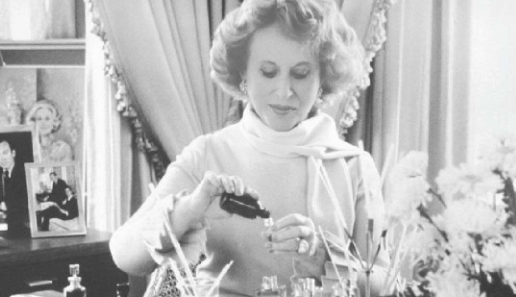
Estée Lauder was not simply a beauty founder, she was a visionary who re-shaped the modern cosmetics industry. Her story is one of ambition, intuition and relentless determination. She understood women, she understood desire and she understood the power of transformation long before beauty became a global business. Her rise from a modest New York upbringing to the helm of a world‑renowned empire is one of the most compelling stories in beauty history.
Born Josephine Esther Mentzer in 1906, Estée grew up in Queens, New York, where her fascination with skincare began early. Her Hungarian uncle, a chemist, taught her how to mix creams and taught her the belief that skin could be improved not just covered. These early formulations became the foundation of her future brand. Estée believed in results and she believed in touch. She insisted on demonstrating products directly on women’s faces, a technique that would later become her signature.
Her early career was built on hustle. Estée sold creams in beauty salons, at social clubs and eventually in department stores. She approached women directly, offering samples, performing demonstrations and speaking with conviction. She understood that beauty was personal and that women wanted to feel seen. Her charisma was magnetic. Her confidence was un-wavering. She made women believe in her products because she believed in them herself.
Estée’s breakthrough came when Saks Fifth Avenue agreed to carry her products. It was a turning point that transformed her from a determined entrepreneur into a rising force in luxury beauty. She revolutionized the industry with her marketing innovations. The “gift with purchase,” now a standard in cosmetics was her invention. She believed that generosity built loyalty and she was right. Women returned not just for the products but for the experience.
Her brand philosophy was simple: “Telephone, telegraph, tell a woman.” She understood word‑of‑mouth better than any marketer of her time. She knew that women trusted other women and she built her empire on that trust.
The 1960s became Estée Lauder’s defining decade. As beauty culture shifted toward modernity, youthfulness and global glamour, Estée positioned her brand at the centre of the movement. Her fragrances, especially Youth‑Dew, became cultural phenomena. Her skincare lines promised radiance, elegance and transformation. Her counters became destinations. Her blue‑and‑gold packaging became symbols of prestige.
Estée’s influence extended beyond products. She shaped how beauty was sold, how it was marketed and how women experienced it. She trained her saleswomen meticulously, insisting on elegance, knowledge and personal connection. She believed that beauty advisors were storytellers, more accurately ambassadors of confidence and glamour.
Her legacy is immense. Estée Lauder Companies grew into one of the largest beauty conglomerates in the world, encompassing brands like Clinique, MAC, Bobbi Brown, La Mer, Tom Ford Beauty, and Jo Malone. But at its core remains Estée’s original philosophy: beauty is personal, beauty is emotional and beauty is transformative.
Estée Lauder’s story is not just the history of a brand, it is the history of modern beauty itself. Her vision shaped the industry. Her innovations changed how women shop. Her determination built an empire. And her legacy continues to influence every corner of the beauty world today.
I’m Stacey Hobbs, thanks for reading Face by Stace! Until next time.
do you feel fabulous today?
 Face by Stace