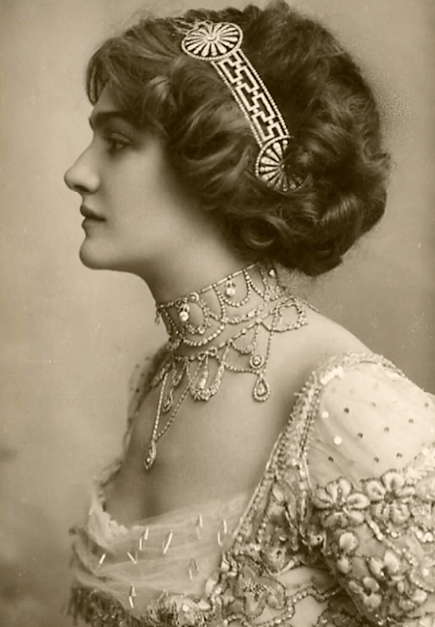
The Belle Époque ushered in a new era of optimism, modernity and indulgence and beauty culture blossomed accordingly. If the Second Empire prized ethereal delicacy, the Belle Époque celebrated radiance, vitality and cosmopolitan glamour. Paris became the global capital of beauty innovation with perfumers, hairdressers and cosmetic houses transforming the city into a laboratory of modern femininity of the time.


A New Ideal of Femininity
Beauty shifted from aristocratic fragility to modern vitality. Women embraced a look that suggested leisure, health and sophistication. The complexion remained pale but now with a natural flush — a sign of promenades, cafés, cycling and outdoor life.
The Rise of the Modern Beauty Industry
Cosmetic houses flourished:
- Guerlain expanded its powders and rouges
- Houbigant dominated perfumery
- Leichner introduced theatrical makeup that filtered into everyday use
Beauty became commercial, accessible and aspirational — no longer confined to aristocratic circles.
Hairstyling Softens and Modernizes
The French interpretation of the Gibson Girl silhouette brought:
- airy pompadours
- soft waves
- romantic looseness
- early professional hairdressing techniques
Hairdressers like Antoine de Paris would soon revolutionize styling entirely but the Belle Époque laid the groundwork for the 20th‑century beauty industry.
Perfume as Identity
Fragrance became a personal signature. Popular notes included violet. heliotrope. rose and mimosa.
Perfume was no longer merely decorative — it was now an extension of personality.
Beauty and Modern Life
Electric lighting, department stores and photography transformed how women saw themselves. Beauty was no longer private; it was part of public life. Women curated their appearance for theatres, cafés and boulevards. This era marked the beginning of beauty culture as we know it today — modern, expressive and deeply intertwined with lifestyle.
I’m Stacey Hobbs, thanks for reading Face by Stace! Until next time.
do you feel fabulous today?
 Face by Stace