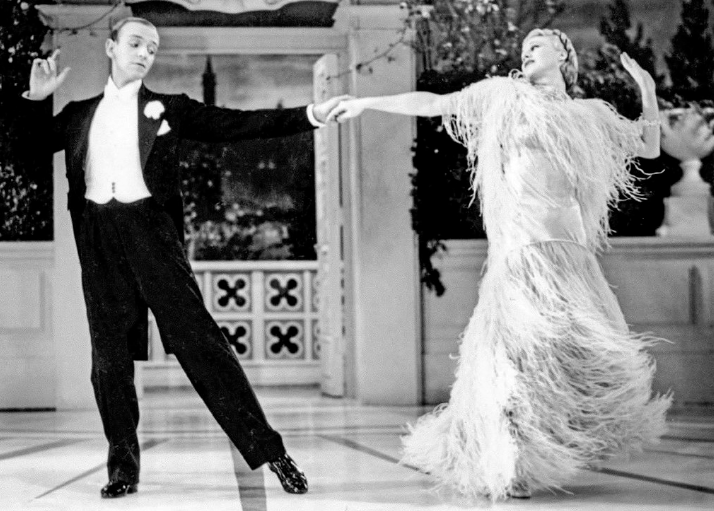
Few costumes in film history are as controversial as the pale blue ostrich‑feather gown Ginger Rogers wore in Top Hat (1935) for the “Cheek to Cheek” number. Designed by Bernard Newman, the dress became a symbol of 1930s glamour.

It is, quite simply, one of the most iconic dance gowns ever created.
A Dress Made to Float
Ginger wanted a gown that would move like a cloud. A gown that was soft, romantic and ethereal. She personally requested ostrich feathers, believing they would create a dreamy halo around her body as she danced.
The final gown featured hundreds of hand‑sewn ostrich feathers; a fitted, bias‑cut silhouette; a pale, icy blue hue that shimmered under studio lights; and a skirt engineered to ripple with every step.
On camera, it looked like she was gliding through air.
The Infamous Feather Fallout
What audiences didn’t see was the chaos behind the scenes.
During rehearsals, the feathers shed everywhere, sticking to Astaire’s tuxedo, floating across the set, and disrupting takes. Fred Astaire, famously meticulous, a perfectionist was furious. He called it:
“a god‑damned feathered monstrosity.”
But Ginger refused to give it up. She believed in the dress, as it turns out, she was right.
The costume team reinforced the gown overnight, stitching each feather more securely. By the time cameras rolled, the shedding was under control… for the most part.
The Magic on Screen
Despite the chaos, the final result is breathtaking. As Ginger and Fred glide across the floor, the feathers create a soft, floating movement, this became a visual of Irving Berlin’s romantic melody.
The gown enhances Ginger’s sweeping turns. the fluidity of her arms and the illusion that she’s weightless
It’s fashion as choreography.
A Dress That Changed Costume Design
The ostrich‑feather gown influenced Hollywood costume design for years:
- feathers became synonymous with cinematic glamour
- designers began engineering gowns specifically for movement
- the idea of “motion fashion” — clothes designed to perform — took hold
Ginger’s insistence on beauty in motionhelped redefine how dance costumes were conceived.
Why the Ostrich Dress Endures
Nearly ninety years later, the gown remains iconic because it represents:
- the height of 1930s glamour.
- the tension and brilliance of the Astaire–Rogers partnership.
- the power of costume to elevate a performance.
- the magic that happens when fashion and movement become one.
It is the dress that turned a dance number into legend.
I’m Stacey Hobbs, thanks for reading. Until next time!
do you feel fabulous today?
 Face by Stace