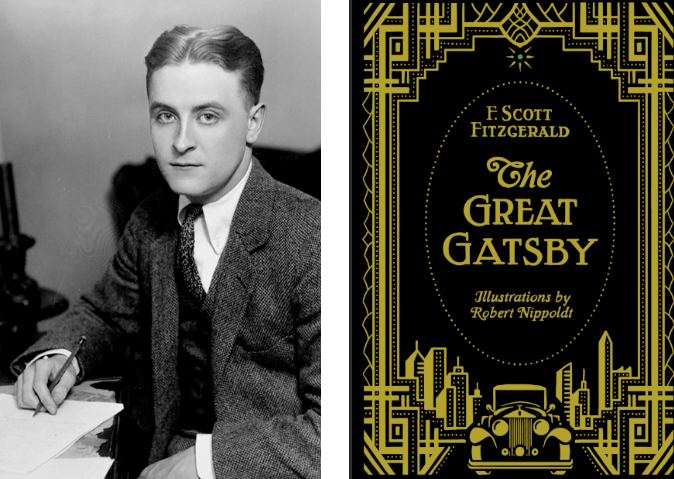
Have you read The Great Gatsby by F. Scott Fitzgerald, published in 1925? It’s fabulous, isn’t it? It’s a classic for a reason. When The Great Gatsby hadn’t yet become the cultural giant it would become, particularly in decades to come. This book that felt like Fitzgerald was writing a story, a fictionalized story based on real people in his real life, real events. Sure enough he was. And yet, The Great Gatsby is a fictional novel inspired by real people, events, and the Jazz Age lifestyle, but it is not a literal true story.
The Great Gatsby captured something essential about the decade. This would be the glittering surface of the Jazz Age and the darker under-current beneath it. Over time, the novel became the definitive portrait of the 1920s, shaping how we imagine the era even more than historical records.

1. Gatsby defined the visual language of the 1920s
Even though Fitzgerald didn’t set out to write a fashion manual of the Jazz Age, the novel crystallized the look of the decade anyway with its shimmering beaded dresses, champagne‑lit parties, bobbed hair, cupid’s bow lips, tuxedos and white dinner jackets and Art Deco glamour.
Designers, filmmakers and fashion houses still draw from Gatsby when referencing the Jazz Age. Every time a brand releases a “1920s‑inspired” collection, it’s really a Gatsby collection.
Baz Luhrmann’s 2013 film only amplified this but the aesthetic existed long before, this film came into existence, which it was based off of the ever so iconic novel The Great Gatsby. How many people heard of the novel before the 2013 movie?
2. It shaped the understanding of the
“American Dream”
The cultural impact of The Great Gatsby shaped the understanding of the “American Dream” but it also influenced the way the dream within itself was perceived and pursued. Gatsby turned the idea of reinvention into a cultural standard with self-creation, ambition, glamour, longing and the illusion of success.
Gatsby became a standard idea that you can become someone through style, performance and desire.
3. It immortalized the flapper and the Jazz Age
Daisy Buchanan became the archetype of the flapper. Flappers at the time in the 1920s were deemed as the modern woman, the woman who rejects Victorian constraints and the woman who lives for pleasure, beauty and sensation. Typically middle-class women.
Even though Daisy is morally ambiguous, her image shaped the following:
- 1920s make-up trends
- 1920s haircuts
- the birth of youth culture
- the idea of nightlife as liberation
4. It captured the dark side of glamour
In addition to The Great Gatsby’s glitz and glamour, it captured the dark side of glamour. This may be the very reason as to why the novel still feels modern, or at the very least timeless.
Behind the glitter lies class divides, corruption, excess, emotional emptiness and the cost of reinvention.
This duality of beauty + decay, is why Gatsby continues to inspire fashion editorials, museum exhibitions and cultural essays.
It’s pretty. It’s tragic. And that tension has a tendency to be irresistible.
5. Gatsby shaped how we imagine the 1920s, more than history ever did
The Great Gatsby had done more than just reflect the Jazz Age, it created the version of the Jazz Age that lives in our cultural memory to this very day.
When people picture the 1920s, they picture Gatsby’s world; the music, the parties, the fashion, the decadence and the longing.
It’s the novel that turned the decade into a something mythical, which is one interpretation, one perception.
I’m Stacey Hobbs, thanks for reading Face by Stace! Until next time.
do you feel fabulous today?
 Face by Stace