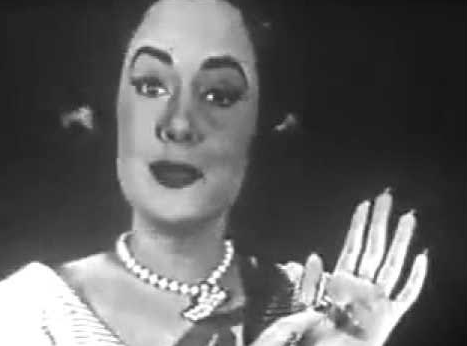
The invention of the long-lasting lipstick was invented in 1950.
Canadian-American woman, Hazel Bishop, and her 1950 “kiss‑proof” lipstick is one of the most important beauty inventions of the 20th century.

Hazel Bishop’s Kiss‑Proof Lipstick (1950)
The first commercially successful long‑lasting lipstick was invented in 1950 by Hazel Bishop, a chemist and entrepreneur from New York, with Canadian family roots. Her formula was revolutionary, a smudge‑proof, non‑transfer lipstick that stayed on the lips instead of rubbing off on cups, cigarettes or clothing.
Bishop’s innovation used a blend of lanolin, dyes, and volatile oils that evaporated after application, leaving behind a stain‑like pigment that adhered to the lips. It was the first lipstick marketed as “kiss‑proof” — a phrase that became a cultural phenomenon.
The Advertising Breakthrough Bishop’s marketing was as groundbreaking as the formula itself. Ads proclaimed:
“It stays on YOU… not on HIM.”
This was the first time a beauty product was openly marketed around dating, kissing, and modern female autonomy. It sold out instantly.
The Impact on 1950s Beauty CultureHazel Bishop’s invention reshaped the decade:
- Women could wear bold red lips without constant reapplication
- It aligned with the decade’s polished, camera‑ready aesthetic
- It triggered a massive industry shift toward long‑wear formulas
- It launched the first major beauty‑industry advertising war (Bishop vs. Revlon)
By 1953, Bishop’s company was worth $10 million — an astronomical figure for the time.
The Revlon Rivalry
Revlon immediately copied the concept and launched “Colour‑Stay” lipsticks, sparking one of the most aggressive advertising battles in beauty history. This competition cemented long‑lasting lipstick as a staple of 1950s glamour.
Modern Reality Check
Modern long‑wear lipsticks use safer pigments, film‑formers and silicone polymers. Hazel Bishop’s original formula was groundbreaking but drying, and early dyes could irritate sensitive skin. Today’s long‑wear lipsticks are far more comfortable and dermatologically tested.
I’m Stacey Hobbs, thanks for reading. Until next time!
do you feel fabulous today?
 Face by Stace