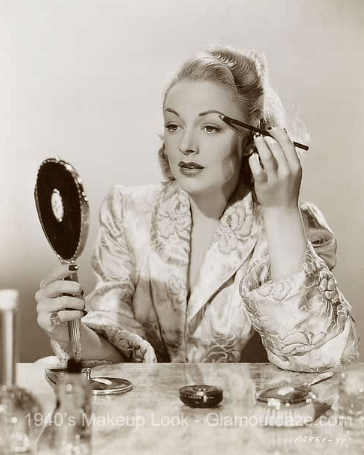
As substitutes for mascara and brow colour when cosmetics were scarce, women in the 1930s, primarily in the 1940s during wartime, relied on creativity.


Burnt cork became one of the most ingenious beauty hacks of World War II, used by women across Canada, Britain, and the United States when cosmetics were scarce or rationed. With factories diverted to wartime production and essential ingredients like alcohol, petroleum, and metals tightly controlled, makeup became difficult to obtain. To maintain morale and keep up appearances, women turned to a resourceful substitute. This substitute in this case was the soot of a charred wine cork.
The 1940s Application Method
Charring the Cork
Women held a natural wine cork over a candle flame or match until the tip was thoroughly blackened with soot. This is a technique borrowed from pre‑war theatrical make-up.
Cooling the Cork
The cork was preferred to cool completely to avoid burning the delicate eye area.
Eyebrow Filling
The charred tip was rubbed directly onto the brows in short, hair‑like strokes to deepen colour and fill sparse areas.
Homemade Mascara
For lashes, the soot was scraped off the cork and mixed with a dab of petroleum jelly or cold cream. The mixture was then applied with a clean spoolie or a small stiff brush, creating a makeshift mascara.
This method was so common that it appeared in official wartime beauty guides, including British Ministry of Information pamphlets and North American home‑front magazines.
Why Women Used Burnt Cork
Burnt cork was a clever hack, as well as it was one of the safer homemade options compared to other wartime substitutes like boot polish, lampblack or ink. It was inexpensive, accessible and effective at a time when beauty products were considered essential to morale.
The Modern Reality Check
(Why to Avoid This Today)
While resourceful for the 1940s, using burnt cork near the eyes carries significant health risks by modern standards:
Carcinogen Exposure
Burning organic material creates polycyclic aromatic hydrocarbons (PAHs), known carcinogens that can irritate and damage skin.
Severe Eye Irritation
Loose soot particles can fall into the eye, causing corneal scratches, inflammation or blocked tear ducts.
Bacterial Infections
Mixing un-preserved ash with petroleum jelly creates a moist environment where bacteria can thrive, it is especially dangerous near the eyes.
This is documented in:
- British Ministry of Information wartime guides
- American Home Front beauty manuals
- Women’s magazines like Woman’s Own and Ladies’ Home Journal
- Oral histories from the Imperial War Museum
- The Housewife’s Handbook to Wartime Beauty (UK, 1942)
- U.S. Office of Civilian Defense beauty pamphlets
- Oral histories from the Women’s Land Army
I’m Stacey Hobbs, thanks for reading. Until next time!
do you feel fabulous today?
 Face by Stace