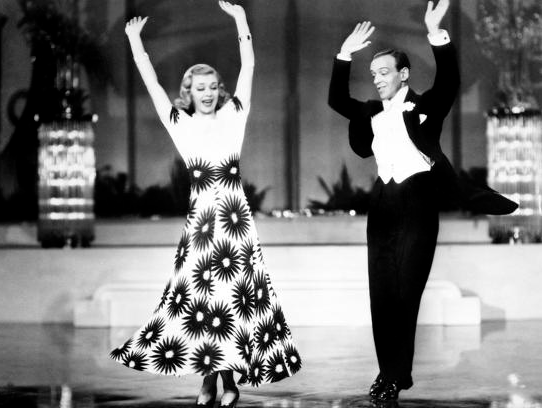
Fred Astaire and Ginger Rogers are known for their dance sequences in their multiple ever so popular classic musicals throughout the duration of the 1930s, with their pairing that began as supporting characters in a film called Flying Down to Rio (1933). Their duo stole the spotlight which lead to the two of them launching their first film, The Gay Divorcee (1934) , the first of soon-to-be many films. Astaire and Rogers were known for their dances, as much as they were known for their fashion, their style, contributing to fashion history. Their costumes shaped 1930s style, inspired designers and elegance that still influences fashion and style today.
These are the ten looks that defined their legacy.
1. Ginger’s Ostrich‑Feather “Cheek to Cheek” Gown (Top Hat, 1935)
The gorgeous, elegant, pale blue, gown that floated like a cloud across the dance floor shed feathers everywhere. Despite the backstage chaos this dress had encountered, it became the most iconic dance dress in Hollywood history.
2. Fred’s White Tie & Tails (Top Hat, 1935)
Astaire perfected the attire of top hat, white tie and tails apparel with such class. With razor‑sharp tailoring, long lines and effortless movement in this solo dance sequence he choreographed as well.. This look became the gold standard for men’s eveningwear.
3. Ginger’s Bias‑Cut Silver Lamé Gown
(Swing Time, 1936)
Slinky, liquid, and sculpted to her body, this gown defined 1930s glamour. It inspired decades of bias‑cut eveningwear.
4. Fred’s Two‑Tone Shoes (Multiple Films)
His signature black‑and‑white shoes became a menswear phenomenon. They added rhythm, contrast and a touch of swagger to every step.
5. Ginger’s Ruffled “Never Gonna Dance” Gown (Swing Time, 1936)
A dramatic, floor‑length gown with cascading ruffles made for graceful movement. It is high fashion at its finest.
6. Fred’s Soft, Unstructured Evening Jacket (Shall We Dance, 1937)
Astaire modernized menswear by replacing stiff tailoring with fluid, dance‑friendly jackets. Designers still reference this style today.
7. Ginger’s Black Velvet Gown with Sheer Sleeves (Shall We Dance, 1937)
Elegant, architectural, and sensual without being revealing. The sheer sleeve trend traces back to this look.
8. Fred’s Knit Tie & Casual Ascot (Various Films)
Astaire made elegance in a relaxed manner fashionable. His knit ties and ascots became staples of 1930s menswear. It was all the rage.
9. Ginger’s Feathered Cape & Gown Ensemble (Carefree, 1938)
A dramatic, ethereal look that showcased her signature “motion fashion.” The cape floated like smoke behind her.
10. Their Matching Black‑and‑White Ballroom Looks (The Gay Divorcee, 1934)
The moment that established Fred Astaire’s and Ginger Rogers’ visual identity as a duo with their clean lines, monochrome elegance, their chemistry on screen and perfect symmetry.
I’m Stacey Hobbs, thanks for reading. Until next time!
do you feel fabulous today?
 Face by Stace