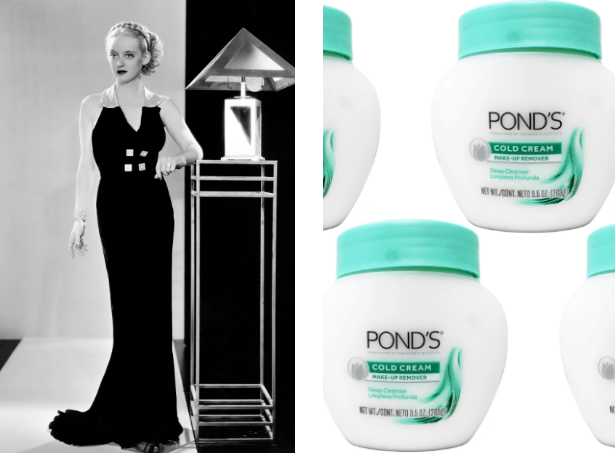
The 1930s beauty ritual that protected Golden Age Hollywood’s brightest eyes.
Davis applied thick cold cream under her eyes before she would film her scenes. This would prevent dryness from studio lights.
Bette Davis had these beautiful, round, large eyes, that became a famous feature of hers with these eyes shining so brightly. She had the eyes of 1930s and 1940s cinema. Bette Davis relied on this beauty trick, that is cold‑cream eye mask. Sounds interesting, doesn’t it? She wore on set to protect her skin from the brutal studio lights.
Why Bette Needed This Ritual
Early Hollywood lighting during the early years as these studio lights and early Hollywood was evolving from it’s beginning roots in the early to mid-1910’s or around that time to 1930s when “talkies” had just came to light about five years in when Bette Davis made her debut, more importantly, her breakthrough. Early Hollywood lights were intense, hot, drying and relentless. The powerful carbon‑arc lamps used on set could seep hydration (for some moisture, as well) from the skin within minutes. A little on the dangerous side. For an actress whose eyes were her signature, Bette Davis needed a way to keep the delicate under‑eye area hydrated, soothed and to be ready.
Her solution was simple, old‑school and incredibly effective. Davis’ trick was to add a thick layer of Pond’s (yes, Bette Davis loved her brand of choice for cold cream, that being Pond’s) cold cream applied under her eyes in between takes.
While other actresses powdered and re-powdered, Bette opted for protected instead. And Pond’s cold cream was also used by some actors/actresses as a make-up primer if Vaseline was not used. Pond’s cold cream served multiple purposes including in this case with Bette Davis.
How the Cold‑Cream Eye Mask Worked
Bette’s technique was straightforward but delivered intentionality. To emulate Davis’ trick, apply a generous layer of cold cream (often Ponds or a studio‑approved equivalent, she would use). Davis would then apply the cold cream under the eyes and across the upper cheekbones. She left the cold cream on during rehearsals, lighting adjustments and in her down-time. Afterwards, she would gently wipe away before filming.
The cream acted as a barrier — locking in hydration in Bette’s case, moisture for others, while preventing creasing and keeping her skin supple under the heat of the studio lights. Those studio lights can be rough and it was rough, particularly in those days.
Make‑up artists loved it because it kept her skin smooth. Cinematographers loved it because it prevented dehydration (or dryness for others) that could catch the light. Bette loved it because this under eye cold cream mask worked.
Why Does Bette Davis’ Cold Cream Under Eye Mask Remain Relevant Today?
- it hydrates deeply
- it plumps fine lines
- it preps the skin for concealer
- it reduces irritation from long wear
- it’s gentle, inexpensive and timeless
It’s basically equivalent to today’s under eye patches, but in this case with Bette Davis the vintage version.
Why Did the Pros Like it or Love this Trick?
Bette’s cold‑cream mask is essentially an early trick, a technique still used by make‑up artists today to:
- prevent concealer from cracking
- keep the under‑eye area luminous
- protect the skin during long shoots
- maintain a smooth texture under powder
It’s a classic example of how vintage beauty often predicted what would transform into a modern technique. In this case under eye patches from Bette Davis’ Cold-Cream Eye Mask, which by the way is perfect for all skin types.
I’m Stacey Hobbs, thanks for reading. Until next time!
do you feel fabulous today?
 Face by Stace