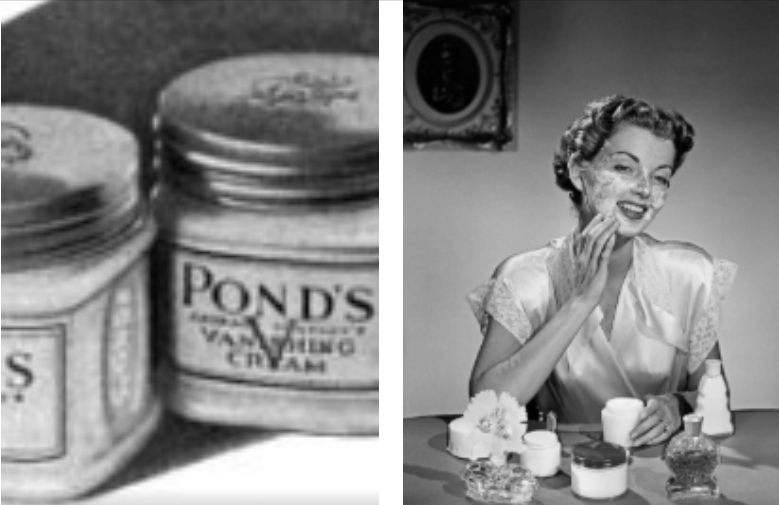
Cold cream is one of beauty’s oldest survivors — a product that has travelled from ancient ritual to modern vanity without ever losing relevance. Its story begins in ancient Greece, where physician Galen created the first known cold cream in the 2nd century CE. His formula blended beeswax, olive oil, and rosewater, producing a cooling emulsion that soothed skin in a hot Mediterranean climate. It was both practical and luxurious, used by women of status to cleanse, soften and protect their complexion.
As cold cream moved through the centuries, its formula evolved but its purpose remained constant: moisture, cleansing, and comfort. By the Renaissance, it had become a staple among European nobility. Apothecaries refined Galen’s recipe, adding floral waters and botanical oils, transforming cold cream into a symbol of refinement and self‑care.

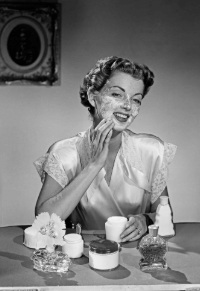
The true cultural shift arrived in the late 19th and early 20th centuries, when brands like Pond’s, Daggett & Ramsdell, and Pompeian commercialized cold cream for the modern woman. Heavy glass jars, metal lids and early advertising positioned cold cream as both scientific and glamorous. Silent‑film actresses relied on it to remove heavy stage makeup and by the 1920s, cold cream had become synonymous with Hollywood beauty routines.
Icons like Bette Davis, Marilyn Monroe, Rita Hayworth and Joan Crawford famously used cold cream to maintain luminous, camera‑ready skin. Its affordability made it relatable; its association with glamour made it aspirational. From ancient Greece to the Golden Age of Hollywood, cold cream has endured because it delivers exactly what beauty promises: ritual, results, and a touch of timeless luxury.
I’m Stacey Hobbs, thanks for reading Face by Stace! Until next time.
do you feel fabulous today?

