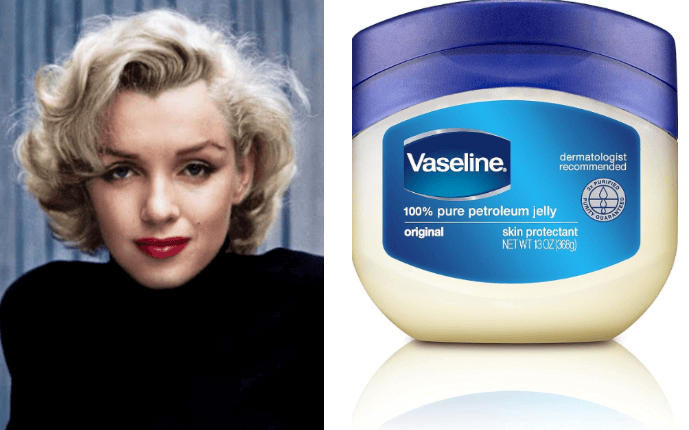
I sometimes wonder if I were to embark on some of these beauty routines, rituals from the women in the 1950s, what the results will be. From using beer to curate volume and vinegar for shine and lemon to brighten my hair, you know your typical, common hair rinse of the decade. Or, how about to brush my hair one hundred times a day to create shine (I’ve got to brush my hair 100 strokes per day, I have got to have that shine, please do not interrupt my count while I brush my hair. Oh, man, now I have to start all over again. My hair is going to super shiny. LOL!); to use nylon stocking to smooth my legs; ice water facials, similar to today’s trends in regards to cryotherapy as in ice facials; can I have some Petroleum jelly for my glossy lids and lashes, please; where is my loose powder? I have got to absorb the oil in my scalp, since we are decades away from dry shampoo coming into existence? Why, thank you! It is much appreciated.
I recently was listening to a show and the host was reviewing 1950’s food, and recipes this host has curated. I can hear him say, 1950s was wild, wild time in food. Was it a wild time in beauty as well? Well, women loved their Ponds Cold Cream, and I can honestly assure you, i have used and bought Ponds Cold Cream several times, and man, the same original cream still exists, it’s amazing. Un-like other creams, it isn’t meant to be left on, once applied. You do have to remove it, once applied either right away or shortly afterwards just like the women have done in the 50’s.
Afterall, 1950’s also known as the pointy decade. There were pointy bras aka bullet bras, pointy lips specifically the cupid’s bow, pointy brows, pointy liner (cat eye, thank you, Elizabeth Taylor for originating and popularizing this look), winklepicker shoes, this defined women’s fashion during the 1950’s, and with stars, Marilyn Monroe and Lana Turner, embracing this trend.
Now, what were the 1950s like during this decade in regards to beauty, is one of the more glamourous decades on the 20th century. From Elizabeth Taylor who oozes glamour from head to toe, with her jewelry from Bulgari, gifted to her by her husbands (I have seen the collection at the ROM, when her jewelry collection was there for a limited time and all I can say is, I’m in loss of words, lol). To Marilyn Monroe to name a couple of glamourous stars. Beauty in this decade marked as an innovation, tradition and the influence of Hollywood glamour. This decade emerged from the previous decade of the Second World War, with women looking to leave the war years behind, saw women embrace femininity, aided by a rapidly expanding beauty industry and the proliferation of new products and techniques. Behind the iconic images of bright red lips, sculpted pointed brows and perfectly coiffed hair, lay a trove of everyday beauty secrets, many of which have faded from memory, since these beauty secrets did not pass onto the next generation or even if they did, by the 1960’s women became more optional of which beauty secret they would inherit, as they did in the 1950’s. Times were changing with young girls, young women compared to previous decades, previous centuries.

Discover 25 authentic beauty secrets that women in the 1950s actually used, spanning skin-care, hair-care, make-up and household remedies. A historically accurate, feminine, and rooted in what women actually did.
Cold Cream: Universal for Cleanser & Moisturizer
Cold cream, which was essentially used back in the day of ancient Greece, had remained as a household product, as it had in previous decades. Popular brands that were used was Pond’s. Pond’s continued to dominate as the go-to cold cream, continuing with the tradition from prior decades, dominating vanities, to be used as a cleanser, moisturizer, night cream, and makeup remover in one jar — used morning and night. Pond’s iconic glass jar and creamy texture promising deep cleansing and deep hydration (Pond’s Cold Cream does it all, in my opinion). Pond’s cold cream was primarily used to soften skin and to remove make-up.
Application Method: Women massaged cold cream onto their faces in an upward motion, to dissolve make-up and grime, then wiped it away with a soft cloth or tissue. Many followed with a splash of cold water for a refreshing finish. Some used it as a night cream, applying a thin layer before bed to lock in hydration and sometimes moisture.
1950s Skincare Context
- The “Seven-Day Beauty Plan”: With heavy marketing, it encouraged women to replace multiple complex steps with just Pond’s Cold Cream.
- The Scent: It was universally known for its soft, powdery rose fragrance that became synonymous with vanity tables of the era.
- Famous Endorsements: Hollywood icons like Marilyn Monroe and Audrey Hepburn publicly swore by Pond’s, as part of their night-time routine to melt away their heavy studio cosmetics before bed.
Marilyn Monroe: Monroe explicitly stated, “I always take off my make-up before I go to bed. I use Pond’s Cold Cream”. While she also used high-end bespoke products from dermatologist Dr. Erno Laszlo, Monroe relied heavily on drugstore Pond’s and Vaseline to keep her skin extremely moisturized and highly reflective under hot studio lights, using Pond’s and Vaseline, primarily Vaseline, as a “primer.”
Audrey Hepburn: Hepburn shared a similar sentiment regarding the classic formula: “I believe in using a simple product like Pond’s Cold Cream. It’s been around for so long and it really works.” Despite having access to the world’s most luxurious brands, Hepburn valued the high moisture content of the water-in-oil emulsion to protect her sensitive skin.
Jackie Kennedy: Kennedy began relying on Pond’s Cold Cream in her early years while attending university and in her early days in the public eye. Later, she had transitioned to high-end custom dermatological routines. Kennedy famously designated Thursday nights for meticulous self-care, massaging Pond’s Cold Cream into her face for exactly two minutes before wiping the excess away with a tissue to keep her make-up from staining her pillows.
Another beloved Old Hollywood actress, Lauren Bacall (widow of Humphrey Bogart, once engaged to Frank Sinatra, starred in To Have and Have Not, the Big Sleep, Key Largo, How to Marry a Millionaire alongside Marilyn Monroe, and more.) absolutely loved Pond’s Cold Cream.
While Bacall balanced her skin-care routine with elite dermatological products from Dr. Erno Laszlo, she relied on a standard jar of Pond’s Cold Cream Cleanser to remove the heavy, oil-based foundations used on mid-century film sets.
Why Pond’s Was Her Go-To
Studio cosmetics in the 1940s and 1950s were thick, wax-heavy formulas designed to withstand hot studio lights. Standard soap and water could not break them down without violently scrubbing and stripping the skin. The mineral oil base in Pond’s effortlessly emulsified the make-up so it could be wiped away with a tissue or towel.
Bacall was known to keep portable, flexible metal tubes of Pond’s Cold Cream in her travel cases and dressing rooms. This allowed her to quickly strip off character make-up immediately after she had concluded her final shot of the day.
Bacall was celebrated for having an incredibly resilient, low-maintenance complexion. She attributed her smooth skin to the simple combination of a rich Pond’s cleanse followed immediately by an invigorating, ice-cold water rinse to snap her pores shut.
Why Cold Cream Was a Beloved Favourite for Old Hollywood Stars
- Dissolving Wax-Based Make-up: Mid-century studio foundations (like Max Factor’s Pan-Stik) were highly pigmented and dense. Ordinary soap and water could not dissolve the oil binders, whereas the high mineral oil concentration in Pond’s broke down the make-up instantly.
- Preventing Dehydration: Studio lights were intensely hot and dehydrating. The occlusive layer provided by cold cream acted as a barrier, preventing trans-epidermal water loss overnight.
- No-Rinse Make-up Removal: The standard ritual involved tissue-ing or wiping the cream away rather than washing with harsh tap water, leaving behind a subtle layer of hydration.
Price Breakdown by Jar Size
The 1950s, a standard jar of Pond’s Cold Cream typically cost between $0.25 and $1.00 USD, depending entirely on the jar size.
- Small / Travel Size: Sold for around $0.15 to $0.25.
- Medium / Standard Vanity Size (approx. 3.5 oz): Sold for around $0.39 to $0.55.
- Large Economy Size (approx. 10 oz+): Sold for around $0.89 to $1.25.


And, it completely works wonderfully, especially and specifically as a cleanser, moisturizer, night-cream and make-up remover. Oh, yes, yes, you may fall in love or have a new love affair. Say hello to Pond’s Cold Cream.
Petroleum Jelly (Vaseline): The Multi-Tasking Wonder: Used for Glossy Lids & Lashes Primarily


“The Wonder Jelly”
Reader’s Digest called Vaseline® “The Wonder Jelly”. – Vaseline
In the 1950s, Vaseline Petroleum Jelly was a staple product used by women. It was valued for its ability to trap moisture, add shine, and protect skin.
Vaseline was dubbed “The Wonder Jelly” which lead to its celebration of its versatility. Its popularity continued from previous decades, which is all thanks to its clever marketing and celebrity endorsements. In this particular case, this jelly was used in beauty to deliver glossy lids and lashes, in addition to other usages.
Application Method: Women used Vaseline as a lip balm, brow tamer, cuticle softener, and even as a nighttime facial mask for dry skin. It was dabbed under the eyes to reduce puffiness, applied to lashes for a glossy look, and used to heal cracked heels and elbows.
The Hollywood “Glow” & Face slugging
Long before the modern term “slugging” was invented, 1950s women heavily applied Vaseline to their faces to achieve a dewy, youthful look. In other words, what’s old is new again.
- The Marilyn Technique: Marilyn Monroe famously applied thick layers of Vaseline under her make-up. She used it as a “primer” to capture a glowing, soft-focus sheen under bright studio lights.
- Night Cream: Average home-makers regularly smoothed a thin layer over their skin before sleeping to prevent wrinkles and battle dehydrated or dry skin.
Make-up & Grooming Hacks
Post-war cosmetic ads pushed a highly manicured look. Women frequently relied on a tub of Vaseline to pull off specific mid-century beauty trends:
- Mascara & Lash Care: Women often applied Vaseline directly to their eyelashes and eye lids to curate a glossy look by using a clean spoolie. This glossy look on the lashes made lashes look longer and darker without the clumping of early cake mascaras.
- Eyebrow Taming: The structured, arched brow (pointy brows) look of the 1950s was held firmly in place by using a tiny dab of Vaseline as a clear brow gel.
- Lip Gloss: Long-wear matte lipsticks of the 1950s were notoriously drying. Women layered petroleum jelly over or under lipstick to create a comfortable, high-shine finish.
I kept a small jar of Vaseline in my pro make-up kit and Pond’s Cold Cream.
Manicures & Fragrance Extenders
- Cuticle Softener: Perfect manicures were a social expectation for women in the 1950s. Rubbing Vaseline into cuticles nightly prevented cracking and hangnails.
- Perfume Base: To preserve expensive perfume, women rubbed a small amount of Vaseline onto their pulse points (wrists and neck) before spraying fragrance. The occlusive jelly trapped the scent, preventing it from evaporating quickly.
My grandmother would use this trick of applying Vaseline onto her pulse points before applying her perfume.
Price Breakdown by Size & Variant
During the 1950s, a standard jar of Vaseline Petroleum Jelly typically retailed for $0.10 to $0.25 USD, depending entirely on the package size and specific formula.
- Small Squeeze Tubes: A travel-sized 3/5 oz. metal squeeze tube usually sold for about $0.10 (10 cents).
- Standard Jars: The highly popular 1-3/4 oz. glass jar featuring the classic blue seal metal cap carried a standard retail price of $0.25 (25 cents).
Women in the 1950s utilized both jars and tubes, strategically selecting the format based on where the product was being used.
The At-Home Staple: Glass and Milk Glass Jars
For the bathroom vanity or nightstand, heavy glass jars were the standard choice.
- Pond’s Cold Cream: Typically came packaged in distinct, opaque white milk glass jars featuring colorful metal screw-on lids.
- Vaseline Petroleum Jelly: Stored in clear, thick glass jars with a tight metal cap.
- Usage: These heavy jars were designed to sit permanently on dressing tables. Women would scoop the product out with their fingers (or small vanity spoons) during morning and nighttime skincare routines.
The On-the-Go Solution: Metal Squeeze Tubes
For a woman’s handbag, travel case or workplace locker, the tubes provided a flexible metal squeeze tubes, which were highly popular.
- Material: These tubes were made of collapsible metal (like tin or aluminum) rather than the plastic squeeze tubes common today.
- Pond’s & Vaseline Variants: Both brands offered travel-sized metal tubes specifically marketed for portability. Specialty items like Vaseline Camphor Ice (used for chapped lips and hands) were almost exclusively sold in portable metal tubes or small push-up tins.
- Usage: Tubes provided a cleaner, lightweight and shatter-proof option that protected the formula from purse debris.
Why Old Hollywood Stars Loved Vaseline Petroleum Jelly
Marilyn Monroe famously relied on Vaseline Petroleum Jelly as an integral cornerstone of her signature, luminous beauty routine.
Long before modern skin-care popularized “slugging” (coating the face in an occlusive ointment), as it is referred to today, in modern times. In the 1950s, Monroe and her legendary Hollywood make-up artist, Allan “Whitey” Snyder, utilized the basic drugstore staple to manipulate studio lighting and lock in extreme moisture.
How She Used It
- The Radiant Make-up Primer: Before applying her heavy studio foundation, Snyder would slather a thick layer of Vaseline across Monroe’s face. When hit by intense, hot 1950s studio lights, the petroleum jelly base reflected the glare, projecting an incandescent, “glass skin” sheen on camera.
- Strategic Highlighting: Beyond an all-over base, she dabbed extra Vaseline directly onto her cheekbones, brow bones and the tip of her nose to catch the light. Snyder would also smooth a tiny amount over her eyelids to create a subtle, glossy texture.
- Protecting Her Skin Barrier: The heavy layer served a functional purpose by acting as an occlusive shield. It trapped moisture underneath and kept heavy, drying pan-cake make-up from seeping directly into her pores or dehydrating her skin under production lights.
- Three-Hour Bath Ritual: Marilyn reportedly doused her entire body head-to-toe in Vaseline before stepping into an hours-long hot morning bath that would leave her with her signature soft, smooth skin.
Her Complementary Routine
While Vaseline provided her camera-ready dewiness, she blended it into a highly rigorous and high-end regimen tailored by her famous dermatologist:
Monroe was a loyal patient of Dr. Erno Laszlo, who custom-formulated products like Phormula 3-9 botanical balm and Active Phelityl Cream to deeply nourish her dry skin.
Monroe intentionally chose not to shave the soft peach fuzz on her face. She noted that the fine hairs caught the Vaseline and light, creating a dreamy, soft-focus halo effect on film.
Bette Davis: Eye Care Rituals: To combat the intense strain of studio lights and late-night filming, Davis used Vaseline under her eyes to prevent dark circles and kept the delicate skin under her eyes hydrated.
She would famously place cool cucumber slices over her eyelids to depuff, paired with a layer of petroleum jelly beneath the eyes to lock in moisture overnight.
Joan Crawford: Extreme Glow & Lash Health: Crawford was obsessed with keeping her skin exceptionally tight and clean. She would apply Vaseline all over her face after an intensive ice-water facial plunge to trap moisture into the skin barrier.
Long before commercial eyelash growth serums existed, Crawford regularly smoothed a small dot of petroleum jelly over her eyelashes every night, believing it made them grow thicker, shinier and more resilient against heavy studio mascaras.
Marlene Dietrich: High-Gloss Glamour: Known for her razor-sharp, sculpted facial features, Dietrich used Vaseline as a primitive form of liquid highlighter.
She would dab a small layer of jelly onto the very centre of her eyelids and across the high points of her cheekbones. When the studio spot-lights hit her face, the glossy texture gave her features an immediate, almost ethereal reflection.
Mae West: Lifelong Wrinkle Prevention: West attribute her famously un-wrinkled skin later in life to a daily head-to-toe slathering of petroleum jelly.
West used Vaseline as a full-body moisturizer and an all-over facial cream every evening, explicitly shunning fancy, perfumed cosmetic creams in favour of the pure, simple occlusive ointment.
Behind-The-Camera Studio Hack: The “Soft-Focus” Lens
Directors and cinematographers also heavily relied on the product. Camera operators would actively smear a very thin layer of Vaseline directly onto the outer edges of a camera lens.
This blurred the periphery of the frame while keeping the leading lady in sharp focus, hiding facial lines and creating the dreamy, romantic, soft-focus aesthetic that defined 1930s to 1950s cinema.
The invention of Kleenex,
thin paper sheets aka tissues
The massive popularity of Pond’s Cold Cream among Old Hollywood stars actually changed the consumer paper industry forever.
“America says “Happy Birthday” to Kleenex® products on June 12, 1924. The Kleenex® Brand suggests its first advertised function – as a “marvelous new way to remove cold cream.” As Kleenex® gained popularity, in 1927, Kimberly-Clark proposed a new use for the product – ‘absorbent kerchiefs.’” – Kleenex.com
Initially marketing the thin paper sheets specifically as disposable “Cold Cream Remover Tissues.”
Because actresses and regular women were ruining their cloth towels by wiping greasy Pond’s cream and make-up off their faces, the concept of a disposable tissue caught on instantly. Pond’s even launched its own line of specialized cream-removing tissues in 1927 before consumers eventually pivoted to using them for blowing their noses.
Stay tuned for Part Two of 25 forgotten beauty secrets women in the 1950’s!
Ice Water Facials: Joan Crawford swore by them (and many other Old Hollywood icons, Silk Pillowcases: Frizz Prevention, Pin Curls: The Foundation of Structured Waves, see you soon, as we discussed this next!
I’m Stacey Hobbs, thanks for reading. Until next time!
do you feel fabulous today?
 Face by Stace