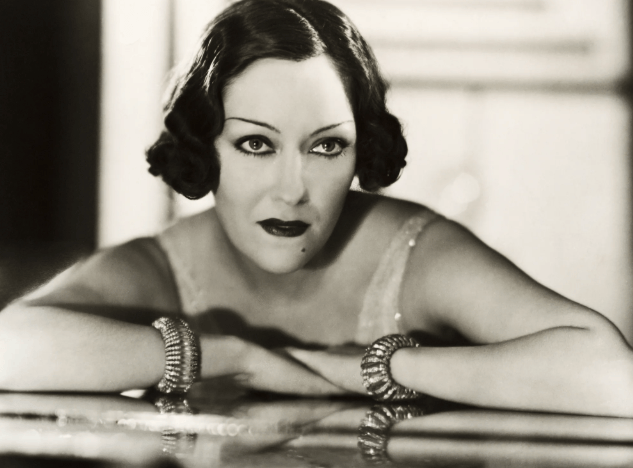
Chanel’s influence on Hollywood wasn’t limited to costumes or couture; it extended into the psychology of stardom itself. Nowhere is this clearer than in her relationships with Marlene Dietrich and Gloria Swanson — two women who understood that glamour could be both a vibe and an argument.
Marlene Dietrich adored Chanel because the clothes matched her mind. Dietrich’s persona was built on precision: tailored suits, clean silhouettes and an androgynous cool that suggested she was always thinking one step ahead. Chanel’s designs amplified that intelligence. When Dietrich wore Chanel, she didn’t look merely beautiful — she looked intentional. Their friendship was a meeting of two women who believed glamour should be sharp, as opposed to sugary if one can describe it in that manner.
Gloria Swanson, meanwhile, embraced Chanel as a symbol of modernity. Swanson’s early screen image was ornate and theatrical, but Chanel offered her a something new, something Chanel represented in her designs: sleek lines, disciplined elegance, and a sense of control. Chanel helped Swanson transition from silent‑era extravagance to a more streamlined, contemporary power.
Together, these relationships shaped what we now refer to as “intellectual glamour.” It’s the archetype of the woman whose beauty is inseparable from her mind — the woman who uses fashion not as decoration but as declaration. Chanel’s clothes gave actresses a way to communicate sophistication without saying a word.
I’m Stacey Hobbs, thanks for reading Face by Stace! Until next time.
do you feel fabulous today.
 Face by Stace