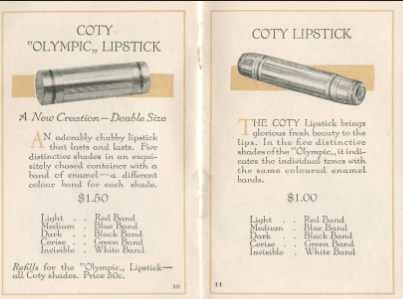
The early lipstick tube of the 1920s marks one of the most important turning points in modern beauty history. Before 1923, lipstick existed but it was inconvenient, messy and socially delicate. Women applied lip pomade from tins, pots or paper‑wrapped sticks often with a fingertip or small brush. It was a private ritual, never performed in public. That changed when beauty companies introduced the first metal push‑up lipstick tubes, transforming lipstick from a hidden indulgence into a portable symbol of modern womanhood.
These early tubes were small engineering marvels. Crafted from metal—silver, brass, nickel or gold‑tone alloys—they used a push‑up mechanism rather than the twist‑up design that would arrive later in the decade. The lipstick sat inside a sturdy cylinder, protected from melting, breaking or staining a handbag. Women could raise the product with a simple slide of the base, apply it cleanly and lower it back into place. This mechanical innovation made lipstick practical, elegant, and—most importantly—public.
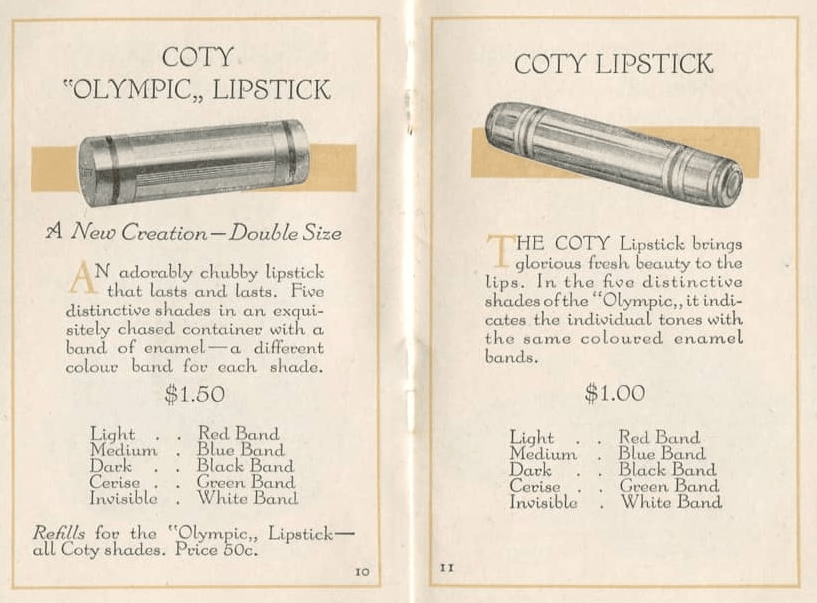
Brands like Coty, Richard Hudnut, Pompeian, and Kissproof embraced the new format immediately. The Coty Olympic Lipstick (pictured above) is a perfect example: bold, modern and marketed as “abnormally sturdy,” “perfectly shaped,” and “double size.” Its metal tube, precise colour offerings and Art Deco typography reflect the decade’s obsession with luxury and innovation.
By 1925, the lipstick tube had become a cultural icon. It empowered women to apply colour confidently in restaurants, dance halls and American speakeasies (Canada had speakeasies as well; they operated similarly but also differently at the same time. Read all about here)—an act that symbolized independence and modernity. In the evolution of beauty technology, the early lipstick tube stands as one of the decade’s most powerful symbols of liberation.
I’m Stacey Hobbs, thanks for reading Face by Stace! Until next time.
do you feel fabulous today?

