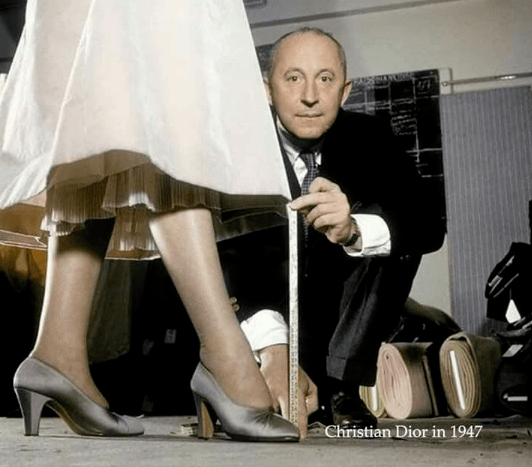
Christian Dior didn’t simply revive Parisian couture after World War II, he rewired the entire fashion industry. His greatest business innovation was the global licensing model, a system that transformed a single couture house into a worldwide brand. Before Dior, designers sold clothes. After Dior, designers sold lifestyles.
In the late 1940s, Dior recognized something no couturier had fully capitalized on: women wanted the Dior look even if they couldn’t afford couture. Instead of guarding exclusivity, he expanded it. Dior began licensing his name to manufacturers who produced stockings, gloves, hats, costume jewelry, scarves, handbags and eventually makeup and perfume. Each item carried the Dior signature, allowing women around the world to participate in the brand without ever entering a Paris salon.
This was revolutionary. Licensing democratized luxury while preserving prestige. It created a new revenue stream that stabilized the house financially, allowing Dior to invest in couture while expanding globally. By the early 1950s, Dior had more than a dozen licensing agreements across Europe, America, and Asia — an unprecedented scale for a fashion house at the time.
Dior’s licensing also shaped beauty culture. His perfumes, cosmetics and accessories became symbols of modern femininity, accessible yet aspirational. Miss Dior, stockings and lipstick were not just products; they were entry points into the Dior world.
Every modern fashion house — Chanel, YSL, Balenciaga, Gucci — follows the guide Dior created. He didn’t just design silhouettes; he designed the business model that defines luxury today. Dior’s licensing revolution turned a couturier into a global brand architect, forever changing how fashion is produced, marketed and experienced.
I’m Stacey Hobbs, thanks for reading Face by Stace! Until next time.
do you feel fabulous today?

