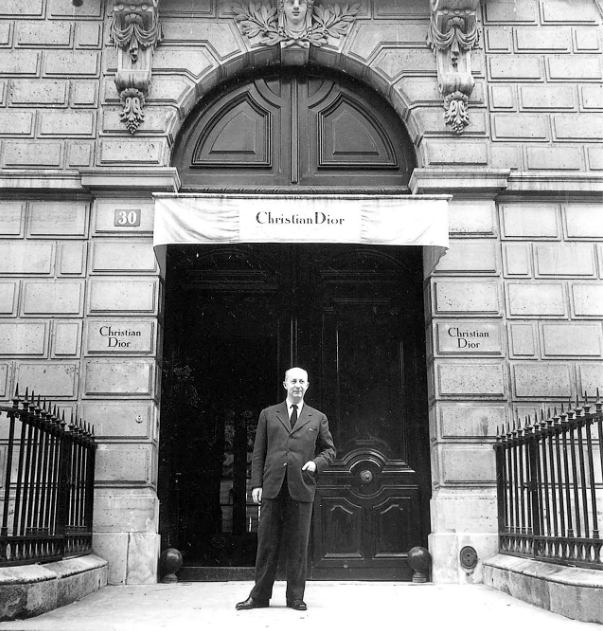
Christian Dior’s meteoric rise in 1947 was not only a triumph of design, it was the result of a powerful partnership with Marcel Boussac, the richest textile magnate in France. Known as “the king of cotton,” Boussac controlled vast mills, factories and distribution networks. When he chose Dior, he wasn’t simply backing a designer; he was strategically investing in the revival of French industry after the devastation of World War II.
Boussac originally wanted Dior to revive the failing house of Philippe et Gaston. Dior refused, insisting he would only work under his own name. Impressed by Dior’s conviction, Boussac made an unprecedented decision: he would finance a brand‑new couture house from the ground up. He provided Dior with full funding, complete creative control, and access to the finest textiles in France — a level of support no young couturier had ever received.
This partnership shaped the New Look itself. Dior’s 1947 silhouettes required extraordinary yardage — sometimes 15 to 30 meters of fabric for a single skirt. In a post‑war economy still recovering from rationing, this was shocking. But for Boussac, it was brilliant. Dior’s lavish designs showcased the strength of French textiles, stimulating demand and reasserting France’s dominance in global fashion manufacturing.
Boussac’s backing also enabled Dior to expand rapidly: perfumes, accessories, licensing, international salons. Dior became not just a designer but a global brand architect and Boussac’s industrial empire supplied the infrastructure to make it possible.
Their partnership was a fusion of artistry and industry. Dior provided the vision; Boussac provided the power. Together, they rebuilt French fashion from the ashes of war and created the modern luxury house.
I’m Stacey Hobbs, thanks for reading Face by Stace! Until next time.
do you feel fabulous today?

