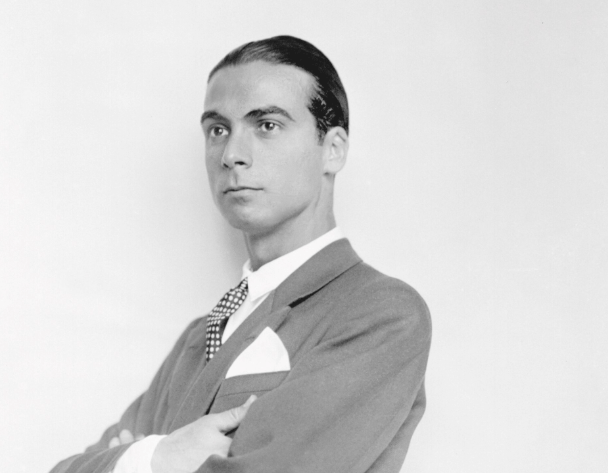
Cristóbal Balenciaga was not merely a couturier, he was a structural engineer working in fabric. In an era when most designers sketched ideas and relied on teams of cutters and drapers to execute them, Balenciaga alone mastered every stage of construction. He could cut, drape, tailor, stitch and finish a garment with the precision of a master craftsman. His technical skill was so extraordinary that Christian Dior famously said, “Balenciaga is the master of us all.”
Balenciaga approached clothing like architecture. He believed a garment should hold its shape independently of the body, creating form through engineering rather than decoration. His patterns were mathematical, built from un-expected angles, curved seams and innovative fabric. He experimented relentlessly with volume, weight and balance often constructing garments that appeared simple but required astonishing complexity beneath the surface.
His mastery of fabric behaviour set him apart. Balenciaga understood how textiles moved, folded and responded to gravity. He used stiff gazar, crisp taffeta and heavy wool to sculpt silhouettes that floated, ballooned or cocooned around the body. His cuts eliminated un-necessary seams, allowing garments to drape in pure, un-interrupted lines. Even his simplest dresses contained hidden architecture: interior supports, strategic darts and structural underpinnings invisible to the eye.
Balenciaga’s engineering genius paved the way for modern minimalism. Designers like Givenchy, Courrèges, and later Rei Kawakubo drew from his structural approach. His work proved that true innovation comes not from embellishment but from mastery of construction.
In couture history, Balenciaga stands alone — the designer who didn’t just create fashion, but built it.
I’m Stacey Hobbs, thanks for reading Face by Stace! Until next time.
do you feel fabulous today?

