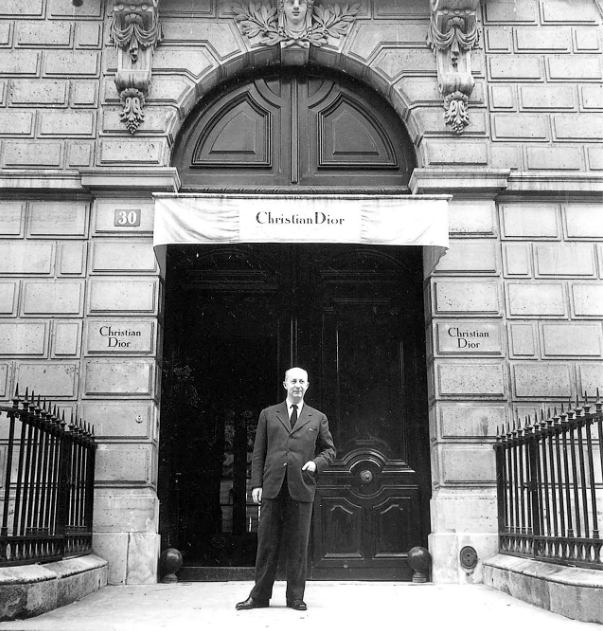
Christian Dior was not merely a couturier; he was a man guided by omens, symbols, and the unseen. Beneath the discipline of his silhouettes and the elegance of his salons lay a deep, lifelong superstition. Dior believed in signs. He trusted intuition. And he relied on psychics, tarot readers and numerologists with the same seriousness that he gave to fabric, proportion and construction.
Dior’s superstition began in childhood, shaped by his mother’s love of ritual and the spiritualism that swept Europe in the early 20th century. As an adult, he consulted Madame Delahaye, a clairvoyant who became his private advisor. She read his cards before collections, warned him of business decisions and predicted moments of danger. Dior never began a season without a reading. He believed her guidance protected him — and his house.
He surrounded himself with talismans: lucky charms in his pockets, symbolic flowers (especially lily of the valley), and objects he believed carried protective energy. He kept these items close during fittings and presentations, convinced they anchored his intuition. Even his salons reflected this belief — bouquets of lily of the valley, soft pink tones and ritualistic order created an atmosphere of calm and luck.
Numerology shaped his decisions. Dior believed certain dates were auspicious, certain numbers dangerous. He timed launches, contracts and even travel around these calculations. His staff learned to respect these rhythms; they understood that Dior’s superstition was not eccentricity but part of his creative process.
Most hauntingly, Dior believed his death had been foretold. Madame Delahaye warned him of a sudden end, and Dior carried that prediction quietly. When he died unexpectedly in 1957, those close to him remembered the prophecy and the way he had lived with it.
Dior’s superstition was not weakness. It was structure. It gave him clarity, confidence and emotional grounding. Just as he engineered silhouettes with mathematical precision, he engineered his life with ritual. His belief in the invisible shaped the visible and became one of the most intimate chapters of his legacy.
I’m Stacey Hobbs, thanks for reading Face by Stace! Until next time.
do you feel fabulous today?

