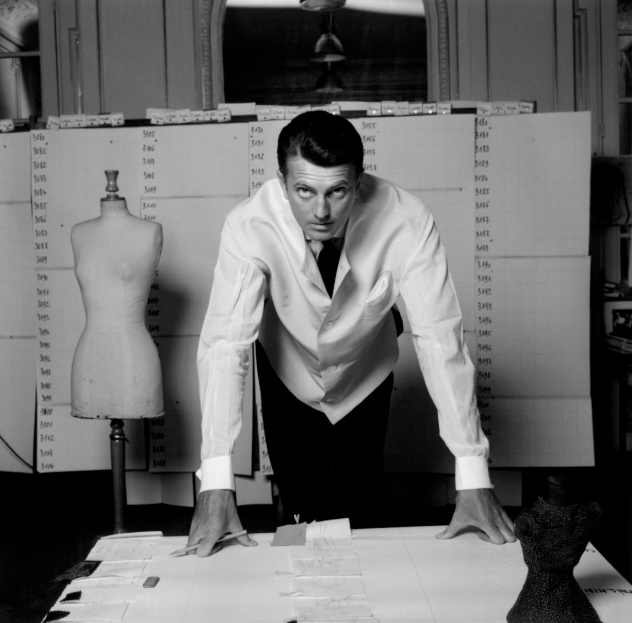
Hubert de Givenchy defined a new kind of elegance — one built not on excess, but on purity of line. In an era dominated by dramatic couture, Givenchy introduced restraint. His silhouettes were long, clean, and architectural, designed to elongate the body and refine the wearer rather than overwhelm her. For Givenchy, elegance was clarity.
His partnership with Audrey Hepburn cemented this aesthetic. She became his muse, and he became her visual identity. Together, they shaped a modern femininity: slim black dresses, crisp white shirts, sculptural evening gowns, and effortless daywear. Hepburn’s image — disciplined, graceful, minimalist — was Givenchy’s philosophy made visible.
His craftsmanship was quiet but exacting. He favoured impeccable tailoring, luxurious fabrics, and silhouettes that moved with fluid precision. While Dior sculpted drama and Balenciaga engineered volume, Givenchy created serenity. His clothes felt aristocratic without being rigid, refined without being fussy.
Givenchy also influenced beauty history. Hepburn’s clean brows, soft matte skin, and understated glamour mirrored his fashion aesthetic: elegance through simplicity. Their collaboration shaped mid‑century beauty ideals and the rise of minimalist chic.
Givenchy’s legacy is architectural elegance — a purity that continues to define modern luxury.
I’m Stacey Hobbs, thanks for reading Face by Stace! Until next time.
do you feel fabulous today?

