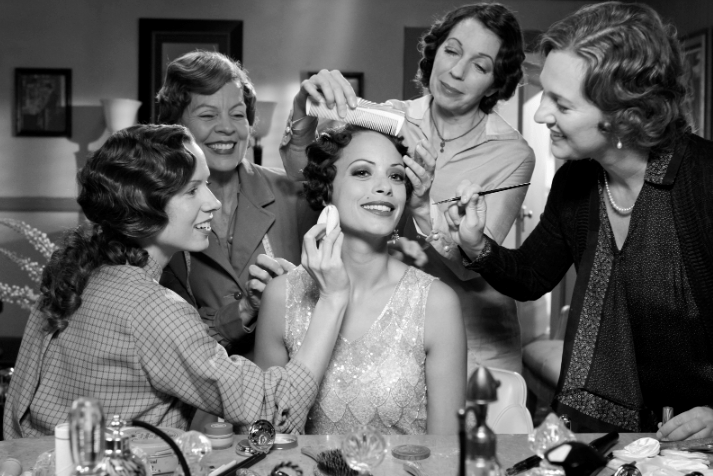
The 1920s brought modernity to Canada, but not with the same roaring intensity seen in the United States. Canada was still deeply tied to British cultural expectations — modesty, propriety and social restraint. Urbanization accelerated in cities like Toronto, Montréal, Winnipeg, and Vancouver, and immigration diversified the cultural landscape.
Women gained the right to vote provincially throughout the decade, marking a slow but meaningful shift in social autonomy. Jazz clubs; speakeasies existed in the bigger cities, however Canadian speakeasies were more about less prohibition and more European entertainment, such as cabaret (still needed a password for entry much like with American speakeasies; dance halls and department stores introduced new forms of leisure and consumption, but Canadian society remained cautious, measured and observant.
Beauty & Fashion Trends
Canadian women embraced the flapper era but with a distinctly Canadian softness.
- Hair: The bob arrived but many women opted for gentler, waved versions rather than the sharp American cut. Marcel waves and finger waves were popular because they felt feminine and controlled.
- Makeup: Rouge and lipstick became acceptable but application stayed light. Canadian beauty norms leaned toward “enhanced naturalness” rather than overt glamour.
- Fashion: Drop-waist dresses, cloche hats and shorter hemlines appeared but silhouettes were less daring than in New York or Chicago. Fabrics were practical and Winter fashion required heavier layering.
- Retail: Eaton’s, Simpson’s, and Morgan’s department stores introduced beauty counters, making cosmetics more accessible but still framed as respectable, not rebellious.
Why These Looks Emerged
Canada’s 1920s beauty look was shaped by a tension between modernity and modesty. Women wanted to participate in the new era of freedom, but cultural expectations encouraged restraint. The result was a uniquely Canadian flapper look: modern, but softened; expressive, but polite; fashionable, but never too loud.
Did you know: After three years of living in Toronto, in the 1920s, with his first wife, Hadley and their sons, with whom their second son was born in Toronto, Ontario, Canada, Ernest Hemingway stated he did not like living in Toronto for these two reasons only; it was too cold and it was too conservative for his liking.
I’m Stacey Hobbs, thanks for reading Face by Stace! Until next time.
do you feel fabulous today?

