The New York 1929 stock market crash hit the Canadian market, the Canadian economy much like it did in America. Canada, like with America, entered The Great Depression.
The 1930s reshaped Canada more profoundly than many beauty and fashion histories acknowledge. The Great Depression hit Canada harder and longer than the United States, with unemployment soaring and rural communities facing devastating crop failures. Relief camps, migration for work and widespread poverty defined daily life.
Radio became the decade’s cultural heartbeat — broadcasting news, music, and Hollywood glamour into homes that otherwise felt bleak. Canadian families consumed American entertainment, but lived under stricter economic realities. This tension between aspiration and austerity shaped the entire vibe of the decade.
Beauty & Fashion Trends
Beauty in 1930s Canada was defined by restraint, resourcefulness, and quiet elegance.
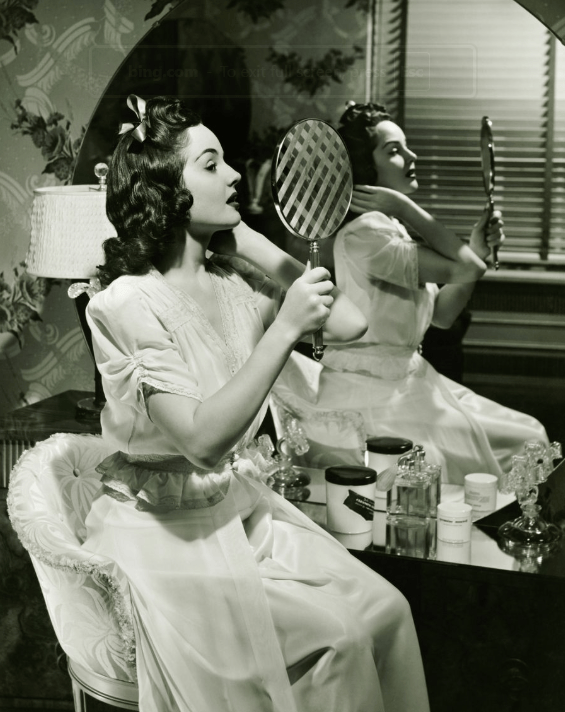
- Makeup: Women still wore makeup, but sparingly. Rouge was applied lightly, lipstick stayed in safe rose or berry tones, and powder was used to create a matte, “clean” complexion. The goal was to look polished, not indulgent.
- Hair: Soft waves and controlled curls remained popular, but elaborate salon styles were rare. Women relied on inexpensive home methods: pin curls, setting lotion made from soap flakes, and careful brushing to maintain shape.
- Fashion: Clothing prioritized durability.
- Wool, knits, and sturdy cottons dominated.
- Silhouettes became more structured — narrow shoulders, defined waists, longer hemlines.
- Winter fashion was essential: heavy coats, practical boots, layered knitwear.
- Many women re-fashioned older garments, adding new collars or altering hems to stay current without spending.
- Aspirational Glamour: Hollywood’s influence was enormous. Women admired Jean Harlow’s platinum hair, Greta Garbo’s sculpted brows, and Carole Lombard’s bias‑cut gowns — but Canadian adoption was gentler, more achievable, and filtered through practicality.
Why These Looks Emerged
Beauty in 1930s Canada was a balancing act: hope vs. hardship, glamour vs. survival.
Women wanted to feel beautiful, but economic reality demanded frugality. This produced a uniquely Canadian Depression‑era vibe— one rooted in subtlety, ingenuity, and understated femininity. The looks of the decade weren’t about rebellion or excess; they were about dignity, resilience, and maintaining a sense of self during national struggle.
I’m Stacey Hobbs, thanks for reading Face by Stace! Until next time.
do you feel fabulous today?

