Beauty became more than vanity — it was morale. The government encouraged women to maintain their appearance as a symbol of strength, stability, and national pride. “Looking your best” was framed as contributing to the war effort, boosting spirits at home and abroad.
The 1940s were a decade of extremes for Canada — austerity, sacrifice, patriotism, and then sudden abundance. When WWII began, Canadian women stepped into roles they had never occupied at scale: factory workers, mechanics, welders, farmers, transport drivers and uniformed service members. Rationing shaped daily life, from food to fabric to cosmetics.
Beauty became more than vanity — it was morale. The government encouraged women to maintain their appearance as a symbol of strength, stability, and national pride. “Looking your best” was framed as contributing to the war effort, boosting spirits at home and abroad.
By 1945, the war ended and Canada entered a period of optimism, immigration and economic growth. The post‑war years ushered in a return to femininity, luxury and the desire to reclaim glamour after years of sacrifice.
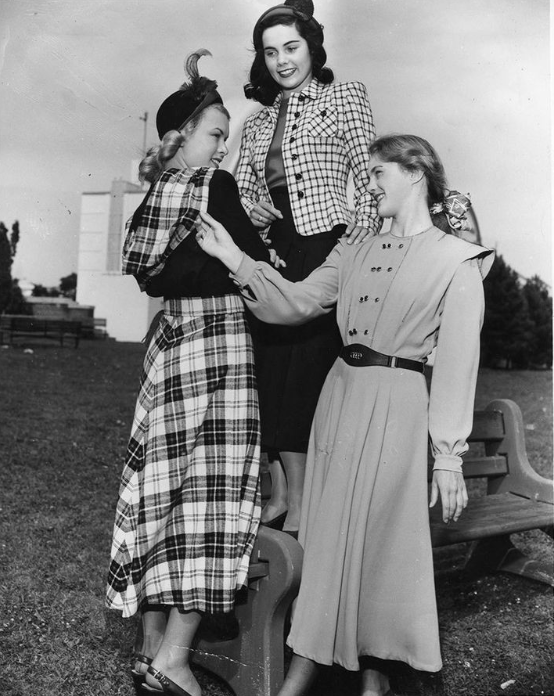
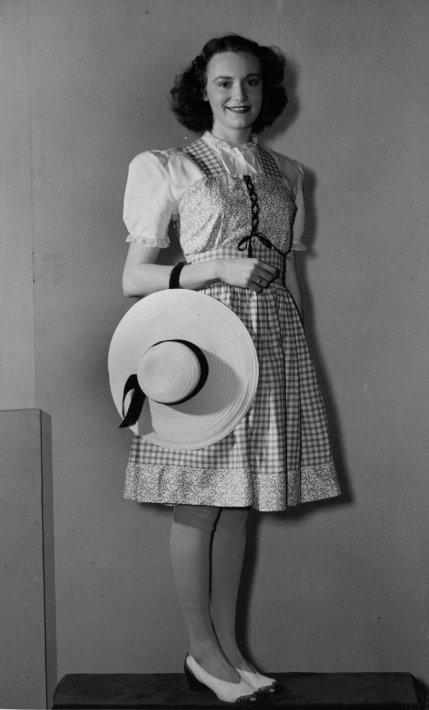
above are Canadian ladies in the 1940s.
Beauty & Fashion Trends
The 1940s produced some of the most recognizable beauty looks in history and Canada embraced them with its own practical twist.
During the War (1940–1945): Practical Glamour
- Hair: Victory rolls, pinned waves and updos that kept hair away from machinery. Styles were structured, strong and symbolic. Women used setting lotion made from household ingredients, like sugar water or soap flakes, to maintain curls.
- Makeup: Red lipstick became patriotic. Shades like Victory Red were worn proudly, even when cosmetics were rationed. Brows were defined but natural, and mascara was minimal. Women improvised when products ran out — beet juice for tint, soot mixed with petroleum jelly for lash darkening.
- Fashion: Utility fashion dominated.
- Boxy shoulders
- Knee‑length skirts
- Durable fabrics
- Simple lines
Clothing coupons limited purchases, so women repaired, altered and re-purposed garments. Canadian winters demanded heavier coats and practical boots, even as silhouettes stayed sharp.
Post‑War (1945–1949): The Return of Femininity
- Hair: Softer curls, brushed waves, and more romantic styles emerged as salons re-opened and products became available again.
- Makeup: Cosmetics boomed. Powder, rouge, mascara and lipstick returned to abundance. Canadian department stores expanded beauty counters and brands like Elizabeth Arden and Max Factor became household names.
- Fashion: Dior’s 1947 New Look swept into Canada through Eaton’s (Eaton’s Town Centre) and Holt’s (Holt Renfrew).
- Nipped waists
- Full skirts
- Rounded shoulders
- Luxurious fabrics
After years of rationing, women embraced glamour with enthusiasm.
Why These Looks Emerged
The 1940s Canadian beauty look was shaped by necessity, symbolism and emotional recovery.
During the war, beauty was a morale booster — a way to maintain dignity, identity and hope. Looks were practical but polished, strong but feminine. After the war, beauty became a celebration: a reclaiming of softness, luxury and self‑expression after years of sacrifice.
This decade explains why 1940s beauty feels both powerful and romantic because it was born from resilience, patriotism and the desire to rebuild.
I’m Stacey Hobbs, thanks for reading Face by Stace! Until next time.
do you feel fabulous today?

