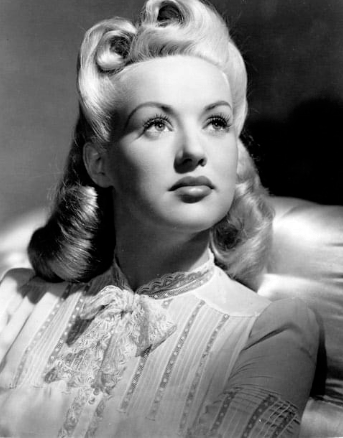
Victory Rolls, the hairstyle that was about patriotism.
Victory Rolls were a 1940s women’s hairstyle that became a symbol of wartime practicality and patriotism, popular from about 1940–1945, named either for the V for Victory and this hairstyle widely spread by Hollywood and working women.


Victory Rolls are sculpted, sausage‑shaped curls rolled upward and pinned at the sides or crown, often leaving an open curl toward the face. They were most popular during World War II (roughly between 1940–1945).
The technique evolved from late 1930s roll and curl practices; by the early 1940s the look coalesced into the named style as women adapted hair for both glamour and work. Wartime imagery show the roll pre-dated the war but gained its cultural meaning during it.
Behind the Name Victory Rolls
There are three common origin theories as to where the name Victory Rolls derives from or why this hairstyle is even named Victory Rolls.
Aviation manoeuvre.
Named after the fighter‑pilot “victory roll” aerobatic spin — the curls visually echoed that looping motion.
V for Victory.
The hairstyle’s shape suggested a “V” and tied into Allied morale campaigns.
Practical workplace adoption.
Women in factories and the services rolled hair up for safety and neatness; the style then became associated with patriotic effort.
These theories overlap and none is definitively proven; historians treat the name as culturally emergent rather than traceable to a single inventor.
Practical Function and Symbolism
Victory rolls were functional, as well as symbolic. Women working in factories and on production lines needed hair secured away from machinery; rolling and pinning the front sections kept hair off the face while still allowing a feminine, polished appearance. Maintaining beauty was also framed as a morale duty during wartime.
Hollywood and Popularization
Film stars and pin‑up models helped spread the look. Actresses such as Betty Grable, Veronica Lake, and other screen icons popularized variations—from symmetrical double rolls to single side rolls paired with waves—making the style fashionable across classes and occupations. Photographs and movie publicity reinforced the association between glamour and patriotic duty.
Styling Techniques and Variants
Victory rolls were not a single fixed cut but a family of techniques: backcombing for volume, smoothing, rolling sections into “sausage” shapes, and pinning them above the ears or at the crown. Variants included paired rolls, a single dramatic roll, or integration with a snood or pinned back hair for factory work. Scarves and bandanas were often used to protect hair while working.
Decline and Legacy
After 1945 the look softened as post-war fashions favoured smoother, more romantic styles; however, victory rolls remain symbolic of 1940s style.
Victory rolls fused practicality, patriotism, and Hollywood glamour. Victory rolls, a wartime hairstyle that kept hair safe for work while signaling solidarity with the war effort.
I’m Stacey Hobbs, thanks for reading. Until next time!
do you feel fabulous today?
 Face by Stace