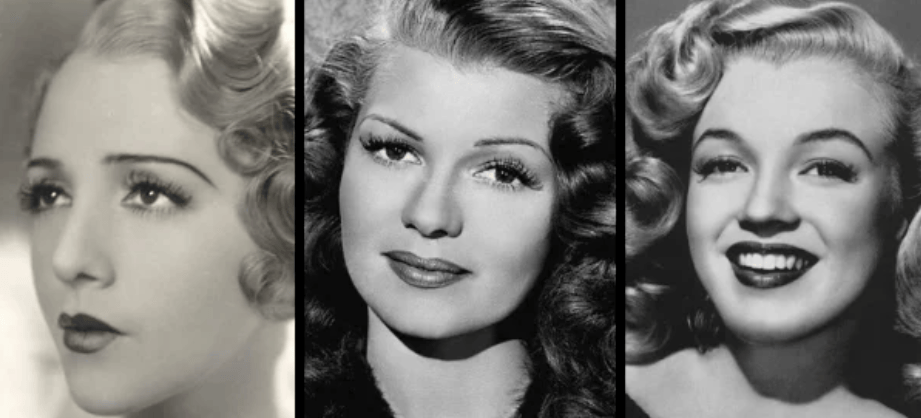
Early forms of false eyelashes appeared in the 19th century through extreme methods like sewing hair into eyelids. However, modern strip lashes were first patented in 1911 by Canadian inventor Anna Taylor. Prior to that, a patent for weaving artificial eyelashes was filed in the UK by German hairdresser Karl Nessler in 1902. It was a Canadian inventor that invented false lashes that we come to know , love and appreciate today.

Quick Overview
- 1882 (Paris): Parisian women engaged in a dangerous and painful trend of having human hair surgically sewn directly into their eyelids.
- 1902 (UK): German hairdresser Karl Nessler filed the first modern patent for weaving artificial eyelashes and eyebrows. By 1903, he was selling artificial lashes at his London salon.
- 1911 (US & Canada): Canadian inventor Anna Taylor received the first patent for false eyelashes in the United States. Her design used a crescent-shaped fabric strip with tiny pieces of hair attached, which could be glued to the lash line.
- 1916 (Hollywood): Film director D.W. Griffith popularized false lashes during the silent film era by having a wigmaker glue human hair and gauze onto actress Seena Owen’s eyes.
- 1940s & 1950s: The Aylott brothers (founders of Eyelure) introduced widespread, commercial false lashes, making the accessory a mainstream Hollywood staple.
Ancient Origins
Let’s rewind to the very beginning where it all began in Ancient Egypt and Ancient Rome. The desire for longer, darker, more defined lashes began thousands of years ago.
In Ancient Egypt, both men and women darkened their lashes with kohl, partly for beauty and partly for protection from the blazing hot sun in the desert and for spiritual symbolism. Whereas, in Ancient Rome, long lashes were associated with youth and virtue, and women used burnt cork or coal to enhance their lashes.
These early practices were not “false lashes” as we know them, but they established the cultural value of emphasized eyes.
Painful Early Experiments (1800s)
By the late 19th century, attempts to artificially lengthen lashes became more extreme.
Reports from 1882 and 1899 have described Parisians sewing human hair into the eyelids to create longer lashes — a painful and dangerous method of applying false eyelash extensions.
These techniques were precursors to modern lash enhancements, however were not widely adopted due to the risks.
The First Patents (1902–1911)
When the early 20th century rolled around, it is the true beginning of modern false eyelashes.
- 1902: German-born inventor Karl Nessler patented a method for manufacturing artificial eyelashes and eyebrows in the UK. He began selling them in his London salon by 1903.
- 1911: Canadian inventor Anna Taylor patented the first U.S. design for false eyelashes — a crescent-shaped fabric strip with tiny hairs attached. This is considered the first modern lash patent that we come to know today.
Taylor’s patent is widely recognized as the foundation of the modern lash industry.
Hollywood’s Influence (1910s–1930s)

Cinema played a pivotal role in popularizing false eyelashes.
- 1916: Director D. W. Griffith, filming Intolerance, wanted actress Seena Owen to have “supernatural” eyes. His wigmaker created lashes from human hair woven into gauze, adhered with spirit gum. Owen’s eyes reportedly swelled shut from the irritation.
- 1930s: False eyelashes began appearing in Vogue and became fashionable among women influenced by Hollywood glamour.
This era cemented lashes as a beauty accessory rather than a theatrical novelty.
Mid‑Century Popularity (1950s–1960s)
By the time mid-century had hit, false eyelashes had arrived within mainstream.
- 1950s: Hollywood stars and pin‑up aesthetics made lush lashes a symbol of femininity.
- 1960s: The “doll‑eye” look exploded. Models like Twiggy wore exaggerated top and bottom lashes to enlarge the eyes.
- 1968: At the feminist Miss America protest, false eyelashes were thrown into the “Freedom Trash Can” as symbols of restrictive beauty standards.
Late 20th Century to Early 2000s
Advances in materials and adhesives made lashes easier and safer to use.
- Cosmetic innovators like Max Factor refined lash design, using human hair for a more natural look.
- Strip lashes became widely available in drugstores, and lash styles diversified.
Key Takeaways
- The cultural desire for enhanced lashes dates back to ancient Egypt and Rome.
- Modern false eyelashes began with early 20th‑century patents by Karl Nessler and Anna Taylor.
- Hollywood played a defining role in popularizing lashes.
- The 1960s cemented lashes as a mainstream beauty staple.
- Today’s industry includes magnetic lashes, extensions and sustainable materials, showing continuous evolution.
I’m Stacey Hobbs, thanks for reading. Until next time!
do you feel fabulous today?
 Face by Stace