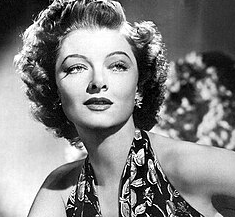
Decades before contouring became a beauty staple, Myrna Loy was perfecting her own version — a technique built not on drama, but on taupe shadow, subtle placement and architectural precision.
While her contemporaries relied on rouge to carve out cheekbones, Loy rejected anything that looked heavy or artificial. She preferred a soft taupe powder, applied just beneath the cheekbone and blended toward the ear. The result was a light definition, the beginning of contouring to what contouring would become in decades to come — sculptural, elegant and almost imperceptible. It refined her face the way good lighting does.
This technique became essential to her screen identity. Loy’s roles demanded intelligence, wit and modernity, and her contouring reflected that. Her face appeared calm, structured and commanding — a look that felt startlingly contemporary.
Taupe contouring also complemented her skincare rituals. With milk‑mask clarity and almond‑oil elasticity, her skin provided the perfect canvas for subtle sculpting. The contour enhanced her natural bone structure rather than masking it, creating the refined silhouette that defined her performances in The Thin Man era.
In a decade known for theatrical beauty, Myrna Loy’s taupe contouring was revolutionary. It was contouring for women who valued restraint and elegance.
I’m Stacey Hobbs, thanks for reading Face by Stace! Until next time.
do you feel fabulous today?

