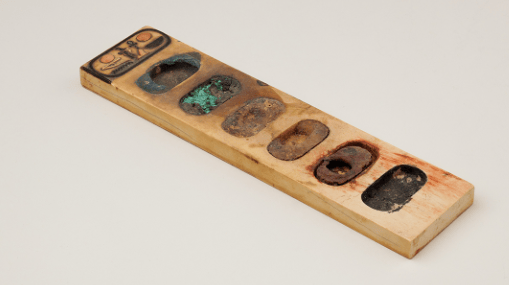
In Ancient Egypt, cosmetic palettes were far more than functional tools — they were symbols of status, identity, and refinement. These beautifully carved objects, often made from slate, schist, or limestone, held pigments for eye makeup and ceremonial adornment. Their presence in tombs, temples, and elite households reveals how deeply beauty was woven into Egyptian culture.
Early palettes were simple and utilitarian, used to grind malachite or galena into powders for kohl and green shadow. Over time, they evolved into highly decorative pieces featuring animal motifs, geometric designs, and sacred imagery. The more elaborate the palette, the higher the owner’s social standing. Some were shaped like fish, turtles, or birds; others carried inscriptions or symbolic carvings that connected beauty rituals to protection, spirituality and prestige.
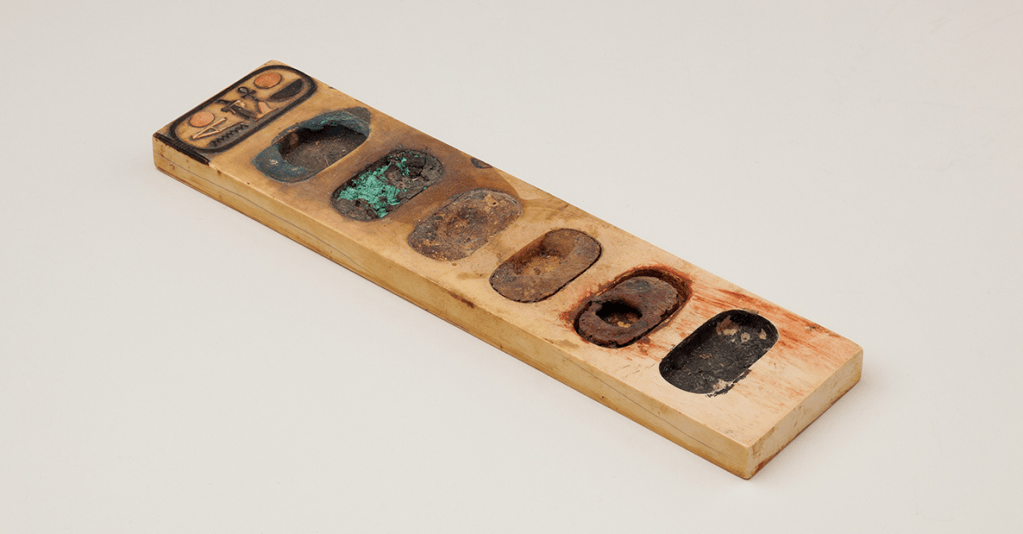
For the elite, cosmetic palettes functioned as luxury objects — gifts, heirlooms and markers of wealth. Their craftsmanship signalled access to skilled artisans and rare materials. In royal contexts, palettes became ceremonial used in preparation rituals that blended beauty, medicine and divine symbolism.
These palettes show how advanced Egyptian beauty culture truly was. They weren’t just tools for applying pigment; they were expressions of identity and power. In a civilization where appearance carried spiritual and social meaning, the cosmetic palette became one of the earliest examples of beauty as both artistry and status.
I’m Stacey Hobbs, thanks for reading Face by Stace! Until next time.
do you feel fabulous today?

