The 1950s powder compact wasn’t just a beauty accessory — it was a cultural symbol. Sleek, gold‑toned, and often engraved, compacts reflected a decade obsessed with elegance, order and polished femininity. They were designed to be displayed, carried and admired.
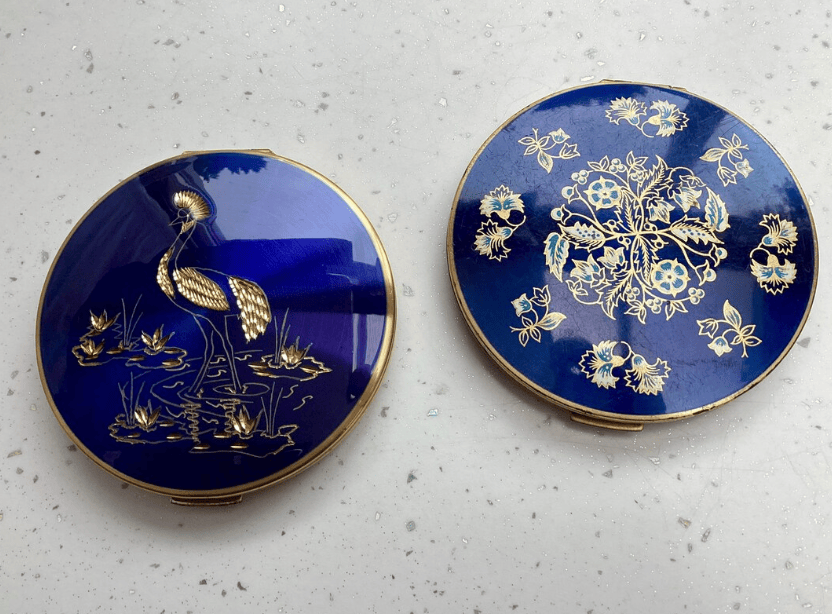
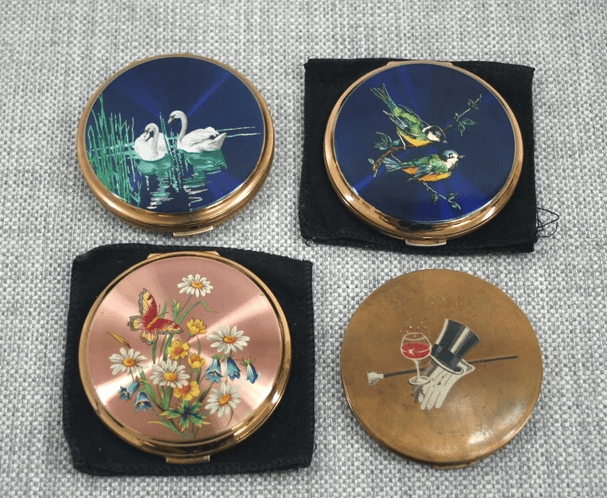
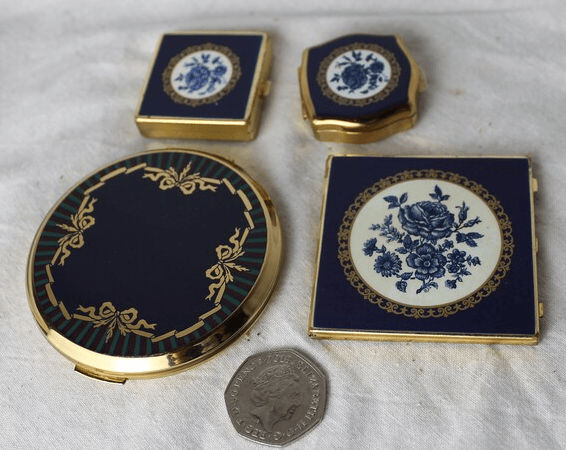
Post‑war prosperity meant women had access to beautifully crafted cosmetics for the first time. Companies like Stratton, Kigu, and Elgin produced compacts that resembled jewellery: enamel finishes, intricate clasps and mirror‑bright metalwork. Owning one signalled sophistication and modern womanhood.
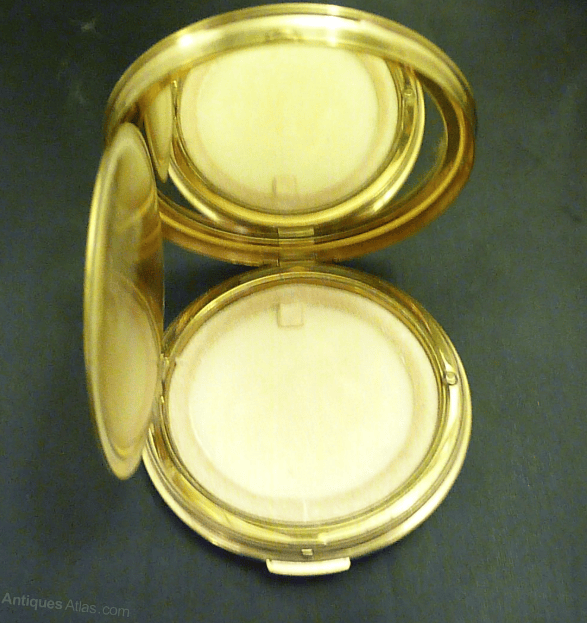
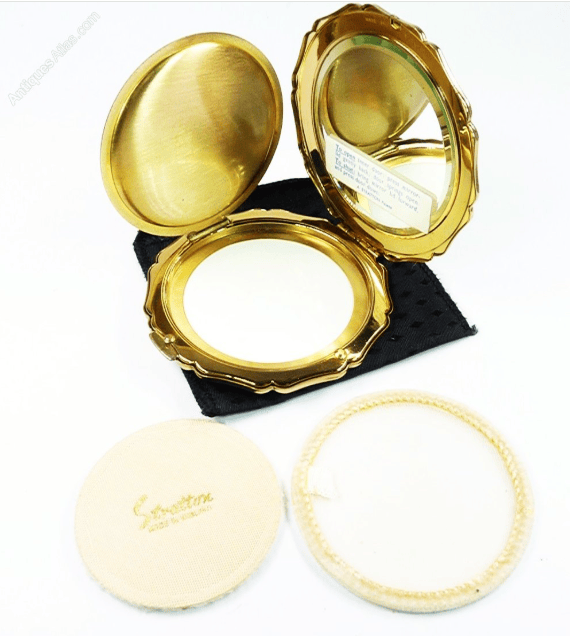
Compacts also mirrored the decade’s beauty ideals. The 1950s face was matte, velvety, and controlled — a stark contrast to the glossy Hollywood looks of earlier decades. Powder became essential for maintaining that flawless finish throughout the day. Women used their compacts in cafés, offices and theatres, turning touch‑ups into a quiet ritual of self‑presentation.
These objects also carried emotional weight. Many were gifted for graduations, engagements or anniversaries. Some included monograms or decorative motifs, making them personal heirlooms rather than disposable beauty items.
By the late 1960s, compacts faded as plastic packaging and mass‑market cosmetics took over. But the 1950s compact remains a symbol of craftsmanship and glamour — a reminder of a time when beauty tools were built to last.
I’m Stacey Hobbs, thanks for reading Face by Stace! Until next time.
do you feel fabulous today?

