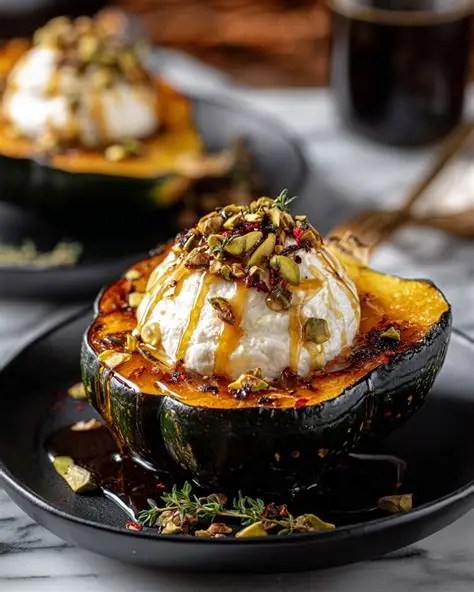
A warm, elegant, Autumn dish that blends caramelized acorn squash with creamy burrata, fragrant spices and a sweet‑heat drizzle of hot honey. The pistachio dukkah adds crunch, aroma and a Middle Eastern edge, turning a simple roasted squash into a refined plate that feels both rustic and couture.
Prep 15 min Cook 40 min Serves 4
Ingredients
- 2 acorn squash, halved and seeds removed
- 3 tbsp olive oil
- 1 tsp sea salt
- 1/2 tsp black pepper
- 1 cup fresh burrata (or whipped ricotta)
- 3 tbsp hot honey
- 1/3 cup crushed pistachios
- 1 tbsp sesame seeds
- 1 tsp ground coriander
- 1 tsp ground cumin
- Handful fresh herbs (parsley or basil)
Instructions
- Roast the squash
Preheat oven to 400°F (200°C). Brush squash halves with olive oil, salt, and pepper. Roast cut‑side up for 35–40 minutes, until caramelized and tender. - Make the pistachio dukkah
Combine pistachios, sesame seeds, coriander, and cumin in a small bowl. - Assemble
Place roasted squash on plates. Add a generous scoop of burrata into each cavity. - Finish
Drizzle with hot honey and sprinkle generously with pistachio dukkah. Garnish with fresh herbs.
Beauty Benefits
- Acorn squash: Beta‑carotene supports glow, smoother texture, and healthy cell turnover.
- Burrata: Healthy fats help absorb vitamins A, D, E, and K — essential for barrier strength and elasticity.
- Hot honey: Natural humectant properties support hydration and calmness.
- Pistachios: Vitamin E and antioxidants help protect against environmental stress and support firmness.
- Sesame seeds: Rich in zinc and fatty acids that support skin repair and moisture balance.
- Coriander + cumin: Anti‑inflammatory spices that support clarity, circulation, and a natural flush.
- Olive oil: Nourishes the moisture barrier and provides antioxidant protection.
Health Benefits
- Acorn squash provides fibre, vitamin C, potassium, and slow‑release carbohydrates for steady energy.
- Burrata offers protein and calcium for bone health and satiety.
- Hot honey provides natural sugars and antioxidants without refined additives.
- Pistachios add healthy fats, plant protein, and minerals like magnesium and zinc.
- Sesame seeds support hormone balance and healthy skin.
- Coriander and cumin aid digestion and metabolic balance.
- Olive oil contributes heart‑healthy monounsaturated fats.
Substitutions
- Burrata → whipped ricotta, fresh mozzarella, goat cheese, or labneh.
- Hot honey → chili‑infused maple syrup, harissa honey, or warm date syrup.
- Pistachio dukkah → almond dukkah, hazelnut dukkah, or toasted pumpkin seeds with sesame.
- Acorn squash → delicata, honeynut, or butternut halves.
- Herbs → basil, parsley, mint, or microgreens.
Storage
- Refrigerate up to 3 days in an airtight container.
- Reheat squash at 350°F for 10–12 minutes.
- Add fresh burrata and hot honey after reheating for best texture.
- Not ideal for freezing — dairy and squash texture will change.
History
Acorn squash has deep roots in Indigenous North American foodways, valued for its sweetness, versatility, and winter storage. Roasting squash halves is one of the oldest preparation methods, highlighting its natural sugars and soft texture.
Burrata introduces an Italian influence — a luxurious cheese from Puglia known for its creamy centre and ability to elevate simple vegetables. Hot honey reflects modern culinary trends blending heat with sweetness, inspired by Southern American and Middle Eastern flavour profiles.
Pistachio dukkah originates from Egyptian culinary tradition, where nuts, seeds, and spices were blended into aromatic toppings used for bread, vegetables, and proteins. Its inclusion here creates a fusion of Indigenous, Italian, and Middle Eastern influences — a contemporary dish that feels global, elegant, and deeply seasonal.
I’m Stacey Hobbs, thanks for reading Face by Stace! Until next time.
do you feel fabulous today?

