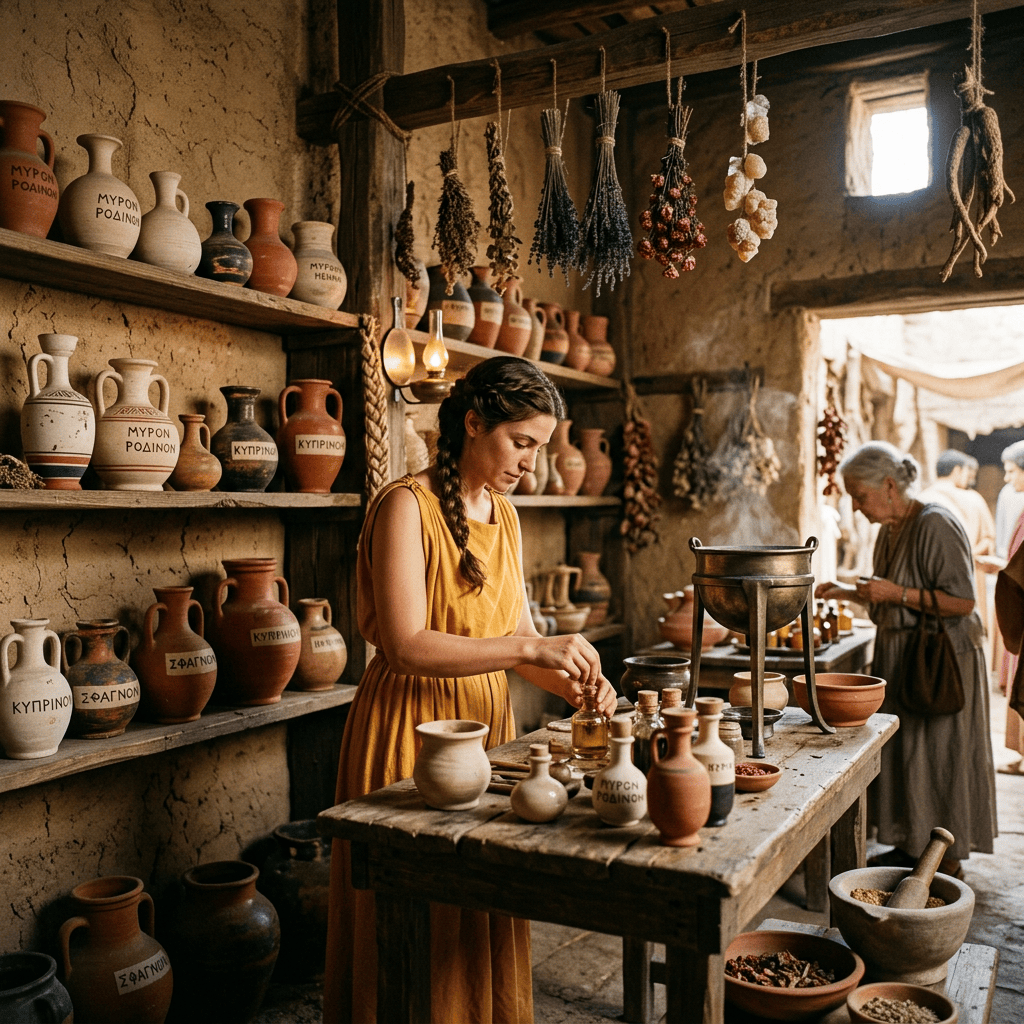
Perfume in Ancient Greece wasn’t simply fragrance — it was luxury, identity, ritual and status. Scent shaped how people presented themselves, how they worshipped and how they marked life’s most important moments. To wear perfume was to participate in culture, spirituality and beauty all at once.
Greek perfumery began with olive oil, the foundation of nearly every cosmetic formula. Into this, perfumers infused aromatics like iris, saffron, cinnamon, marjoram, anise, styrax, balsam, cassia, and cardamom. Many of these ingredients were imported from Egypt, Syria, and Persia, making them expensive and deeply symbolic of wealth and global connection.
Perfume‑making was slow, deliberate work. Oils were gently heated with herbs and spices, then left to steep until the scent fully bloomed. Finished perfumes were stored in ornate vessels — amphoriskoi and alabastron — carved or painted with mythological scenes. These bottles weren’t just containers; they were status objects displayed in homes and carried to ceremonies.
Fragrance held spiritual meaning. Perfumes were used in weddings, funerary rites, athletic grooming, religious rituals and daily elite life. Many scents were associated with Aphrodite, linking fragrance to divine beauty, seduction, and favour. Records from Linear B tablets even document large quantities of perfumed oil reserved for ritual use, proving how central scent was to Greek culture.
I’m Stacey Hobbs, thanks for reading Face by Stace! Until next time.
do you feel fabulous today?

