Cold cream is often credited to Galen in the Roman era but the truth is far more interesting: Greek women were already making early cream‑based skincare centuries before cold cream had a name. Their formulas were simple, clever and rooted in the Mediterranean environment — the first moisturizers, the first balms and the first cosmetic moisturizers.
Greek women were already making early cream‑based skincare centuries before cold cream had a name.
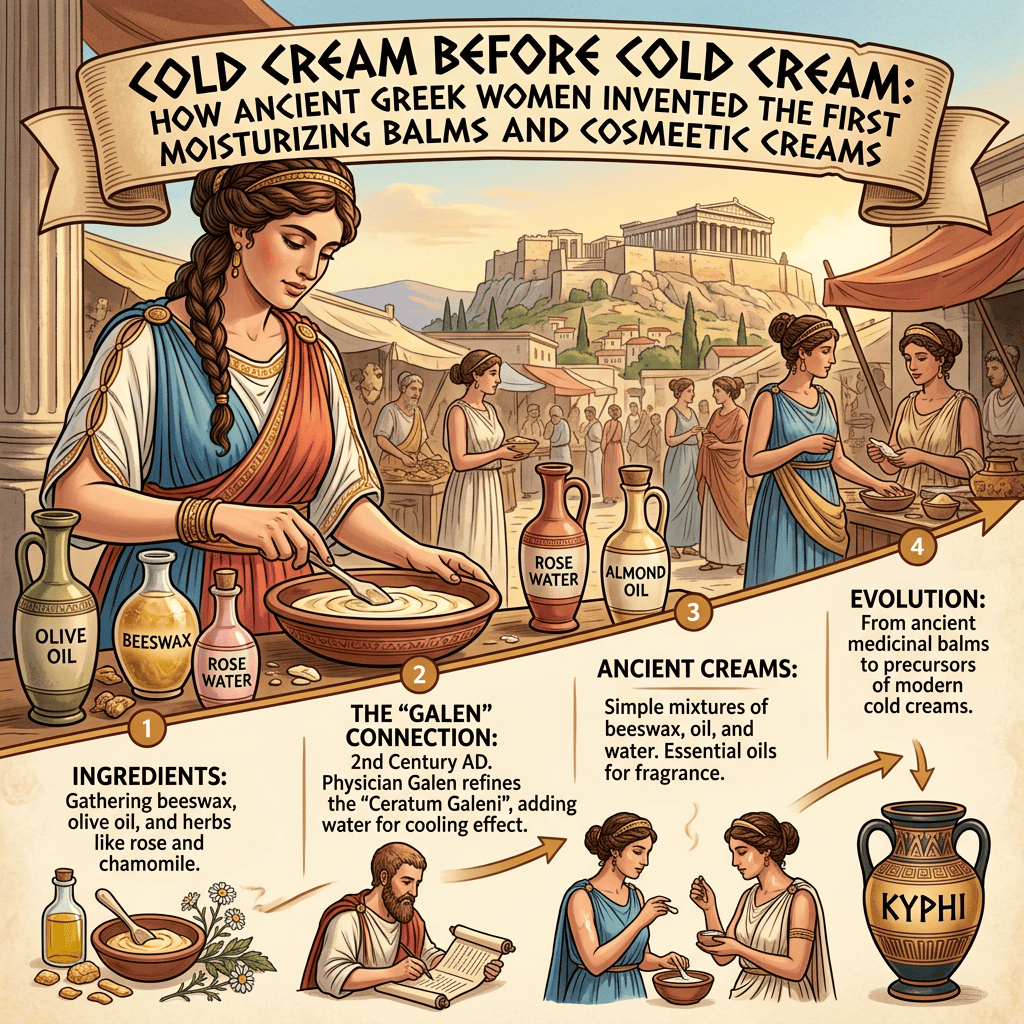
The First Cream Bases
Greek women blended olive oil, animal fats and beeswax to create soft, spreadable balms. These early creams protected the skin from sun, wind and dust — essential in a climate where daily exposure could quickly dry or irritate the complexion. Olive oil was the star: a moisturizer, cleanser and carrier for botanicals.
Mineral Pastes for Complexion
To achieve the culturally prized pale skin, women mixed white lead (psimythion) with fats or oils to create a smooth, opaque paste. While unsafe by modern standards, historically it functioned like an early foundation‑cream hybrid: coverage, brightness and a velvety finish.
Herbal Balms & Botanical Infusions
Greek women infused their creams with mint, thyme, marjoram, rose, and iris. These botanicals softened the skin, added fragrance, and offered mild antiseptic benefits. Honey was often added for glow and hydration, creating a texture similar to modern balm‑creams.
Why These Precursors Matter
These early formulas reveal that Greek women practiced layered skincare long before the term existed: cleansing with oil, softening with balms, protecting with wax‑based creams and finishing with mineral pastes. Cold cream didn’t appear suddenly — it evolved from centuries of Greek cosmetic innovation.
I’m Stacey Hobbs, thanks for reading Face by Stace! Until next time.
do you feel fabulous today?

