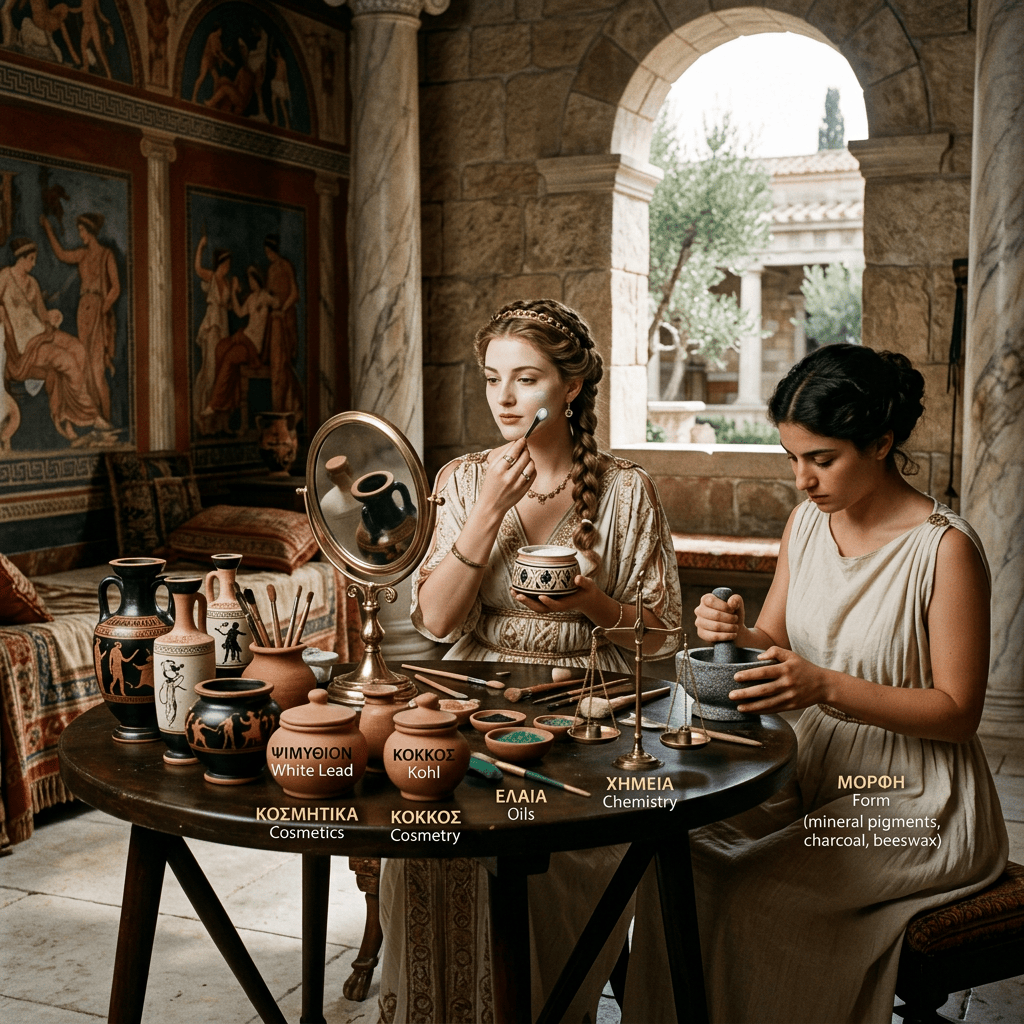
Cosmetics in Ancient Greece were more than surface enhancement — they were a reflection of status, philosophy and early cosmetic chemistry. Greek women approached beauty with intention, using pigments, pastes, oils, and botanicals to express purity, refinement and cultural ideals.
The Ideal Greek Complexion
Greek beauty centred on pale, luminous skin, symbolizing wealth and an indoor life of leisure. To achieve this look, women used psimythion, a white lead paste blended with oils or animal fats. Though unsafe by modern standards, historically it created the porcelain finish associated with elite femininity.
Colour, Definition & Early Pigments
For lips and cheeks, Greek women used red ochre, crushed berries or alkanet root to add soft colour. Eyes were defined with kohl, charcoal, or soot mixed with oils — subtle compared to Egyptian styles but still essential for shaping the gaze. Brows were darkened with burnt cork or natural pigments to frame the face.
Skincare as Ritual
Greek women relied on honey, milk, yogurt, olive oil and herbal pastes to soften, cleanse, and brighten the skin. Honey masks delivered glow, milk and yogurt offered gentle exfoliation, and olive oil served as both moisturizer and makeup remover — reflecting the Greek belief that beauty and wellness were inseparable.
Beauty & Social Tension
Cosmetics carried cultural weight. Philosophers like Plato and Xenophon criticized makeup as “deception,” yet women across classes used it daily. Beauty in Greece existed at the intersection of aesthetics, morality and identity.
I’m Stacey Hobbs, thanks for reading Face by Stace! Until next time.
do you feel fabulous today?

