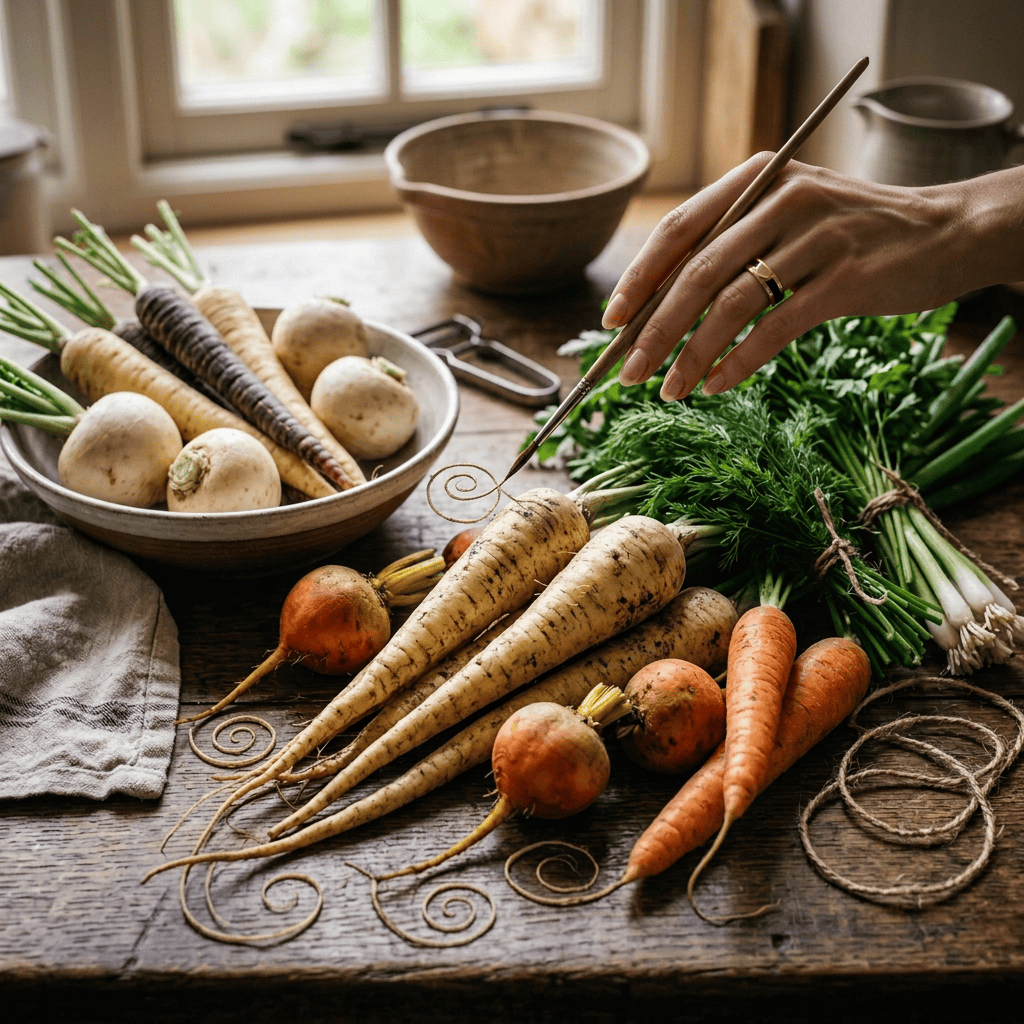
Parsnips are one of the most elegant yet overlooked root vegetables in culinary history. Long before potatoes became the dominant staple, parsnips were a prized crop across Europe — valued for their sweetness, resilience and ability to thrive in cold climates. In ancient and medieval kitchens, they were used in broths, purées and early forms of rustic “mashes,” offering gentle sweetness and dependable nourishment during winter months.
By the 17th century, parsnips were widely grown throughout Britain and Northern Europe. Their natural sugars made them a favourite in both savoury dishes and early desserts, and they were often recommended in herbal texts for digestion and vitality. As global trade expanded and potatoes became more accessible, parsnips slowly slipped from everyday cooking, becoming a quiet relic of pre‑industrial cuisine.
Today, parsnips are experiencing a subtle revival — appreciated for their refined flavour and versatility. When roasted, they develop caramelized edges and a silky interior. When puréed, they create a creamy, luxurious texture that feels surprisingly modern. Their pale ivory colour and delicate sweetness lend an understated elegance to contemporary dishes, making them a perfect fit for today’s interest in seasonal, vegetable‑forward cooking.
Parsnips remind us that some of the most beautiful ingredients are the ones history nearly forgot. Their story is one of resilience, subtlety, and timeless flavour — a root vegetable ready to reclaim its place in the modern kitchen.
I’m Stacey Hobbs, thanks for reading Face by Stace! Until next time.
di tiy feek fabulous today?

