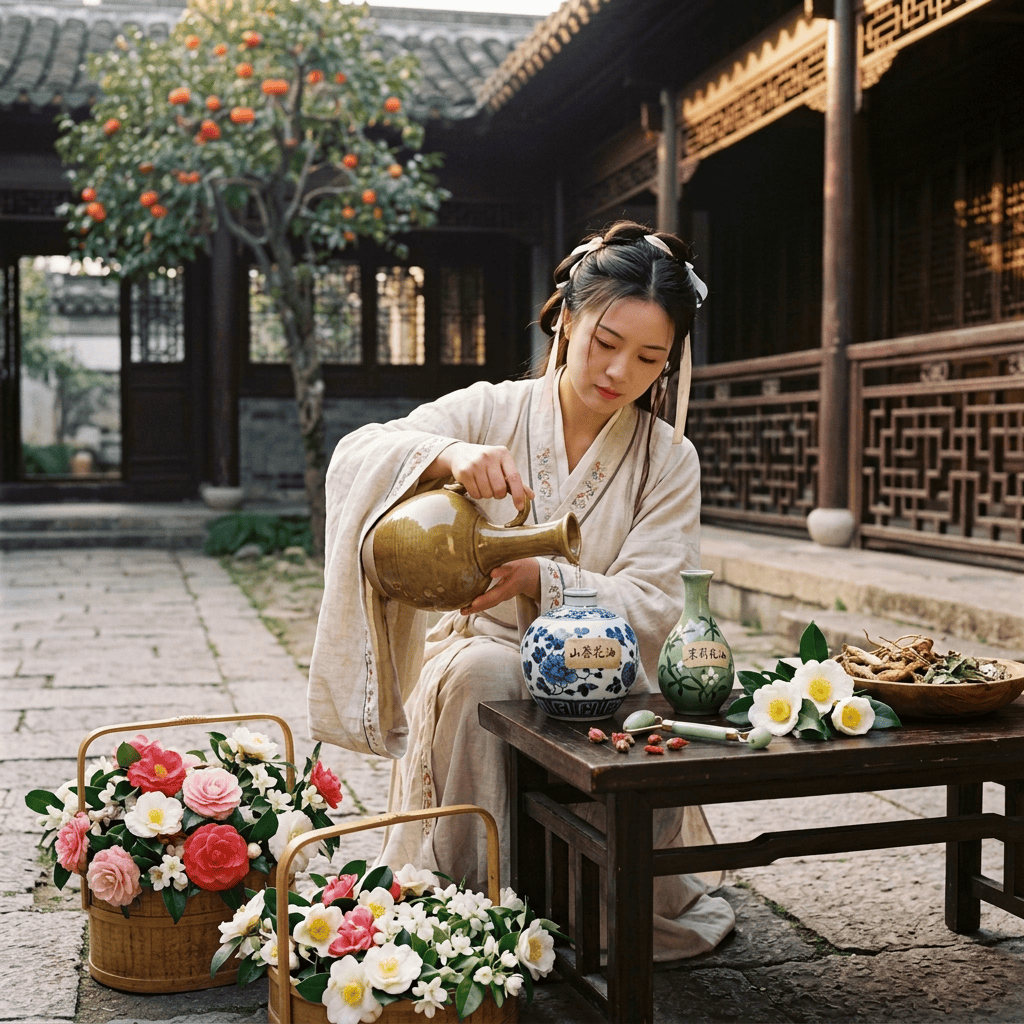
In Ancient China, beauty rituals were deeply connected to nature, refinement, and balance — and two oils stood at the centre of these traditions: camellia and jasmine. Both were treasured for their fragrance, their skin‑nourishing properties, and their symbolic ties to purity and elegance.
Camellia Oil
Camellia oil, often called tea seed oil, was one of the most prized beauty ingredients among Chinese women, especially during the Han and Tang dynasties. Extracted from the seeds of the camellia flower, it was celebrated for its lightweight texture and exceptional ability to soften and condition the skin. Women used it to moisturize the face, smooth the hands, and protect the skin from dryness caused by seasonal winds.
Camellia oil was also a revered hair treatment. It added shine, reduced breakage, and helped maintain the sleek, glossy styles that defined classical Chinese beauty. Its high oleic acid content made it deeply nourishing yet non‑greasy — a perfect match for the understated elegance of the era.
Jasmine Oil
Jasmine, known for its delicate white blossoms and intoxicating scent, held both aesthetic and cultural significance. Jasmine oil was used in perfumed hairpins, skin balms, and bath rituals. Its aroma symbolized grace, femininity, and inner harmony, making it a favourite among noblewomen.
Beyond fragrance, jasmine oil was valued for its calming properties. It soothed the skin, eased tension, and brought a sense of serenity — aligning with traditional Chinese ideals of beauty as a reflection of inner balance.
I’m Stacey Hobbs, thanks for reading Face by Stace! Until next time.
do you feel fabulous today?

