In ancient Mesopotamia and Sumer, perfume was a luxury and yet, it was also a cultural symbol of status, spirituality and refinement. These early civilizations were among the first to experiment with fragrant resins, oils and botanicals, creating aromatic blends that laid the foundation for perfumery as we know it today.
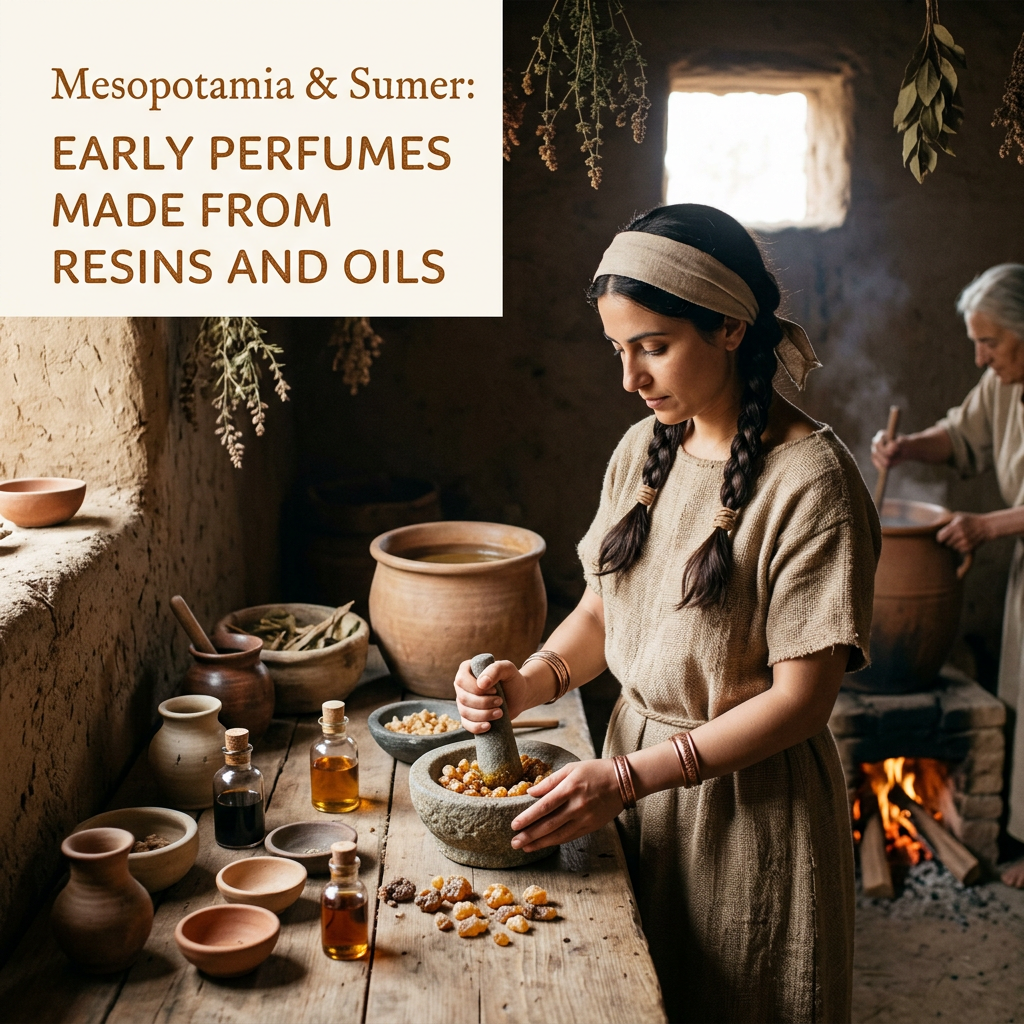
Perfume‑making began with resins such as myrrh, frankincense, balsam, and storax. These materials were prized for their rich, smoky sweetness and their ability to hold scent over time. Resins were crushed, heated, or dissolved into oils to create balms, salves, and early fragrance pastes. Their aromas were used in temples, ceremonies and daily grooming — a way to honour the gods while elevating personal presence.
Alongside resins, Mesopotamian perfumers used plant oils extracted from sesame, cypress, and date palms. These oils acted as carriers for aromatics, creating smooth, skin‑friendly blends. Tablets from the region describe recipes combining oils with herbs, flowers, and spices — including juniper, cedar, saffron, and calamus — forming some of the earliest documented perfume formulas.
Perfume also held social meaning. Scent signified purity, wealth and divine favour. Royal households and priestesses used fragrant oils to anoint the body, soften the skin, and create an aura of elegance. These rituals reveal a world where beauty, spirituality, and craftsmanship were deeply intertwined.
Mesopotamia and Sumer transformed simple resins and oils into sophisticated fragrance traditions — proving that the desire to smell beautiful is as ancient as civilization itself.
I’m Stacey Hobbs, thanks for reading Face by Stace! Until next time.
do you feel fabulous today?

