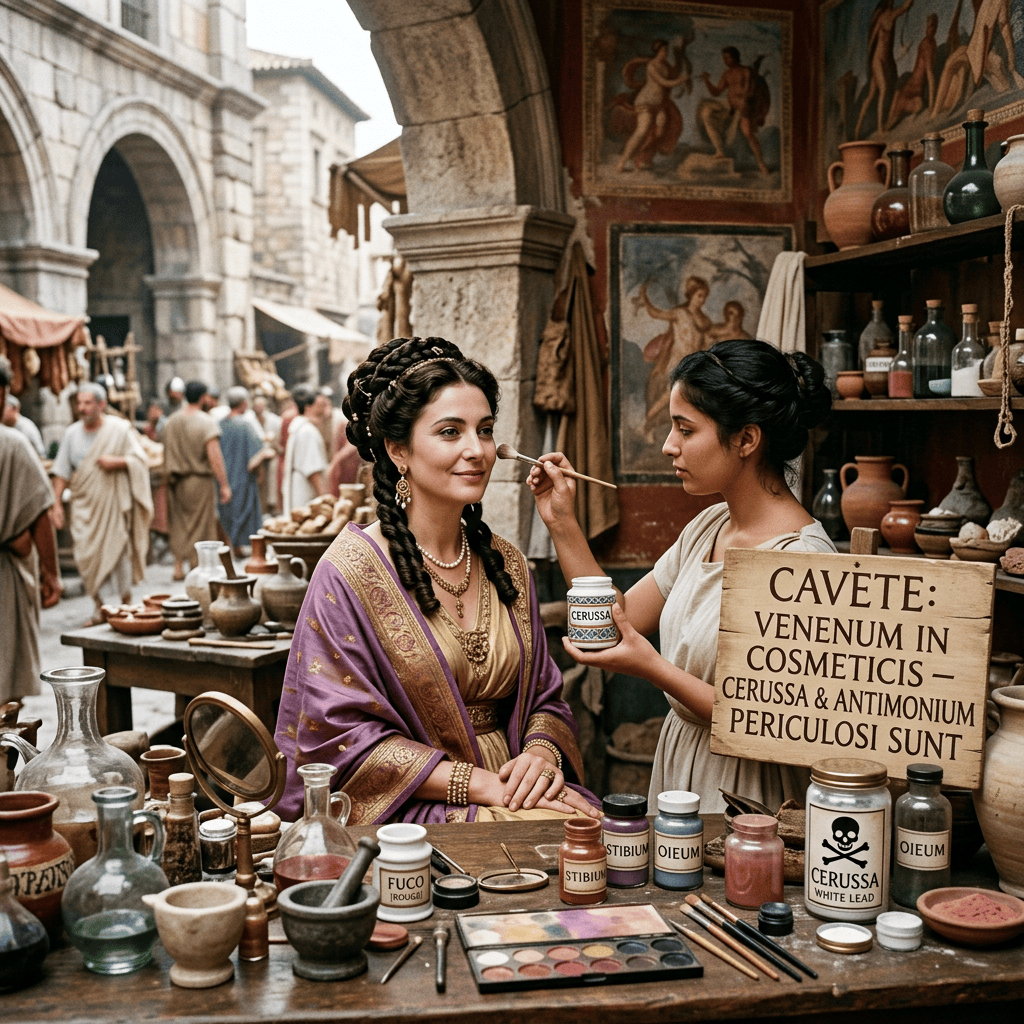
Ancient Rome was bold, glamorous and experimental — and its beauty rituals reflected that ambition. Roman women embraced elaborate cosmetics, perfumes, and hair treatments, creating one of history’s most expressive beauty cultures. But with innovation came significant risk.
Romans admired pale skin, associating it with wealth and leisure. To achieve it, they used white lead paste, one of the most dangerous cosmetics in history. Lead created a smooth, luminous finish but caused irritation, premature ageing, and long‑term toxicity.
For colour, Romans turned to cinnabar, a mercury‑based red pigment used on lips and cheeks. Its vivid hue was striking, but mercury exposure carried serious health risks. Even everyday powders sometimes contained harmful minerals.
Hair rituals were equally intense. To lighten the hair, Romans used sulphur, ashes, and lye‑based mixtures, then sat in the sun to activate the bleaching process. These treatments weakened the hair, caused breakage, and occasionally burned the scalp.
Perfume was central to Roman identity. They adored strong, resin‑heavy scents made from myrrh, frankincense, balsam, and spices. While luxurious, burning resins indoors created smoke that irritated the lungs.
Despite these dangers, Roman beauty was influential. Their passion for glamour, fragrance, and artistry shaped Western beauty traditions for centuries. Rome reminds us that beauty history is both brilliant and imperfect — a blend of creativity, culture, and risk.

