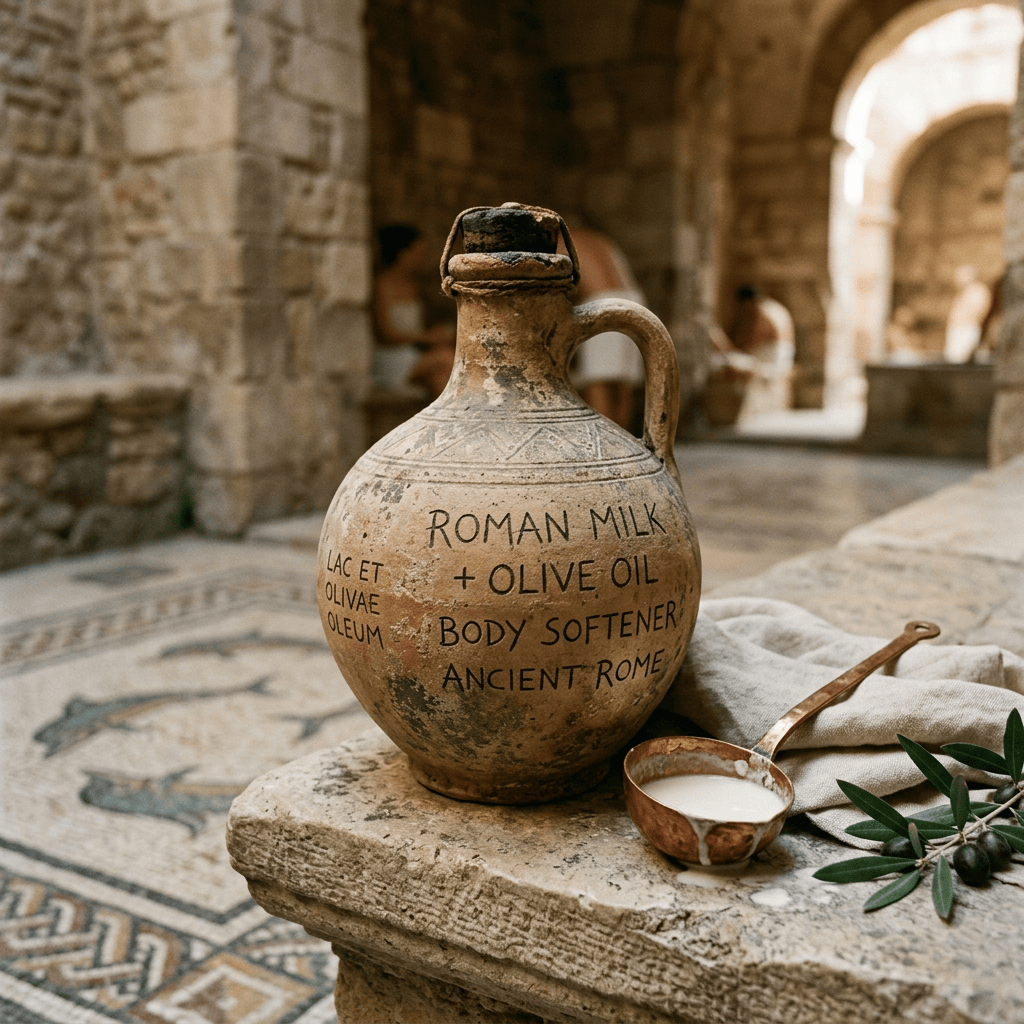
A rich body treatment inspired by Roman bathhouse rituals, combining milk and olive oil for deep nourishment. Ingredients ½ cup milk 2 tbsp olive oil 1 tsp honey Instructions Mix ingredients. Massage onto damp skin after bathing. Rinse lightly or leave on. Storage Refrigerate 2 days. Substitutions Olive oil → almond oil Honey → mapleContinue reading “Roman Milk + Olive Oil Body Softener (Ancient Rome)”
Tag Archives: Ancient Rome
Ancient Rome: Skin Whiteners (Historically Significant)
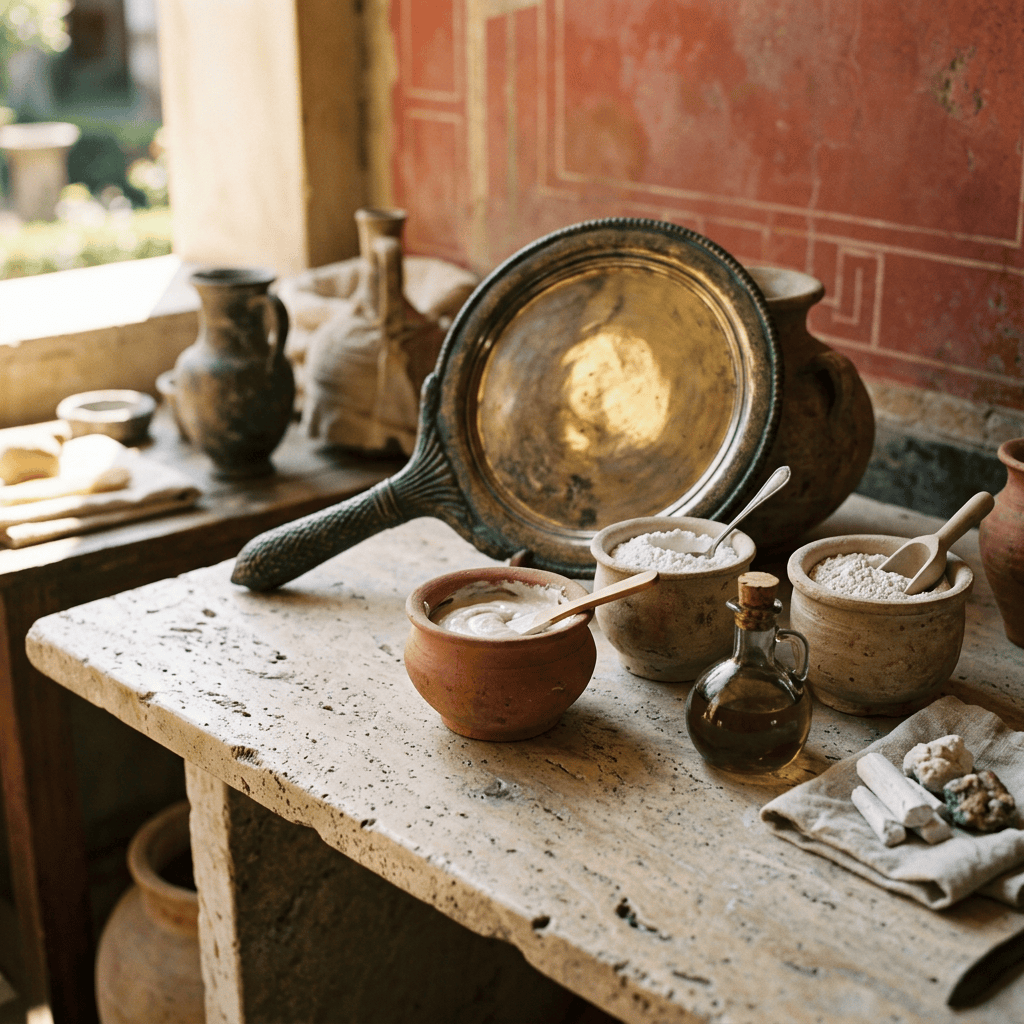
While Romans admired a healthy glow, pale skin also carried social meaning. Skin whiteners were used to soften imperfections, even tone, and signal status. Ingredients included chalk, ground barley, vinegar, and sometimes lead‑based compounds — though these were less extreme than later European formulas. Whitening pastes were applied lightly, creating a soft matte finish ratherContinue reading “Ancient Rome: Skin Whiteners (Historically Significant)”
Ancient Rome: Luxury Beauty Rituals
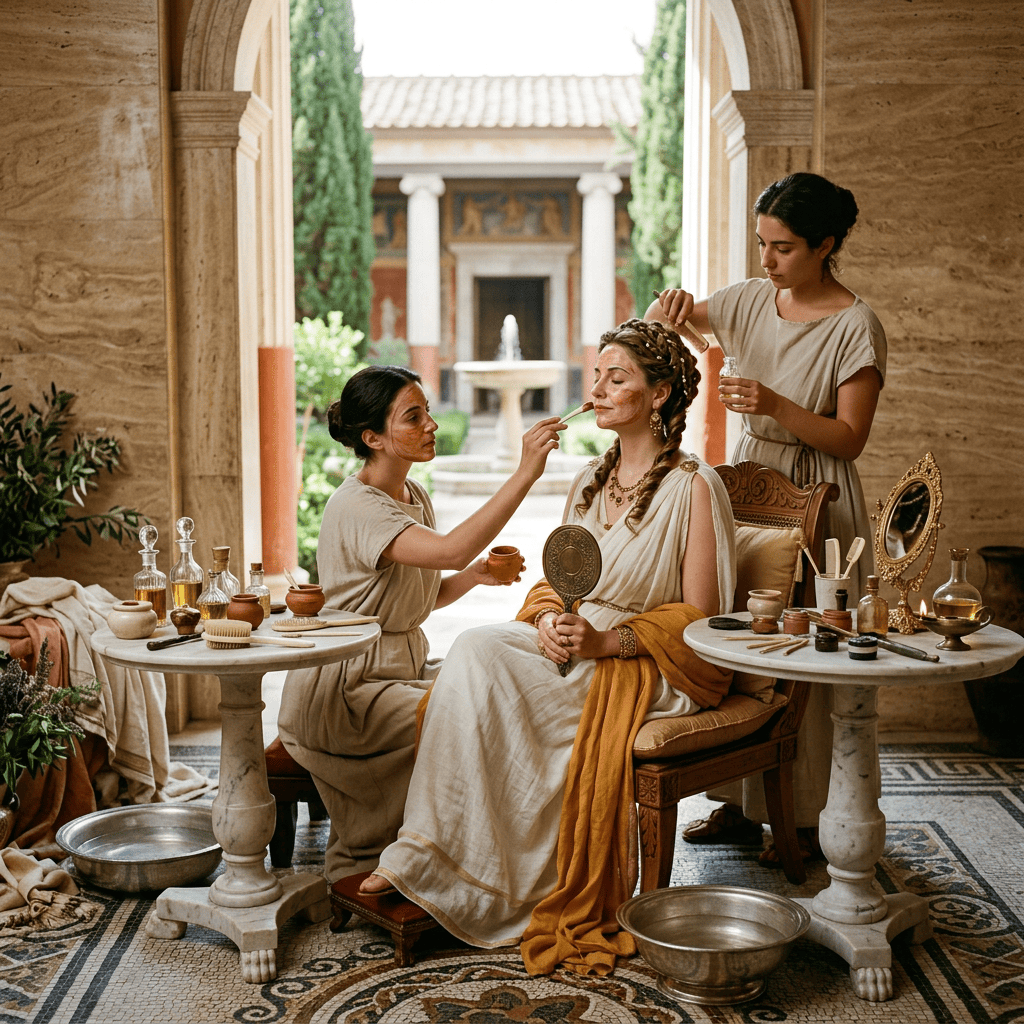
Luxury in Ancient Roman beauty was defined by texture, fragrance, and indulgence. Wealthy households employed attendants to prepare oils, creams and perfumes using saffron, rose, myrrh and exotic imports. Skincare was layered: cleansing with olive oil, exfoliating with fine sand or pumice, masking with honey or clay, and finishing with perfumed balms. Bathhouses offered premiumContinue reading “Ancient Rome: Luxury Beauty Rituals”
Ancient Roman Skincare Ingredients
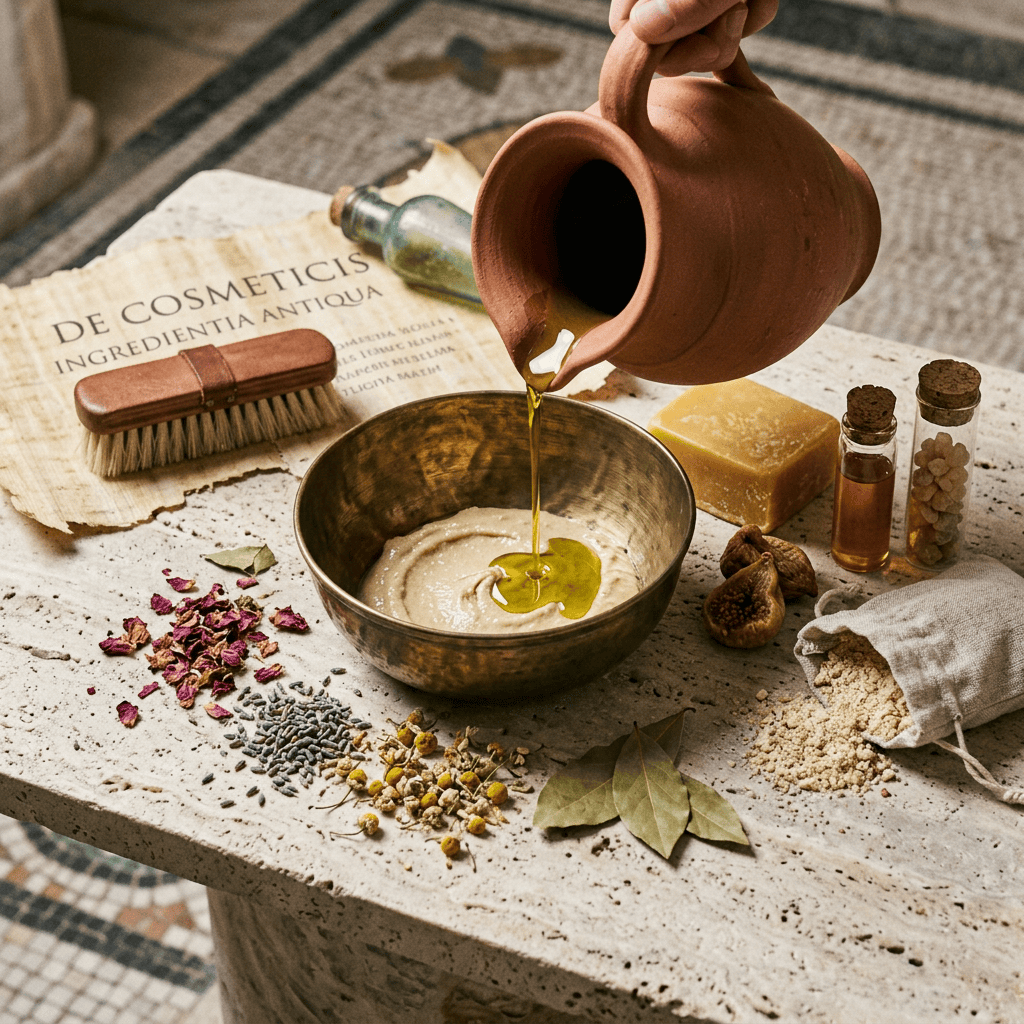
Roman skincare blended practicality with luxury, relying on ingredients that soothed, protected, and refreshed the skin. Olive oil was the foundation — used as a cleanser, moisturizer, and base for perfumes. Its emollient properties made it ideal for a climate of heat and dust. Honey was prized for hydration and healing, often used in masksContinue reading “Ancient Roman Skincare Ingredients”
Ancient Roman Rouge
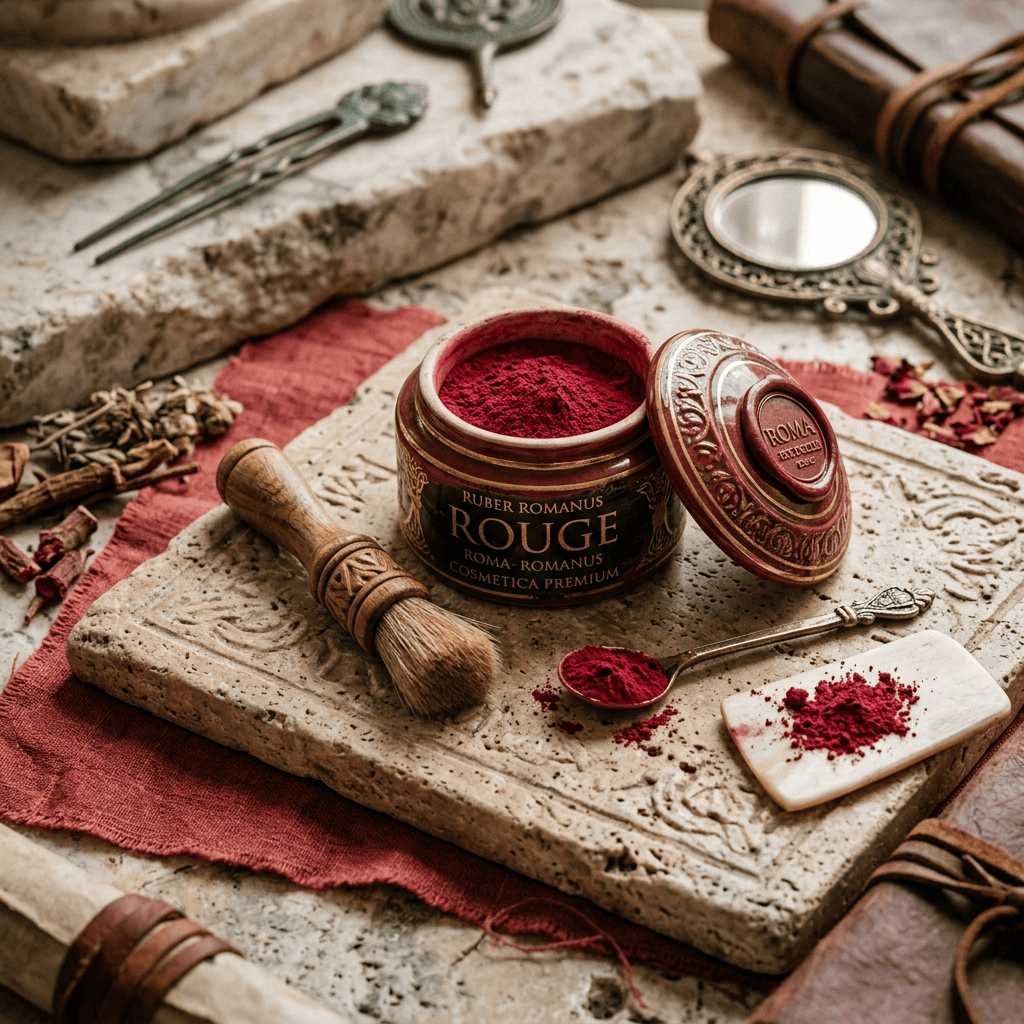
Rouge was central to Roman beauty, adding warmth, vitality, and definition to the face. Unlike the stark whiteness of later European cosmetics, Roman makeup aimed for a healthy, sun‑kissed glow. Rouge was applied to the cheeks and lips using pigments derived from red ochre, safflower, mulberries or imported cinnabar. Cinnabar, though vivid, contained mercury andContinue reading “Ancient Roman Rouge”
Ancient Rome: Spa Culture — Mud Baths, Oils, Massages
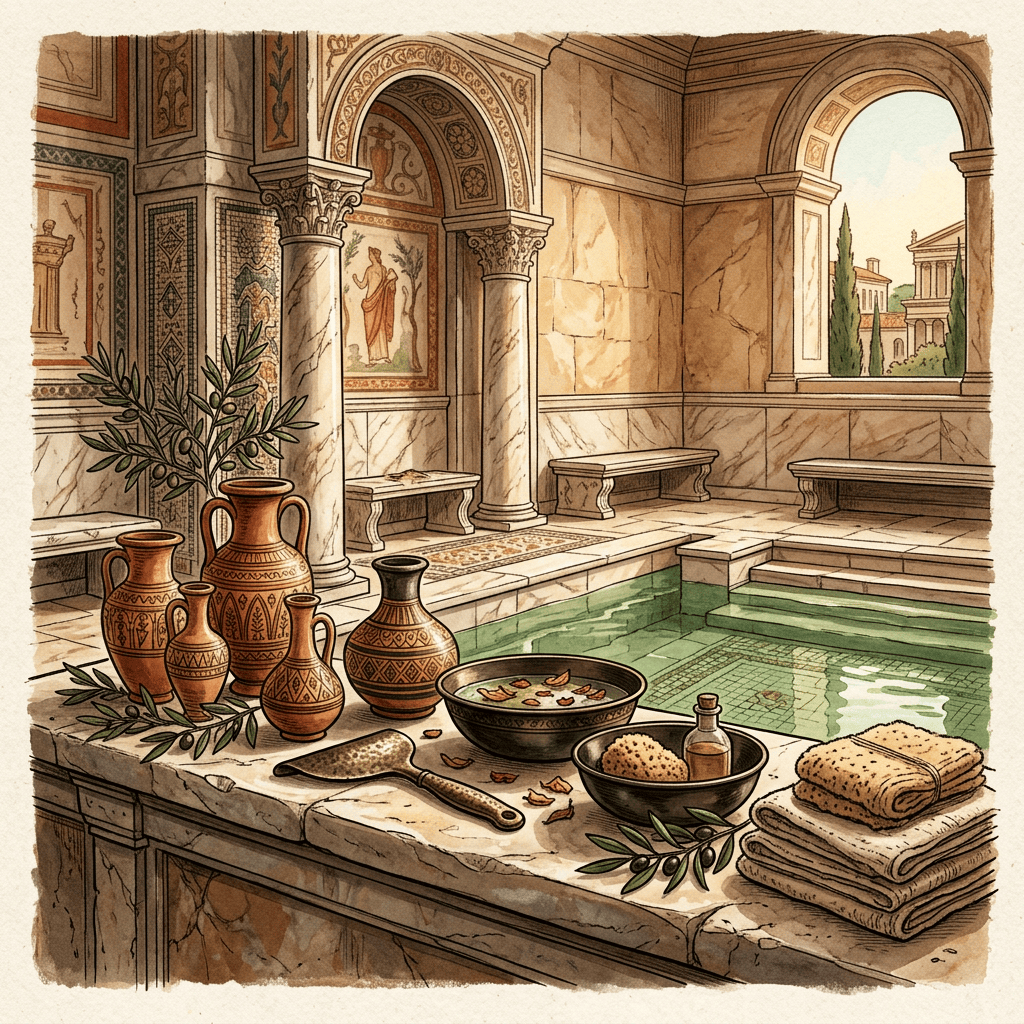
Roman spa culture was a sensory world built on warmth, touch, and indulgence. Inside the thermae, beauty and wellness blended seamlessly, offering treatments that feel strikingly modern. Mud baths were among the most luxurious rituals. Romans sourced mineral‑rich mud from thermal regions, applying it to the body to soothe joints, soften skin, and draw outContinue reading “Ancient Rome: Spa Culture — Mud Baths, Oils, Massages”

