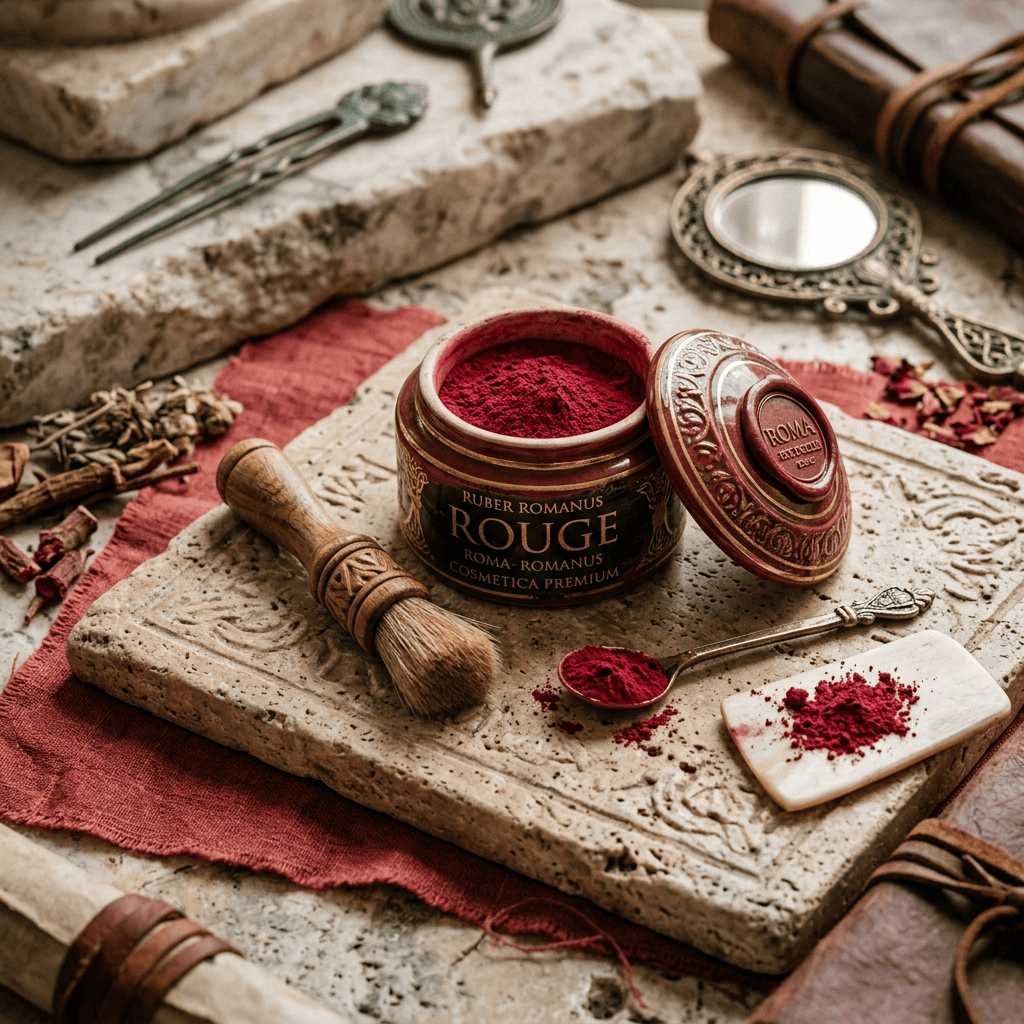
Rouge was central to Roman beauty, adding warmth, vitality, and definition to the face. Unlike the stark whiteness of later European cosmetics, Roman makeup aimed for a healthy, sun‑kissed glow. Rouge was applied to the cheeks and lips using pigments derived from red ochre, safflower, mulberries or imported cinnabar.
Cinnabar, though vivid, contained mercury and posed health risks — yet its intensity made it desirable among the elite. More modest households used plant‑based pigments, creating softer, natural tones. Rouge wasn’t only cosmetic; it symbolized youth, fertility, and social vibrancy.
Stored in small glass or ceramic pots, rouge was applied with fingers or soft cloths. Its use reflected Roman ideals of balance: colour that enhanced, not masked.
Roman rouge reminds us that beauty has always been a dialogue between nature, culture, and desire.
I’m Stacey Hobbs, thanks for reading Face by Stace! Until next time.
do you feel fabulous today?

