
Fixing dehydrated skin starts with restoring water and protecting your barrier so that moisture stays where it belongs. The first step is to add hydration back into the skin using ingredients that attract and hold water — hyaluronic acid, glycerin, aloe, and urea are some of the most effective. Apply these on slightly damp skin to boost absorption and lock in more moisture.
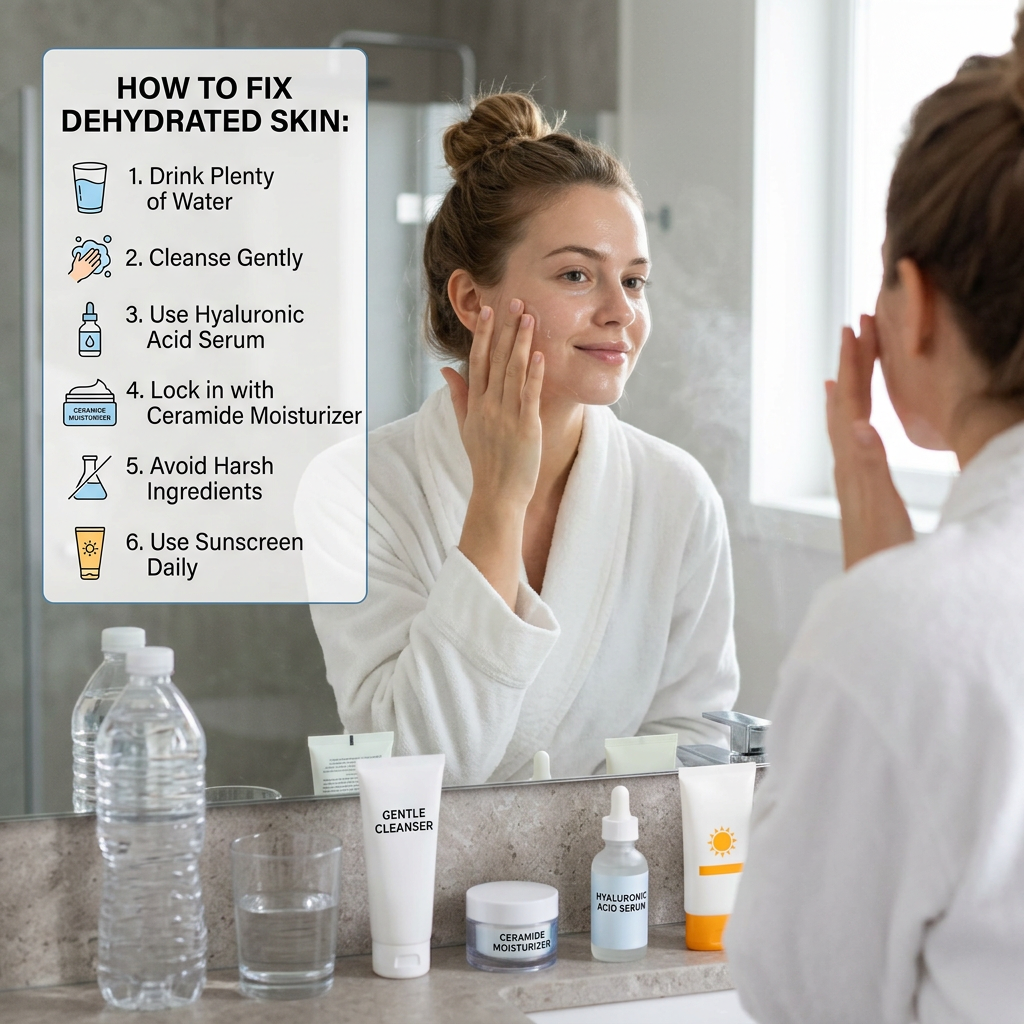
Next, seal that hydration in. Even if you’re oily, you need a moisturizer. Choose lightweight gels if you prefer a non‑greasy feel or richer moisturizers if your skin leans dry. Oils and ceramide‑based moisturizers help strengthen the barrier, preventing water from evaporating throughout the day.
Gentle cleansing is essential. Harsh cleansers, over‑exfoliation and strong acne treatments can strip water from the skin, making dehydration worse. Switch to a hydrating cleanser and reduce exfoliation to once or twice a week until your skin feels balanced again.
Lifestyle matters too. Increase water intake, reduce excessive caffeine, and add a humidifier during dry seasons — especially in Alberta’s climate, where indoor heating pulls moisture from the air. Shorter, lukewarm showers also help prevent moisture loss.
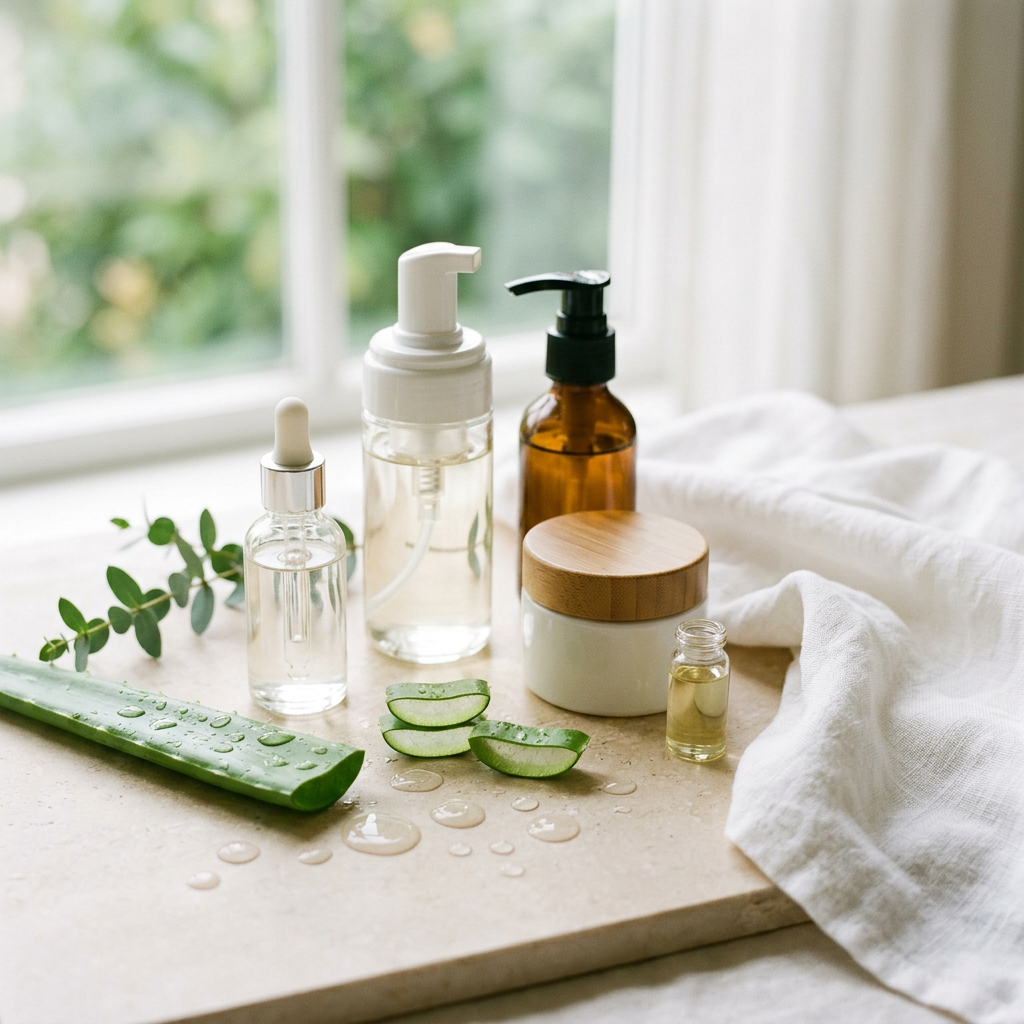
Finally, choose makeup wisely. Opt for hydrating foundations, avoid heavy powders, and prep the skin with a moisture‑boosting primer.
With consistent hydration, barrier support, and gentler routines, dehydrated skin becomes smoother, plumper, and more resilient — restoring that healthy, comfortable glow.

