Canada’s speakeasy culture during Prohibition wasn’t uniform. Each major city developed its own underground identity — shaped by local laws, cultural influences, immigration, nightlife traditions and the social attitudes of the era. What emerged was a patchwork of hidden bars that reflected the character of each region, creating a uniquely Canadian mosaic of nightlife.
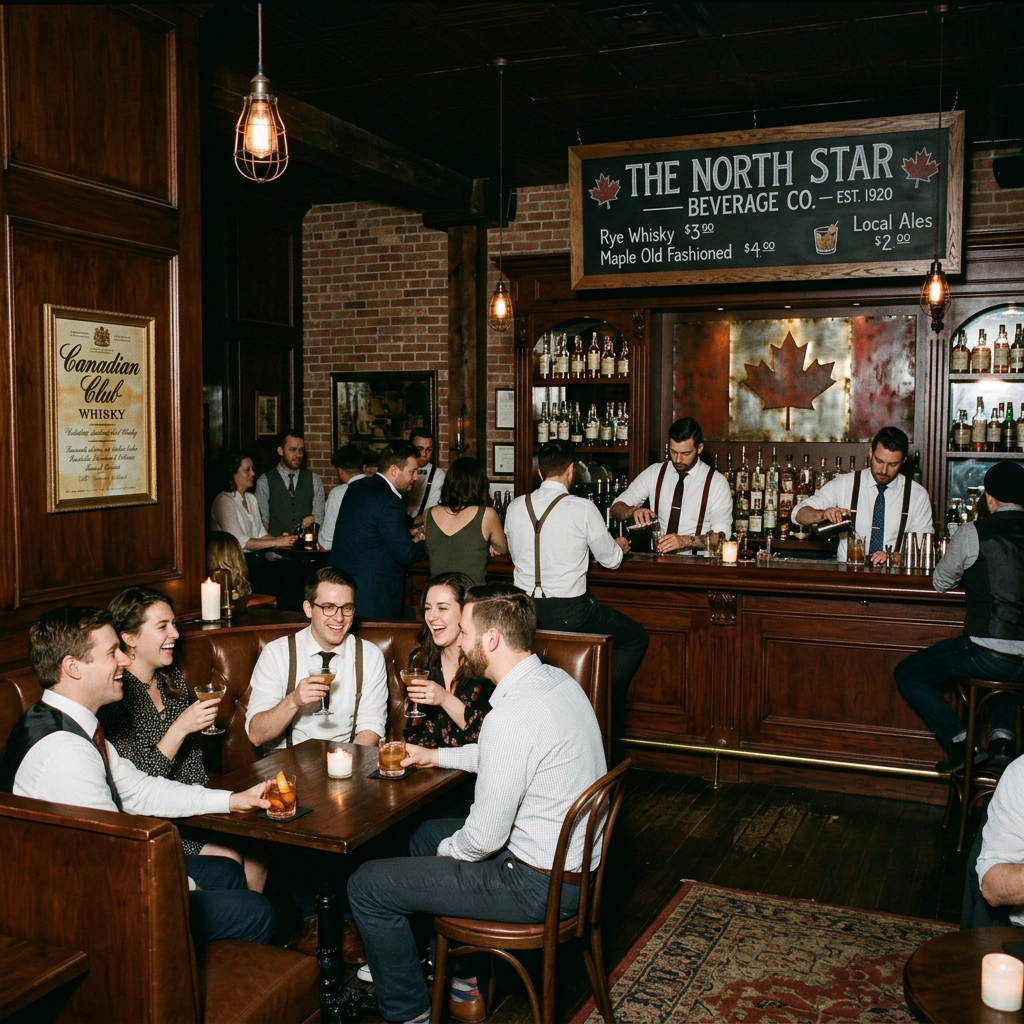
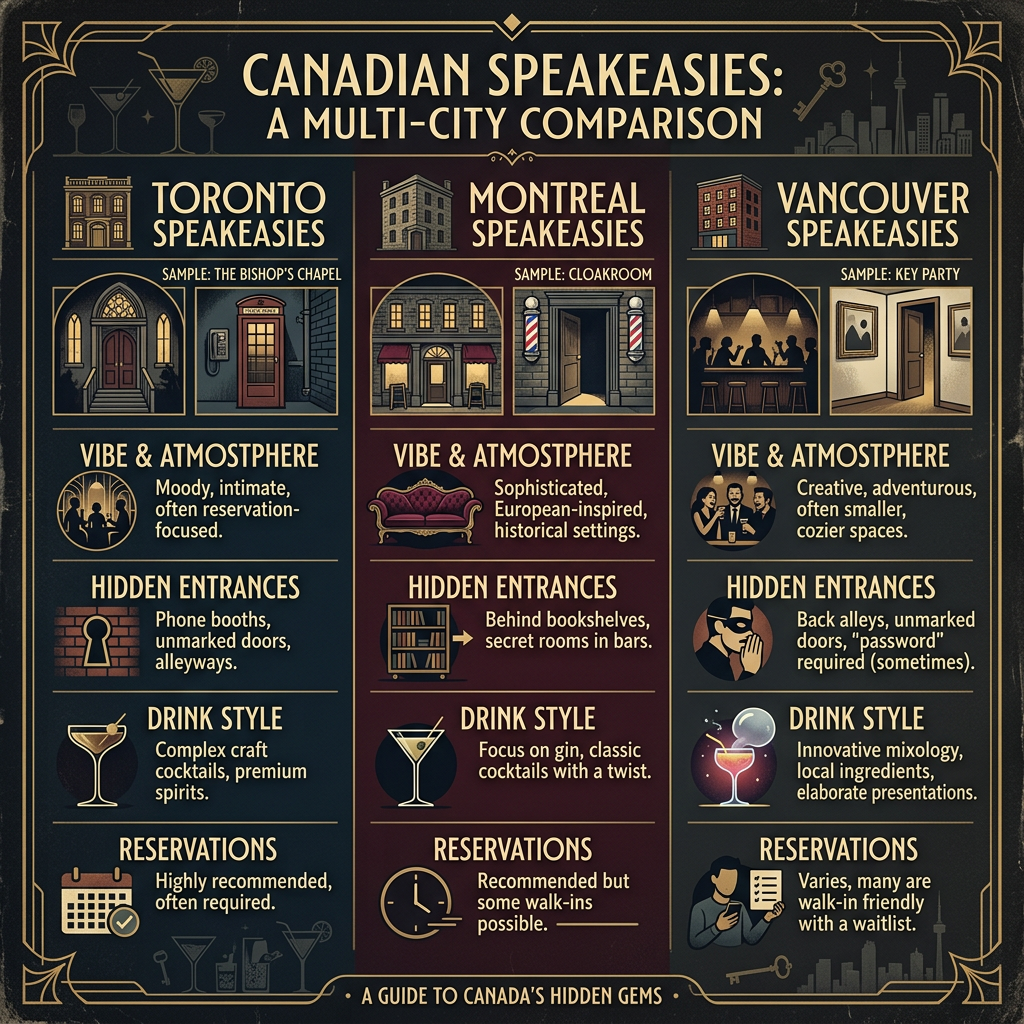
Montréal was the crown jewel of Canadian speakeasies. With its French influence, thriving jazz scene, and reputation for indulgence, Montréal’s hidden bars felt glamorous rather than forbidden. American tourists crossed the border specifically for its nightlife, drawn to smoky jazz rooms, cabaret‑style performances, and cocktails served with European flair. Montréal’s speakeasies were bold, lively and unapologetically decadent.
Toronto took a more restrained approach. Its British‑influenced social norms shaped quieter, more conservative speakeasies tucked behind restaurants, inside private clubs, or disguised as “soft drink parlours.” Toronto’s underground bars focused on discretion and respectability. Patrons wanted modern fun without scandal, creating a scene defined by softer jazz, polite cocktails and a preference for privacy.
Winnipeg, booming in the 1920s, developed a surprisingly vibrant speakeasy culture. Fuelled by railway workers, immigrant communities, and a growing middle class, its hidden bars blended European traditions with Prairie practicality. Expect hearty drinks, folk music and a warm, communal atmosphere — less glamour, more gathering.
Vancouver offered West Coast eclecticism. Influenced by maritime trade, Asian immigration, and American visitors arriving by ship or rail, its speakeasies ranged from smoky waterfront hideaways to stylish hotel lounges operating “after hours.” Vancouver’s scene felt adventurous, modern and slightly rebellious.
Together, these cities reveal how Canada’s speakeasy culture was never one‑note — it was regional, diverse, and deeply reflective of the country’s cultural landscape.
I’m Stacey Hobbs, thanks for reading Face by Stace! Until next time.
do you feel fabulous today?

